Ancient Americas
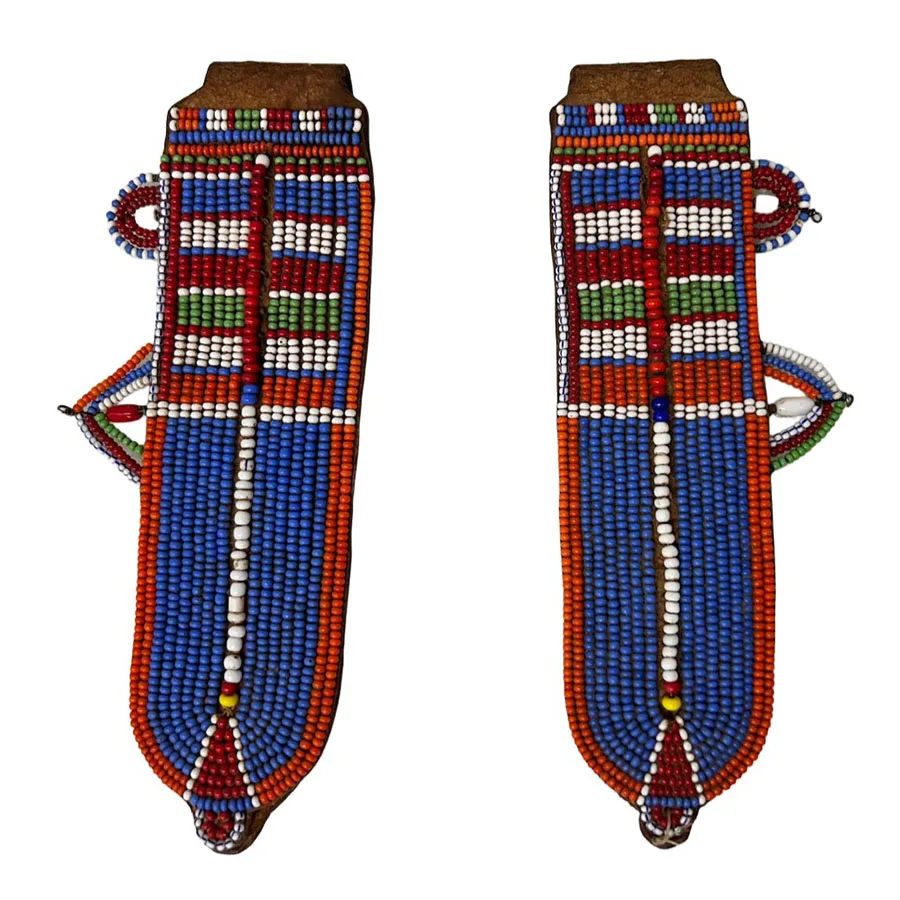
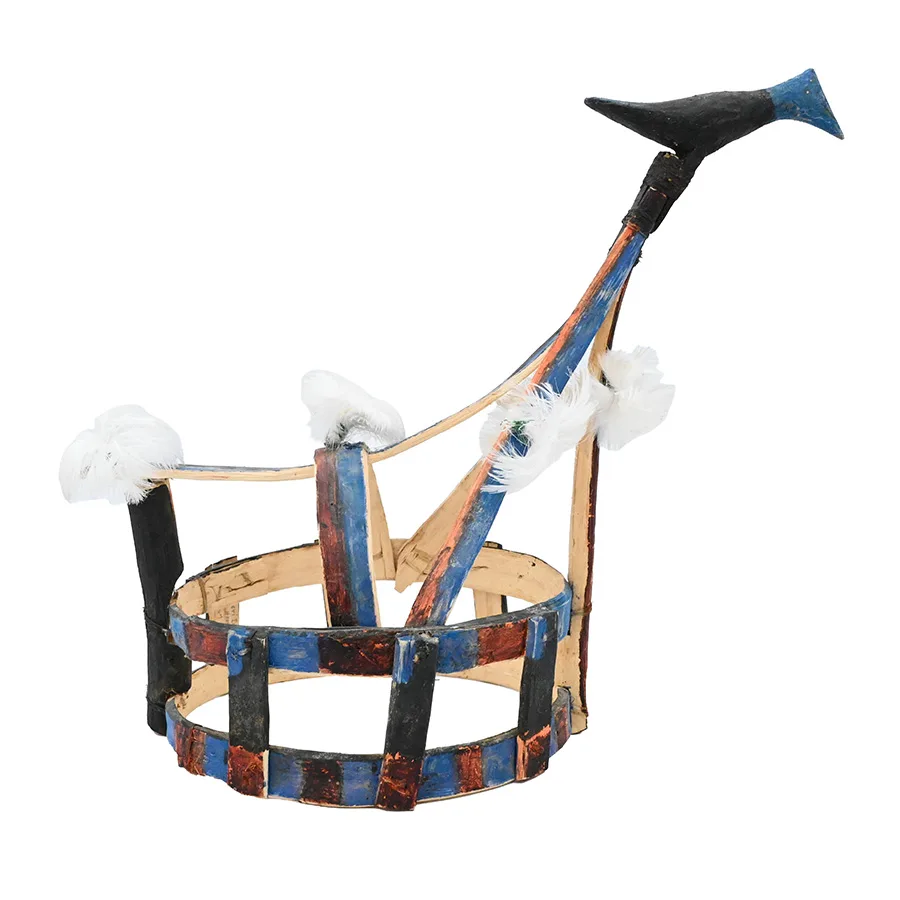
These objects from the Indigenous peoples of the ancient Americas represent highlights from the UNC-Wilmington Collection, acquired by the Lam Museum to preserve the legacy of the former Museum of World Cultures.
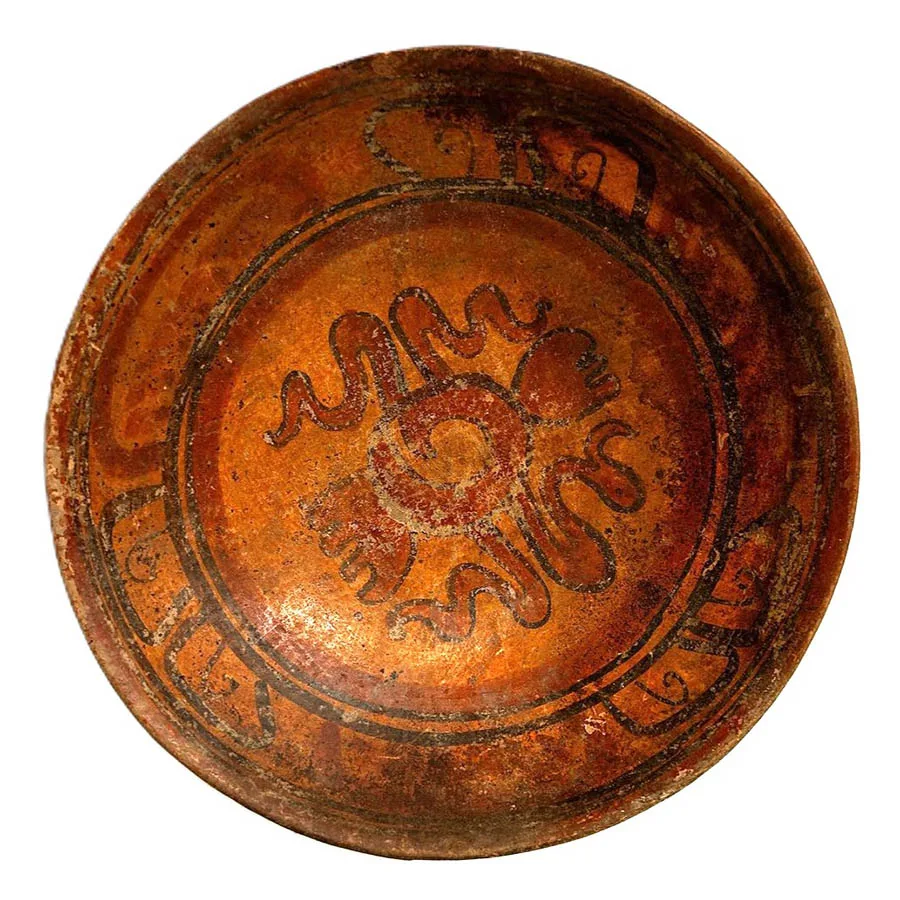
Bowl
Maya (Archaeological), Guatemala
#2023.12.E.271 ● Written by Alexandria Dove-Ali
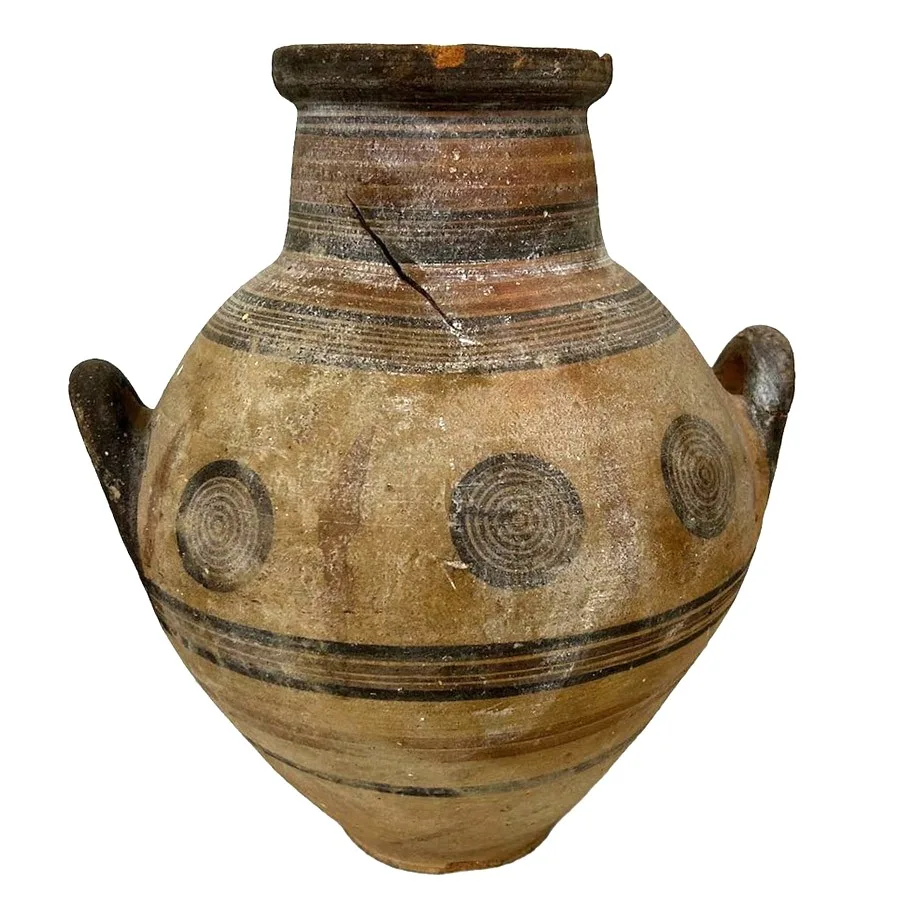
The ancient Maya made ceramic bowls by hand rather than using a wheel. They used the bowls to hold food and drink, as well as offerings for the dead. They were also given as gifts. Potters used clay from local sources, often folding in additives like crushed limestone or volcanic ash to achieve the desired consistency. They would cover the clay with a mineral mixture dissolved in water before firing to give the piece color. The artists would paint the final designs after firing.
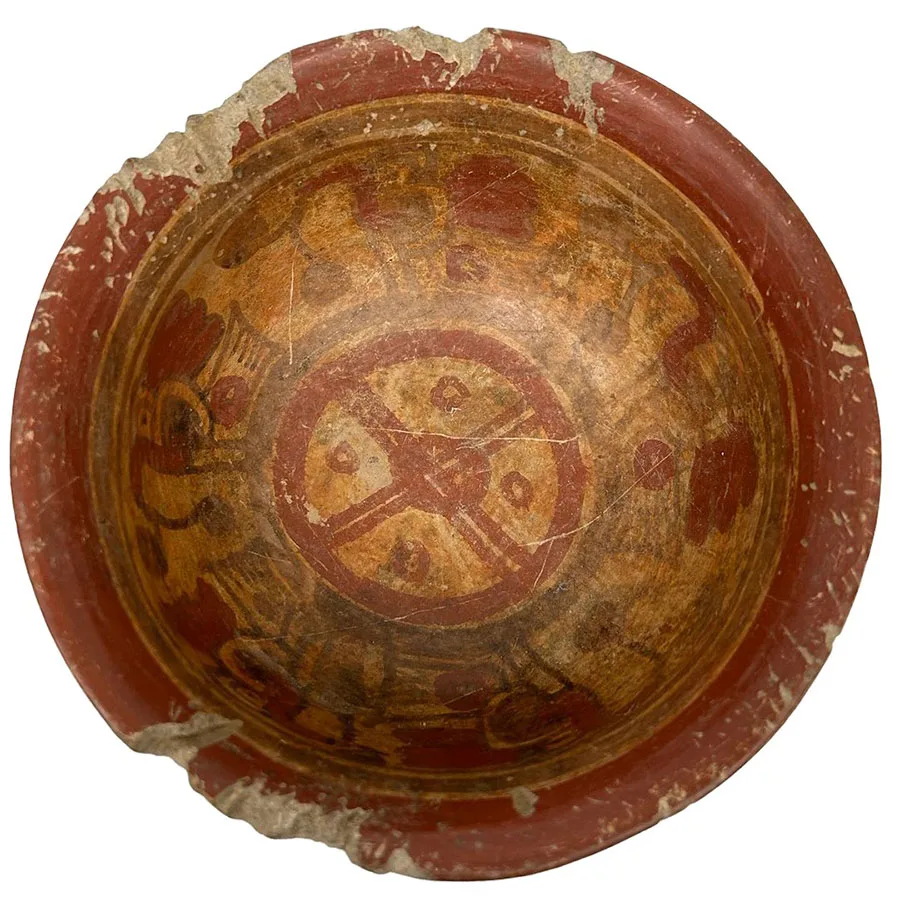
Bowl
Maya (Archaeological), Guatemala
#2023.12.E.130
The design in the center of this bowl consists of four lines at the cardinal directions with a fifth point in the center. For the Maya, this symbol relates to the centering of the world in space and time. The Preclassic Maya conducted rituals in public plazas to deposit objects in the ground in this same pattern, recreating the center of the universe. Some contemporary Maya people conduct rituals for house building that have the same purpose. This symbol is also related to the Classic Maya “k’in” glyph meaning “day.”

Cylinder Vase
Maya (Archaeological), Guatemala
#2023.12.E.268
The shape of this piece indicates that it was likely used to drink cacao or chocolate beverages. It is decorated in the codex style, meaning that it resembles a Classic Maya book with red borders at the top and bottom and a white background. Despite this fact, the design does not contain any actual hieroglyphic writing. The decorations possibly depict an underworld scene with a conch shell and some type of water-dwelling underworld creature. (Since the time of this exhibit additional research has come to light that the scene depicted on this vase may instead show emblems of the deer hunt, with the conch shell serving as a horn, and the large central element representing a net for carrying venison.)
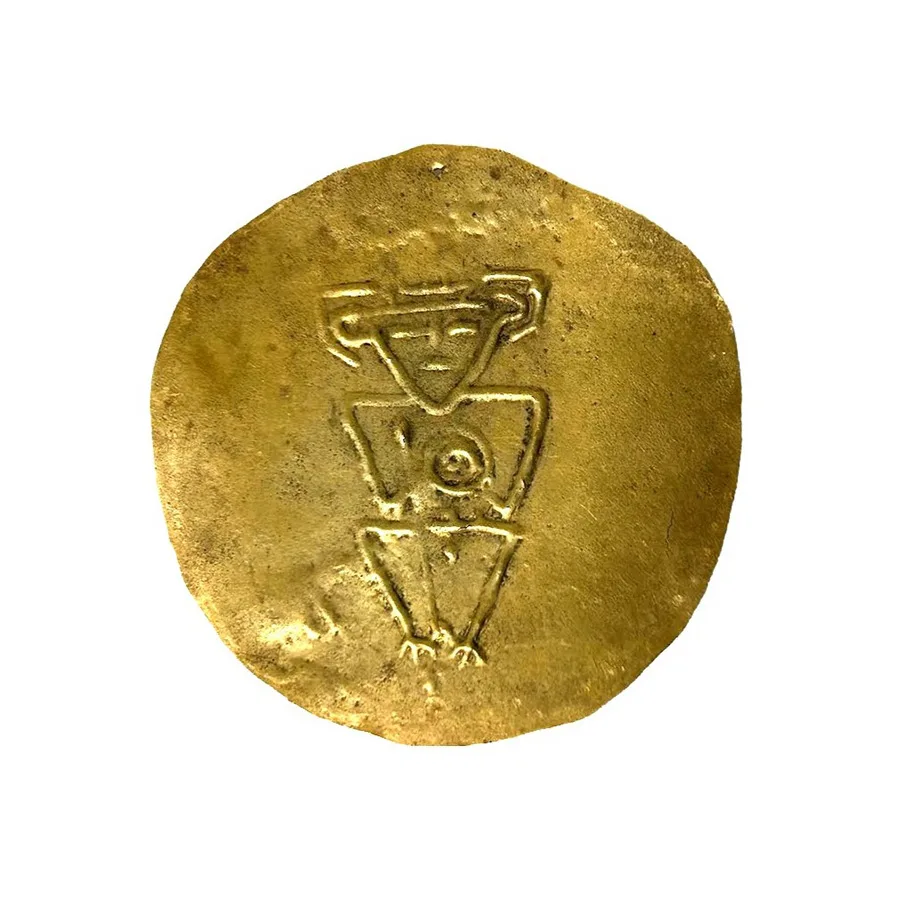
Pendant
Moche (Archaeological), Peru
#2023.12.E.29
Golden jewelry has been made in Peru for at least 4000 years. By the time of the Moche culture, from 100-800 CE, gold was one of the primary ways of displaying status. This pendant depicts a person crouching with a club and shield, perhaps a clue to the wearer’s identity as a warrior. Though the MOWC identified this as originating in Peru, it is stylistically similar to gold pendants found further north in Colombia.
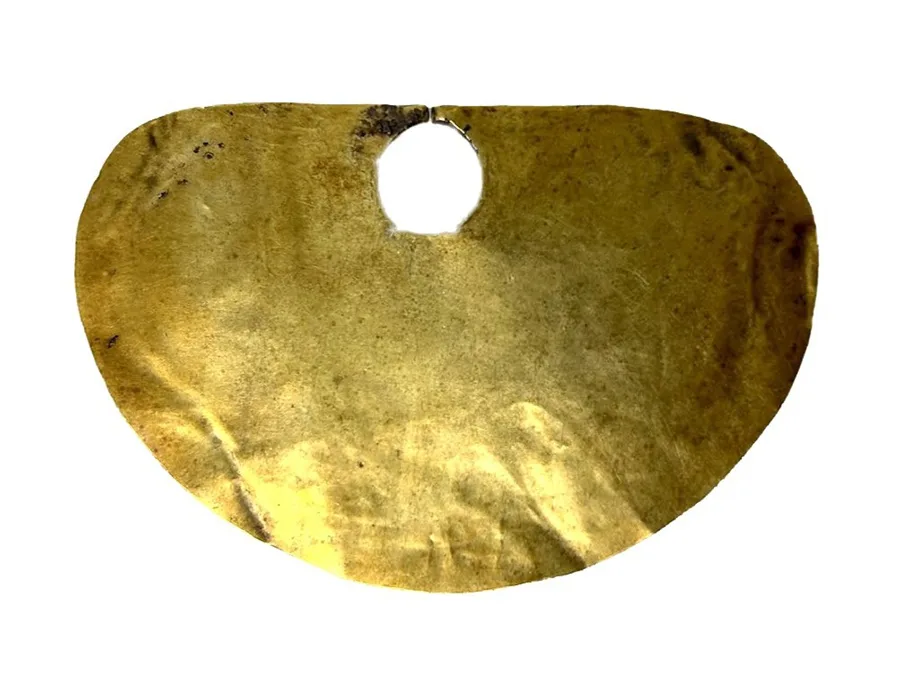
Nose Ornament
Moche (Archaeological), Peru
#2023.12.E.30
An ornament like this would be worn through the septum–the partition between the nostrils. While it could be worn on its own, a true display of wealth might include necklaces, pendants, headdresses, ear spools, scepters, weapons, and even golden clothes. Typical pieces of jewelry like this ornament were not often made of pure gold. Instead, the sheen of gold was reproduced by alloying it with silver and copper to make a mixture called tumbaga.
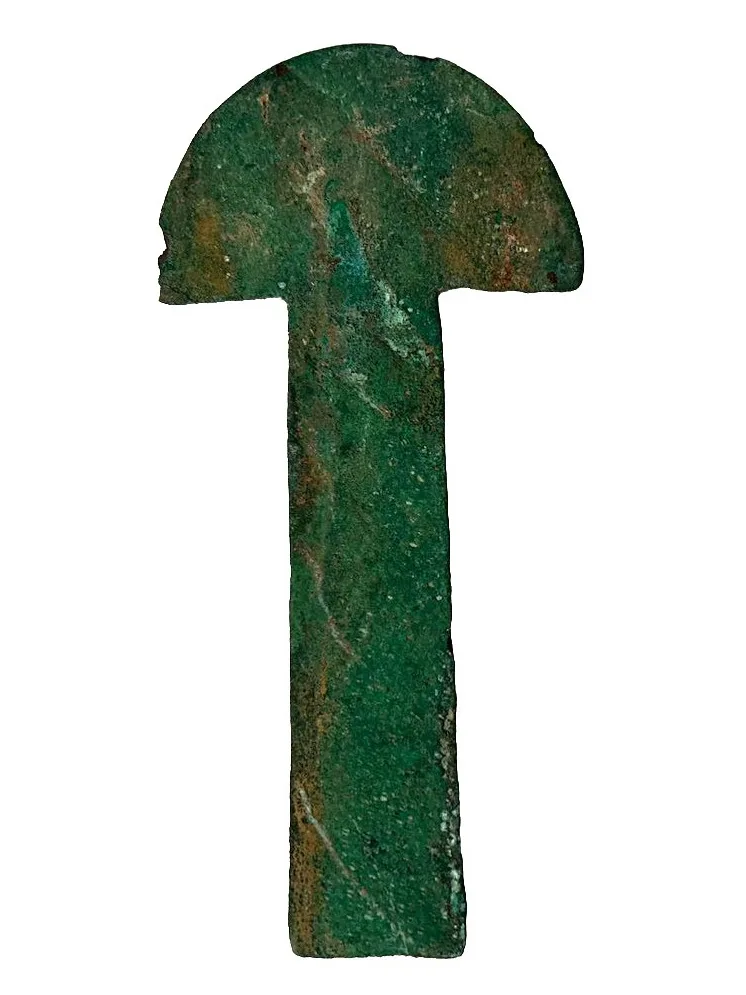
Knife
Chimu (Archaeological), Peru
#2023.12.E.123
This tumi knife served as both a tool and a ceremonial object. Copper knives could be used for a range of functional tasks–everything from farm work to kitchen prep. By 900 CE, Chimu farmers grew crops like potatoes, beans, and maize, and raised llamas. However, the tumi half-circle blade shape is often associated with ritual sacrifices and offerings, symbolizing a connection between humans, nature, and the divine.