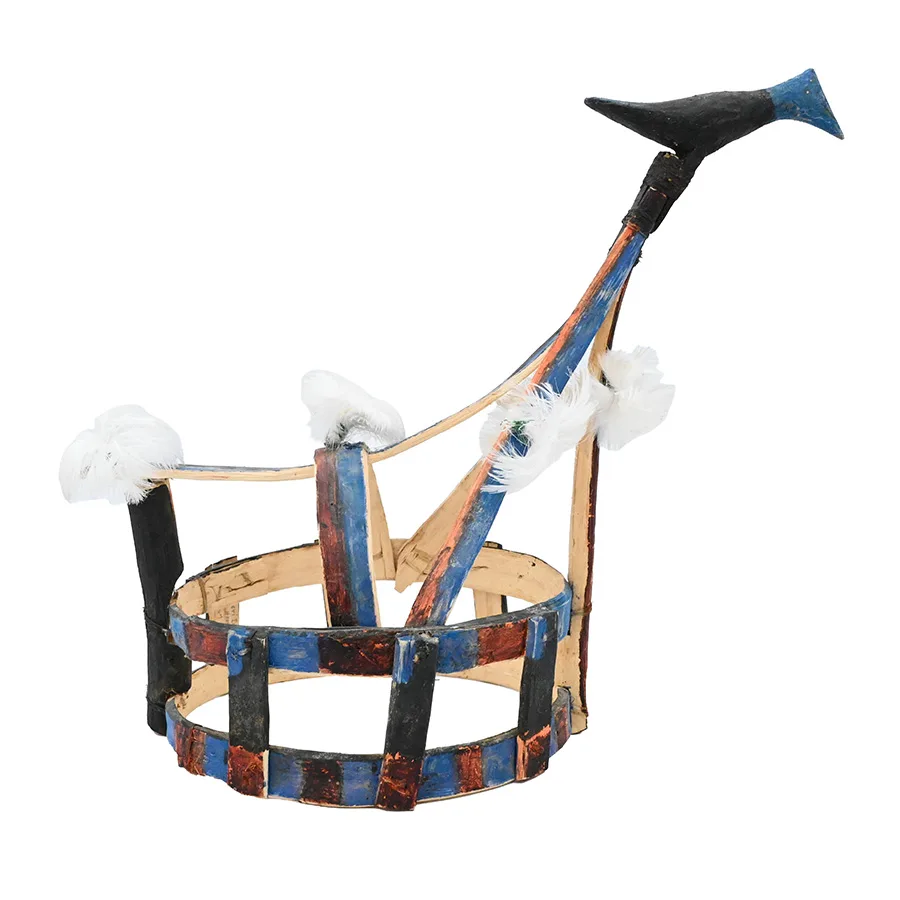
Southeast Asia
These objects from Southeast Asia represent highlights from the UNC-Wilmington Collection, acquired by the Lam Museum to preserve the legacy of the former Museum of World Cultures.
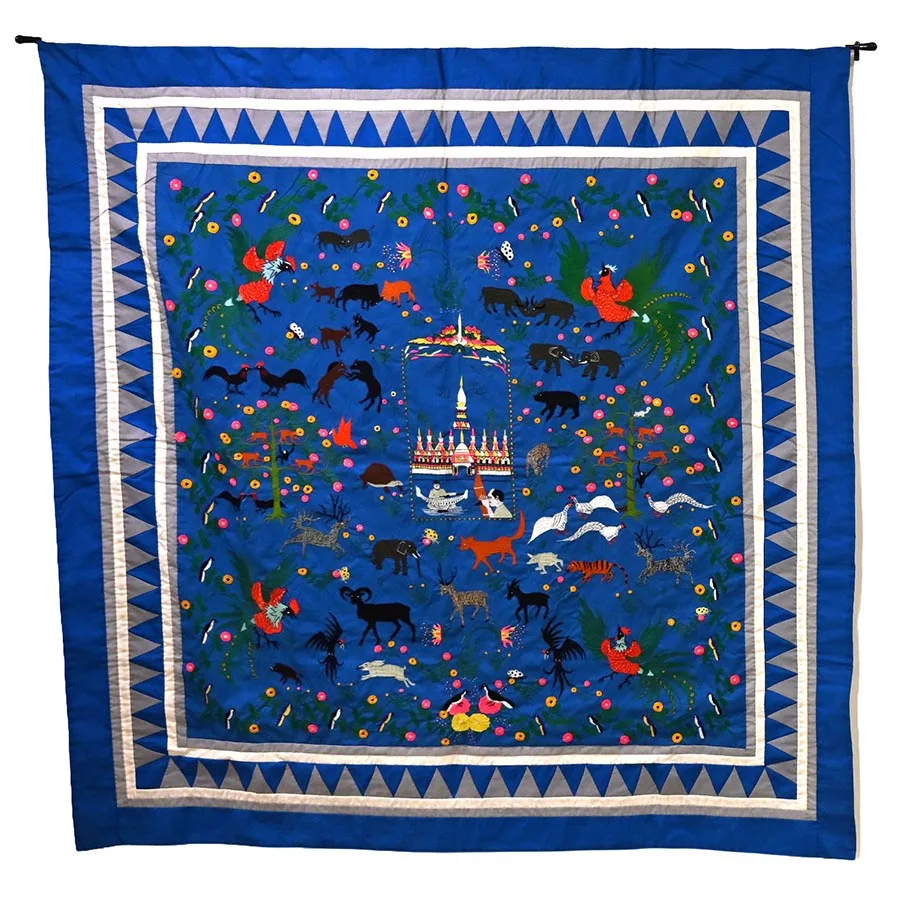
Quilt
Hmong, Laos
#2023.12.E.180 ● Written by Avery Houck
This traditional story quilt, or paj ntaub, tells the story of the Hmong people through images. Different symbols represent Laos, one of the Southeast Asian countries where the Hmong people reside, such as the Siamese Fireback (the national bird of Laos) and the elephant (the national animal). Behind the two central figures is the Pha That Luang, a major temple in Laos that is also recognizable from the national coat-of-arms. The triangles which make up the frame border symbolize the protective highland landscape of Laos. Though the object is not dated, it likely originated toward the end of the 20th century, when the paj ntaub art form was revived to keep Hmong history alive as migrants left the country.
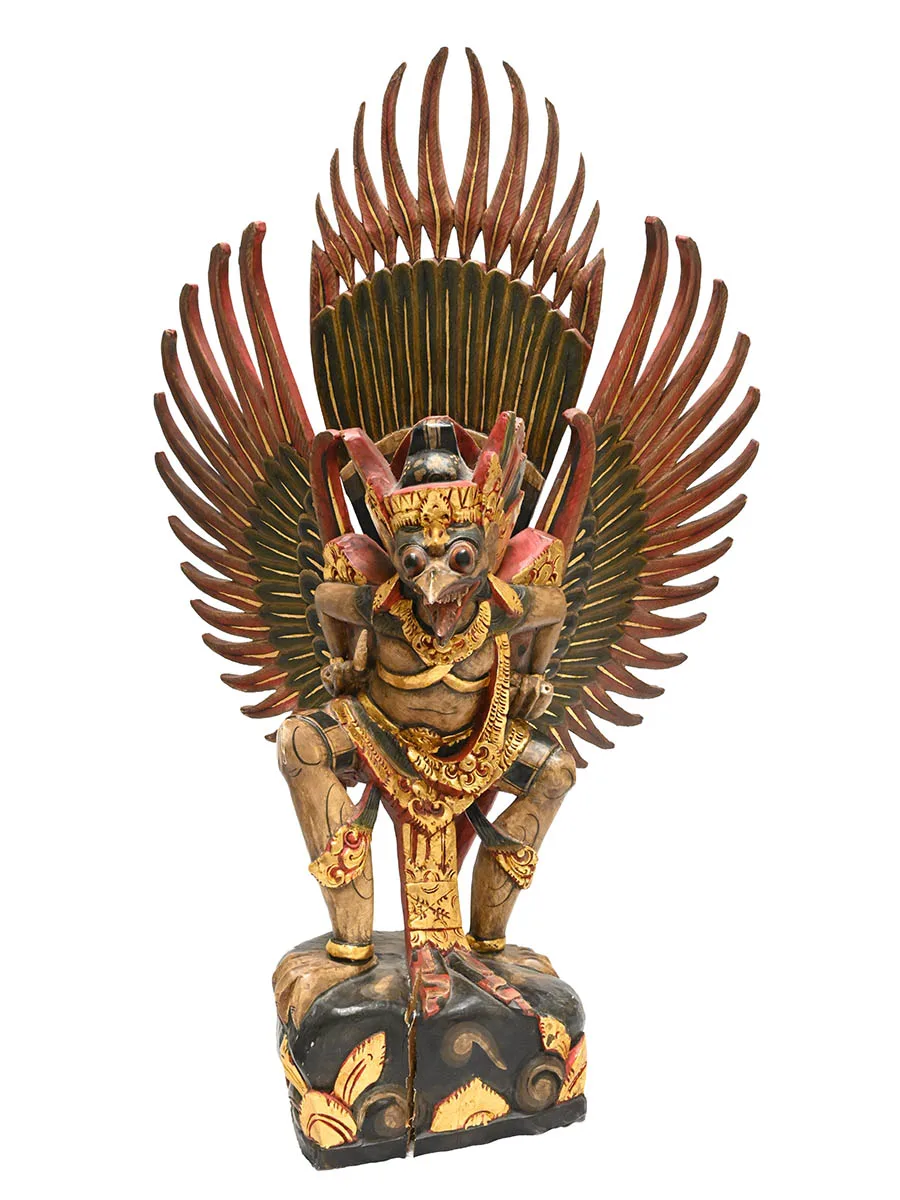
Statue
Hindu, Indonesia
#2023.12.E.164.a-d
This statue depicts Garuda, the mythological bird-man from Hindu lore. In South Asia, Garuda often serves as a mount for other deities, but in Bali he is often depicted on his own. Though broken, the extended pinky and index fingers emphasize a commanding, assertive stance. The statue’s dynamic form and posture reflect Garuda’s role in providing divine protection and power.
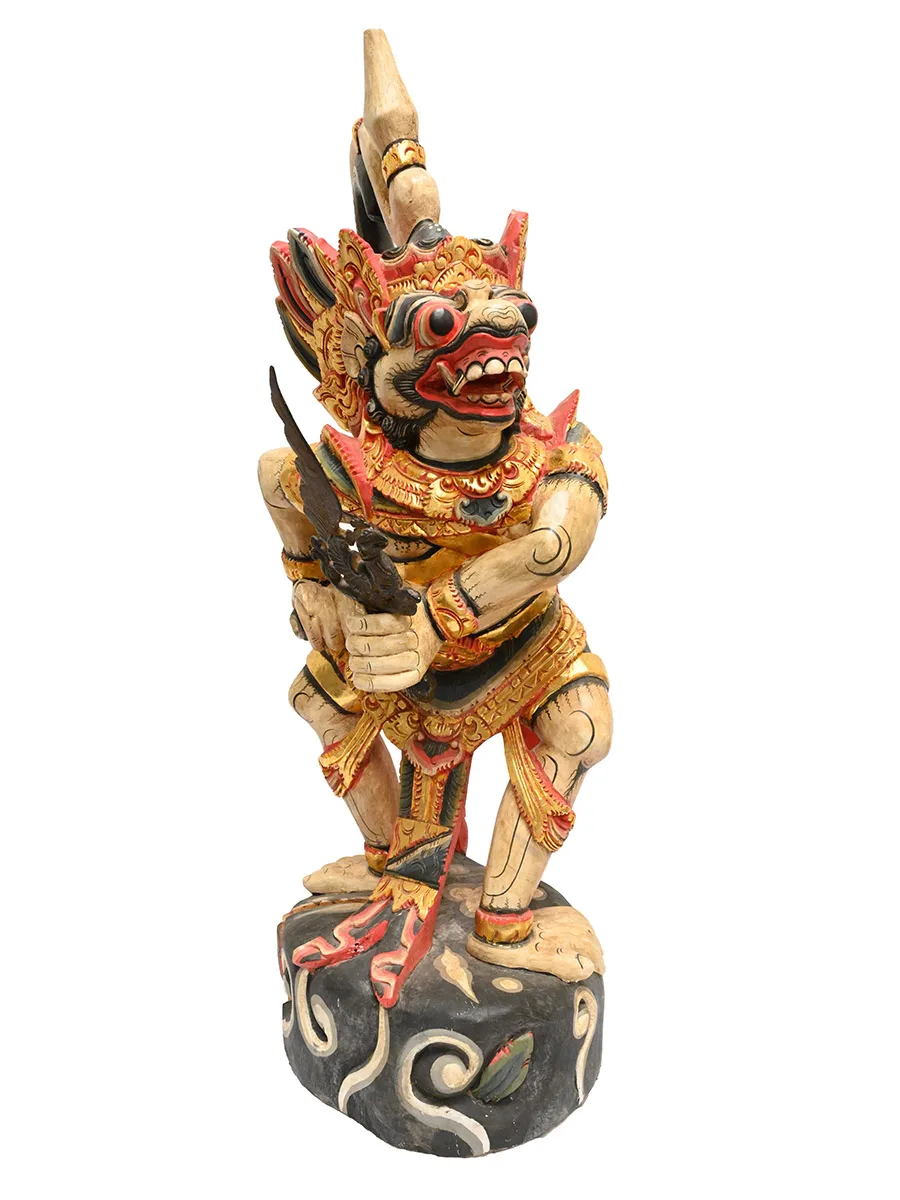
Statue
Hindu, Indonesia
#2023.12.E.83.a-b ● Written by Shrihan Atluri
Hanuman is a Hindu monkey deity. He appears in the epic of the Ramayana, where he is essential in helping Lord Rama fight against Ravana, an evil king, and rescuing Rama’s kidnapped wife. Hanuman is incredibly devoted to Lord Rama and uses his strength to help defeat Ravana. To represent this, the statue depicts Hanuman with a sword in his hand, baring his teeth, and in a fighting position. This statue was likely used to worship Hanuman. Hinduism, including the story of the Ramayana, originated in India, but spread to Indonesia and flourished during the medieval period.
Plaque
Balinese, Indonesia
#2023.12.E.109
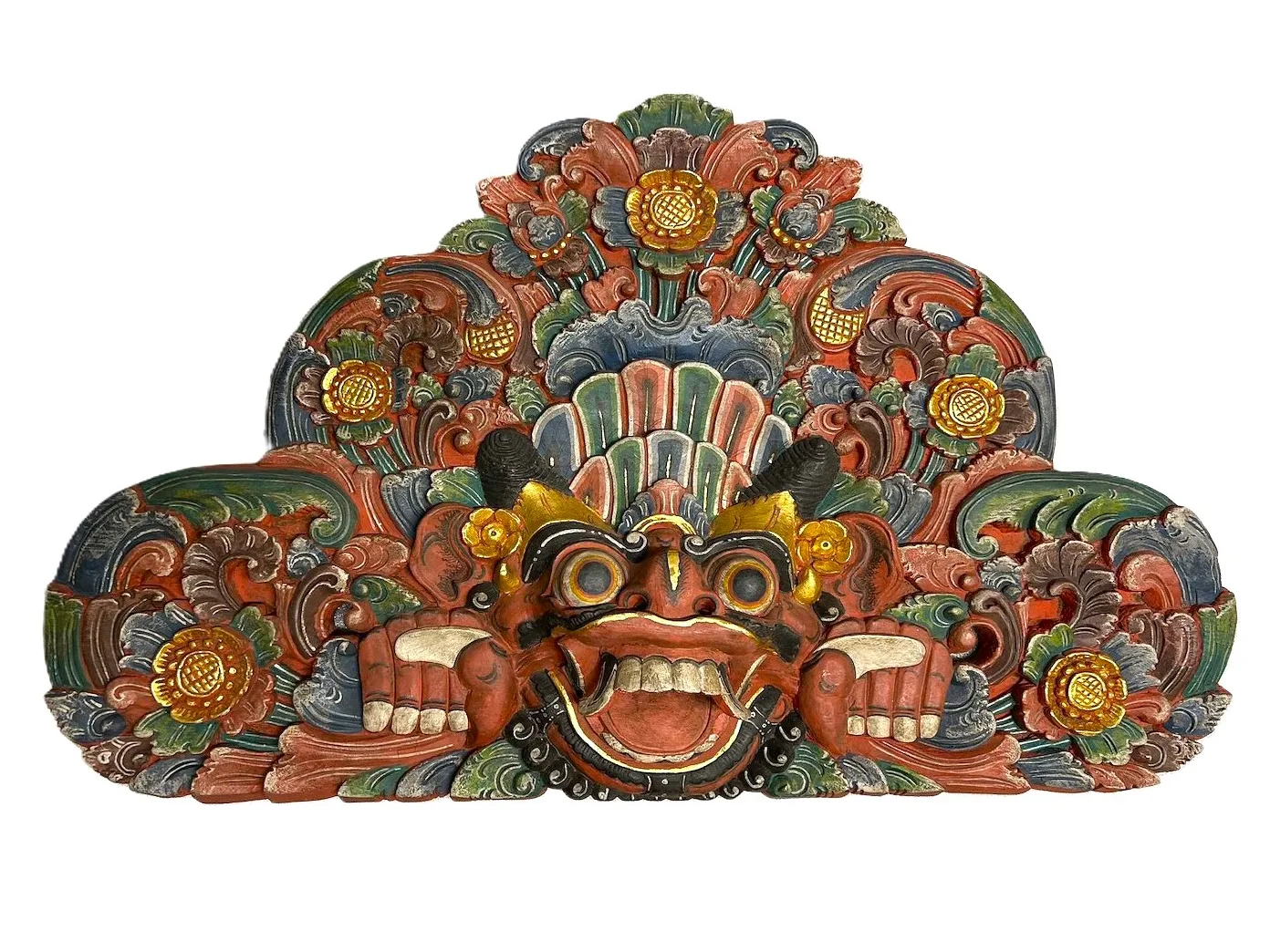
This wood carving depicts Barong, a forest guardian spirit venerated on the island of Bali. The prominent eyes and curling flowers are great examples of Balinese aesthetics, and the MOWC’s records list its origin as Balinese. These three pieces of evidence allow the Lam Museum to confidently state that it represents Balinese culture, even though its exact provenance history is unknown. Unfortunately, not all MOWC artifacts have clear origins. The sculptures of Hanuman and Garuda, above, are both Hindu deities that are important to Balinese culture, but there is no record of where they were created. It is possible they were created in a different part of Indonesia–perhaps intended to be artwork rather than religious objects.
Calendar
Batak, Indonesia
#2023.12.E.91.a-b ● Written by Scarlett Knapp
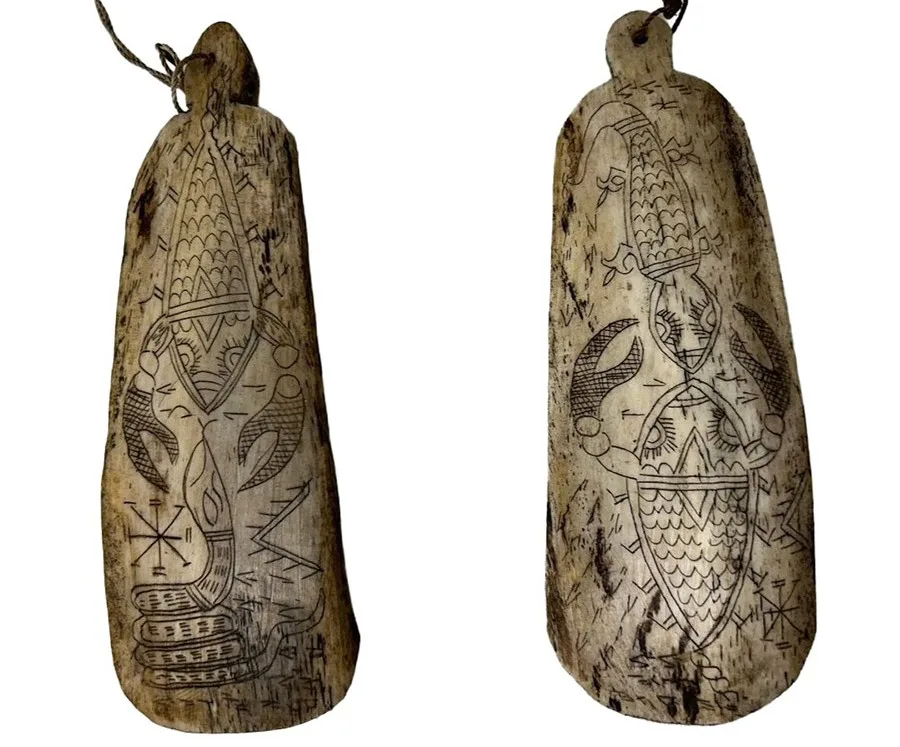
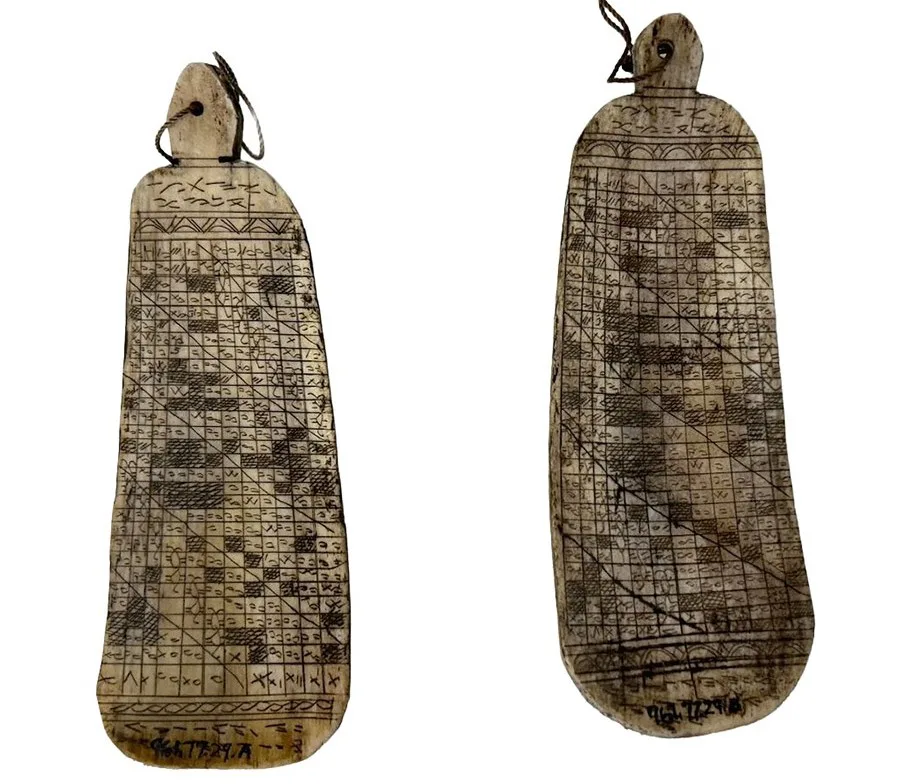
This pair of engraved bone ritual calendars, known as porhalaan, originated from the island of Sumatra in Indonesia. The calendars, which are shaped like shoehorns, feature carvings of scorpions, snakes, and lizards on one side. These animals all hold symbolic significance in Batak spiritual practices due to their power. On the other side, the traditional Batak calendar system of boxes and stroke marks is carved into the bone. Unlike the typical use of a calendar as a timekeeper to track the movement of the sun, ritual leaders used porhalaan to consult the cosmos and determine spiritually powerful times for ceremonies.
Bottle
Sawankhalok, Thailand
#2023.12.E.201
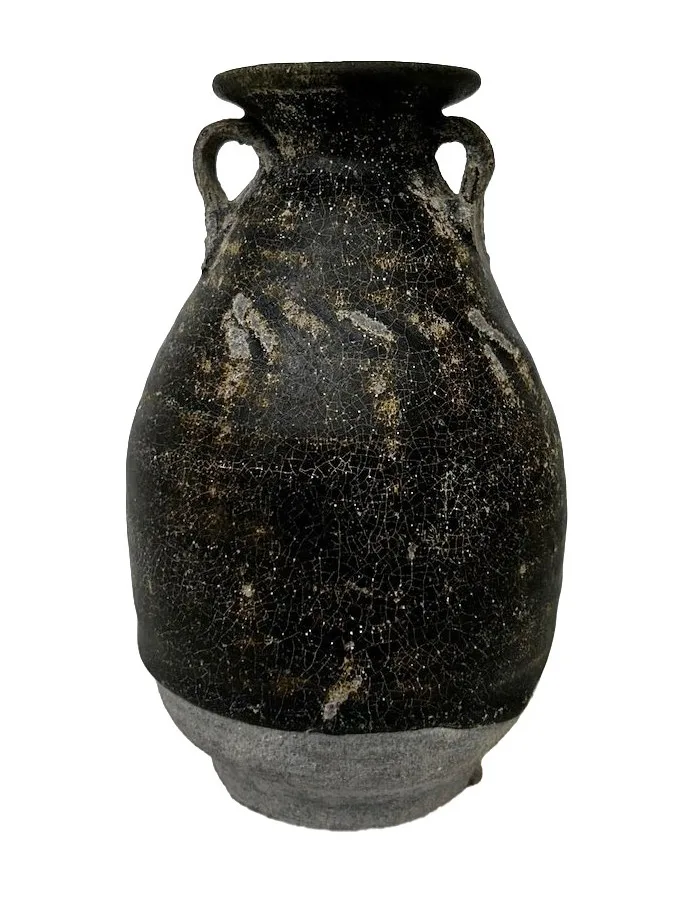
Sawankhalok style ceramics originated in the Si Satchanalai region of Thailand and are known for their dense stoneware body and distinctive dark glazes. This bottle has a typical rounded body, a glaze made from iron oxide, and small lug handles at the top of the vessel–often called “ears” by museum curators. The base of the bottle remains unglazed, showing how the creator dipped the vessel before firing it in a kiln. These jars were significant trade items from the 14th to 16th centuries during the emergence of global maritime trade.
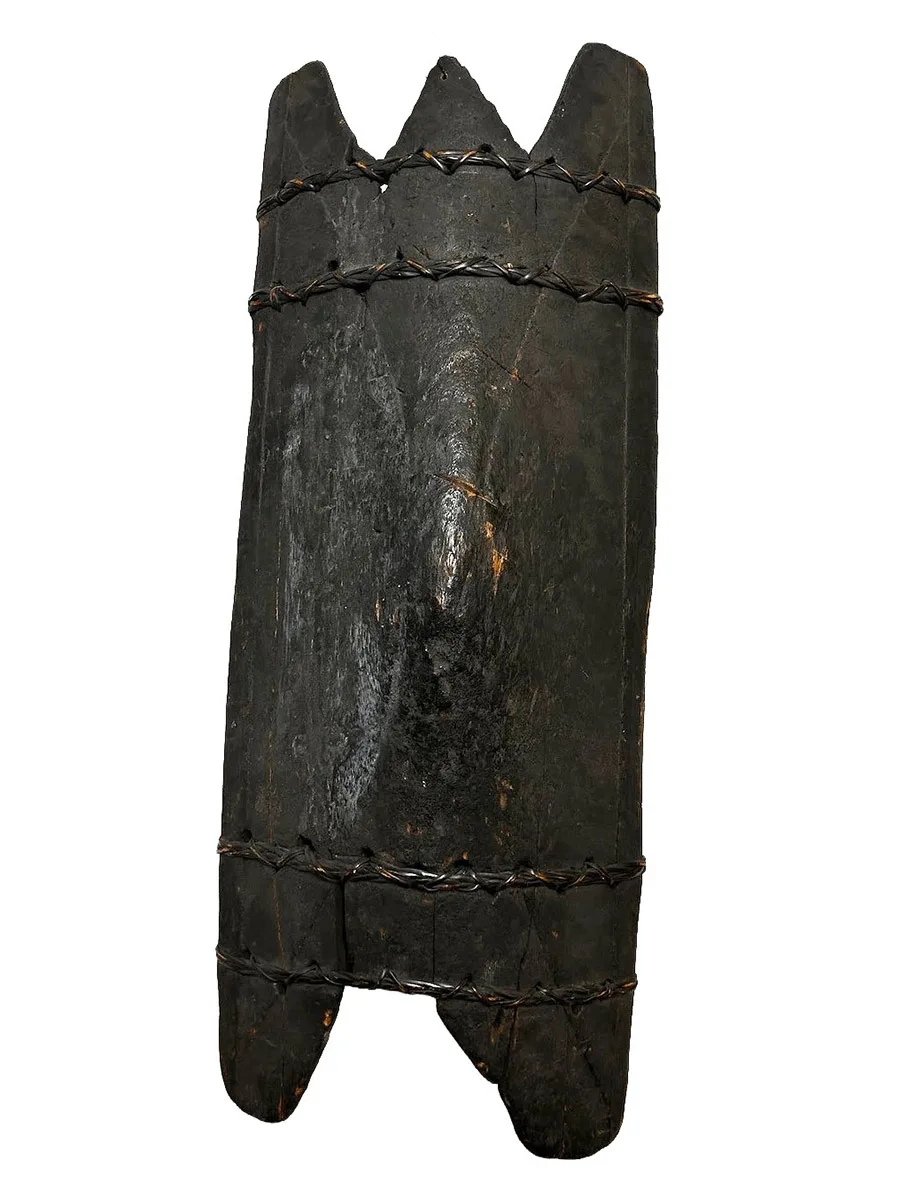
Shield
Bontoc, Philippines
#2023.12.E.168 ● Written by Teddy Cohen
Mid-20th century Filipino warriors defended themselves in battle with this type of wooden shield. Originating with the Cordillera peoples of Luzon, this shield was used in warfare, hunting, and ceremonial dances. It is made from wood covered in resin to increase its durability. Referred to as a kalasag, the shield is also a symbolic extension of the man who carried it. To show off, the shield can be beaten with sticks like a drum. Beaten together with other men, their shields connect them together as a community, especially in times of battle.
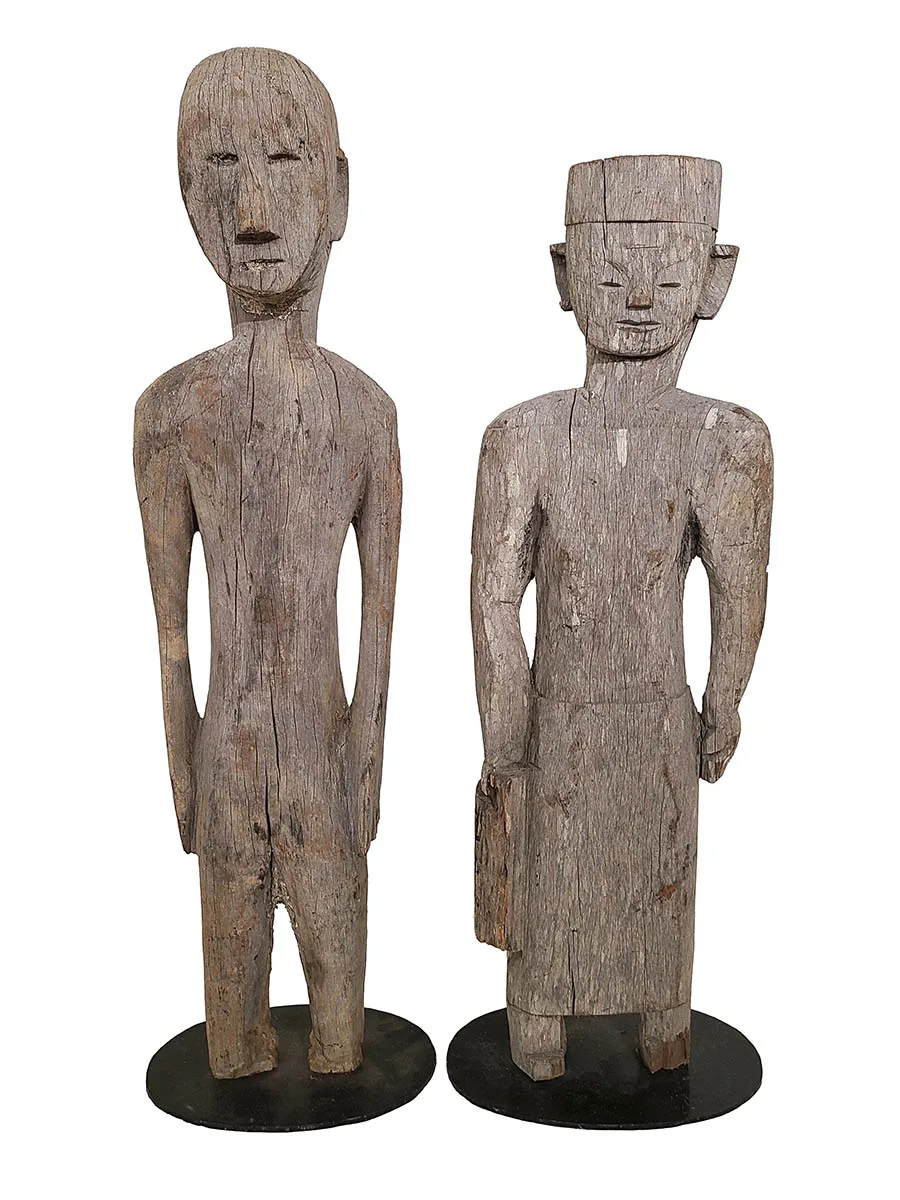
Statues
Jarai, Vietnam
#2023.12.E.84 & .85 ● Written by Alistair Norwood
The Jarai people of highland Vietnam traditionally place these wooden statues outside of tombs. After death, the deceased and their possessions would be placed in a small hut surrounded by wooden pillars. Statues like these would then be placed on top, as they are believed to protect those who have passed away while funeral traditions are completed. Jarai funerals are quite complex, often spanning multiple years. Following the Vietnam War, many tombs were abandoned, leading to their guardian figures being moved to museums.