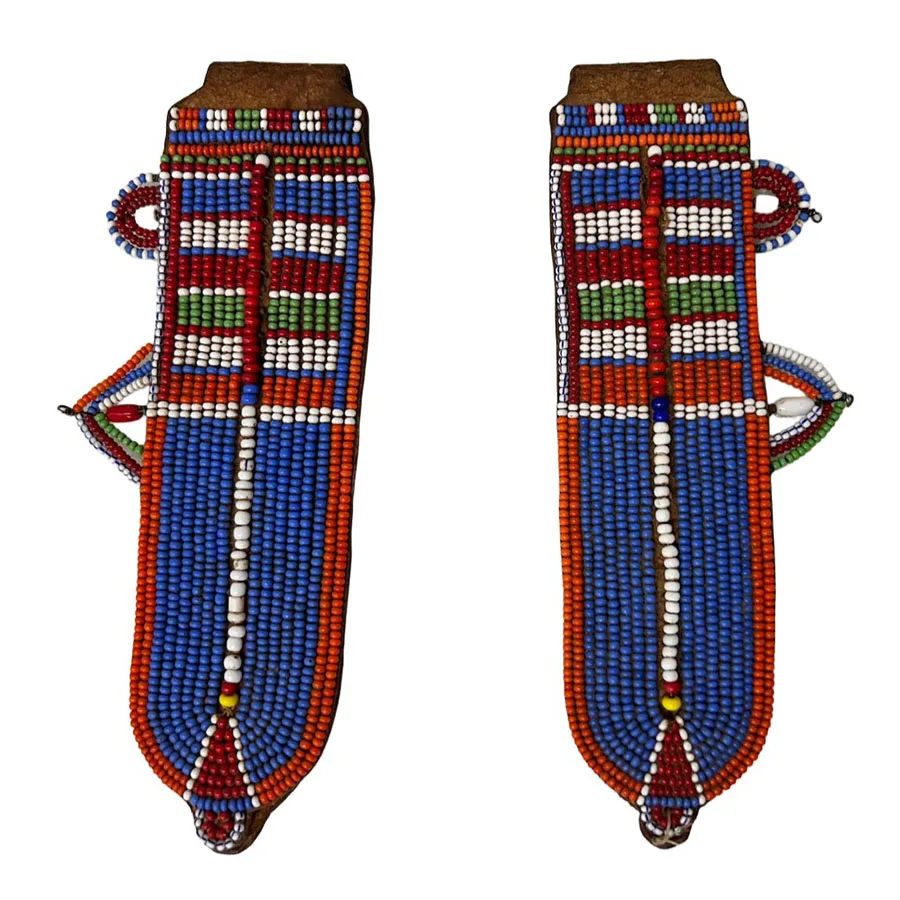
Indigenous North America
These objects from the Indigenous peoples of North America represent highlights from the UNC-Wilmington Collection, acquired by the Lam Museum to preserve the legacy of the former Museum of World Cultures.
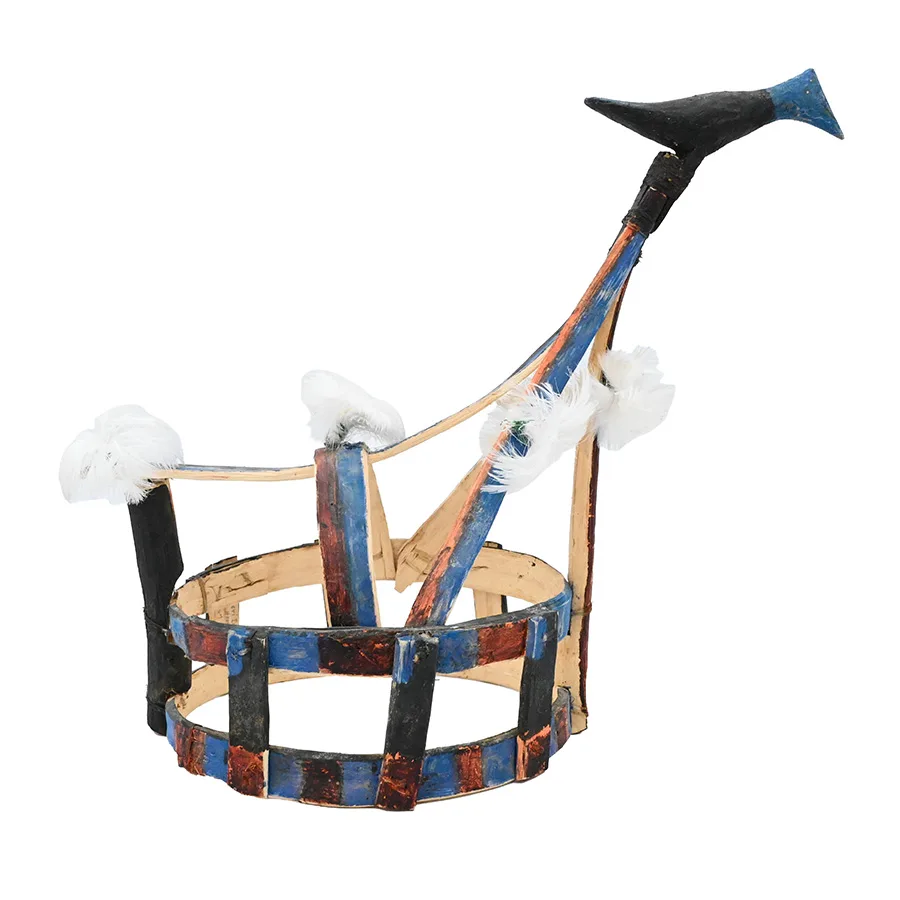
Crown
Seri, Mexico
#2023.12.E.165 ● Written by Jasmine Standez
This crown is constructed from strips of wood from the Jatropha bush tied together with animal sinew. This base is topped by a carved bird and tufted with seagull feathers. It is colored with red ochre and “Seri blue,” a pigment made from local clays and the resin of the Guayacan tree. The Seri, indigenous peoples from Tiburón Island and the Sonoran Desert, wore crowns like this one for religious purposes. Today, they are sold to tourists for profit.
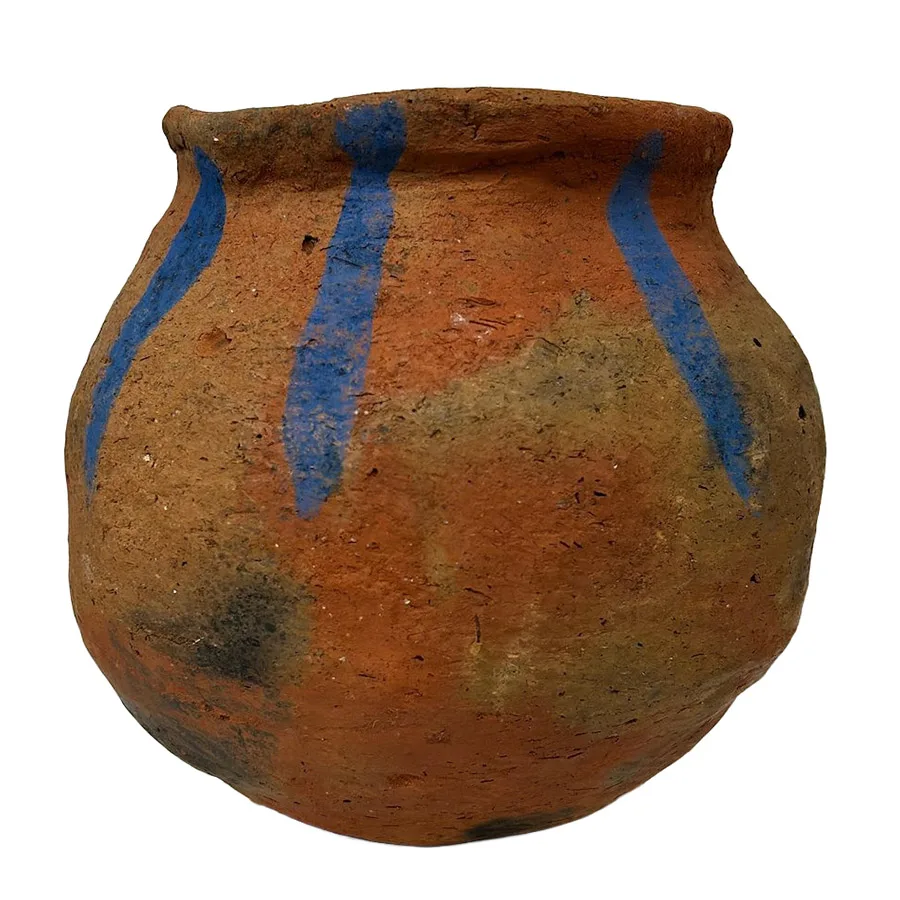
Pot
Seri, Mexico
#2023.12.E.257
Seri potters first started using bright blue paint around 1930, when they began marketing their traditional pottery as artwork to collectors. Each pot is made from clay that has been tempered with fine sand and ground rabbit dung. The clay is built up with coils and then scraped smooth. The pottery is fired in a covered pit, which often produces the dark “fire clouds” on the red clay surface. While it is still hot from the fire, the artists smooths the surface again before completing the piece with a painted geometric design.
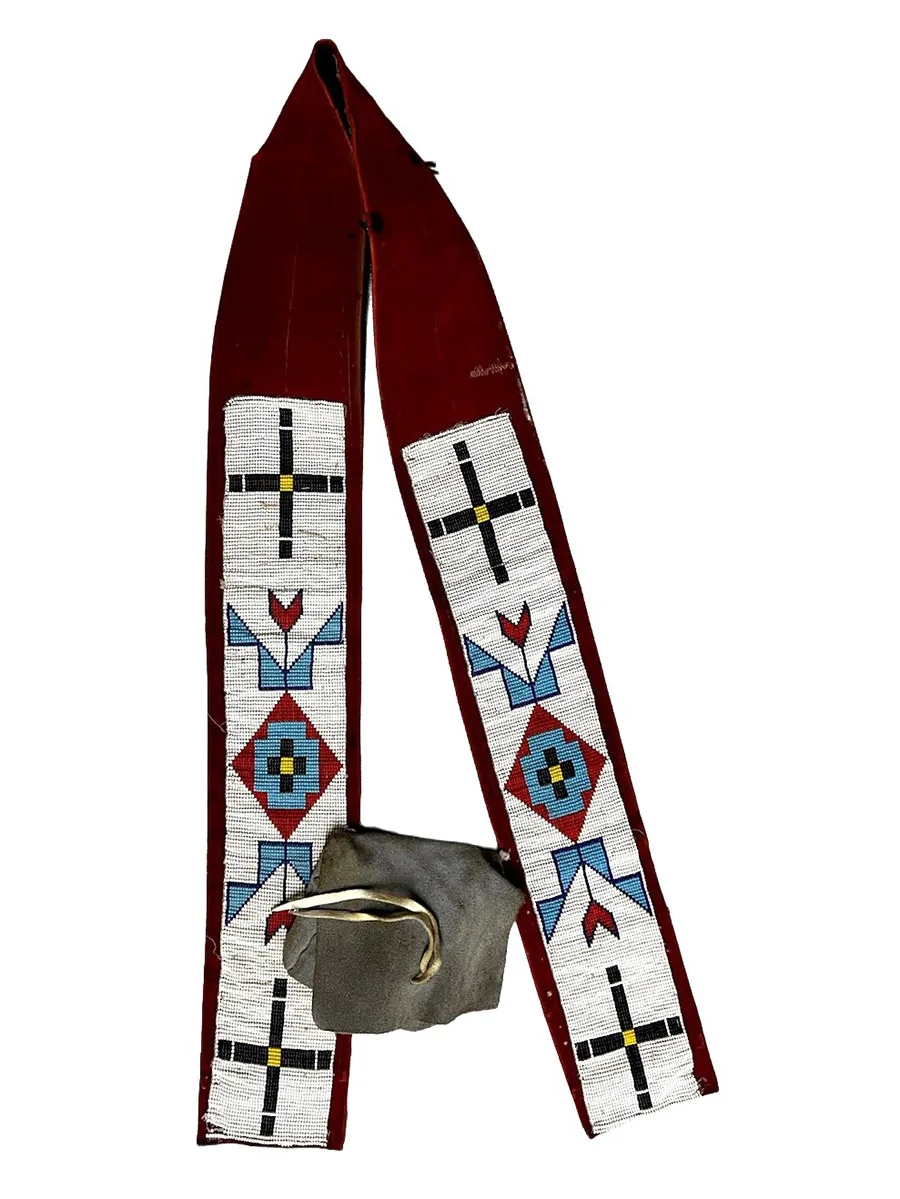
Belt
Navajo, United States
#2023.12.E.170 ● Written by Lily Kurinsky
Blue, white, red, black, and yellow are the primary colors used in Navajo art. Although they look unified, the colored fields are actually woven together with extremely small glass beads known as “seed beads.” Weaving is a significant part of Navajo culture. Woven pieces such as rugs, blankets, and moccasins often feature intricate patterns representing aspects of Navajo culture and legend. For example, crosses (such as the ones present on this belt) represent the four cardinal directions. The bead colors can also represent mountain ranges in the American Southwest.
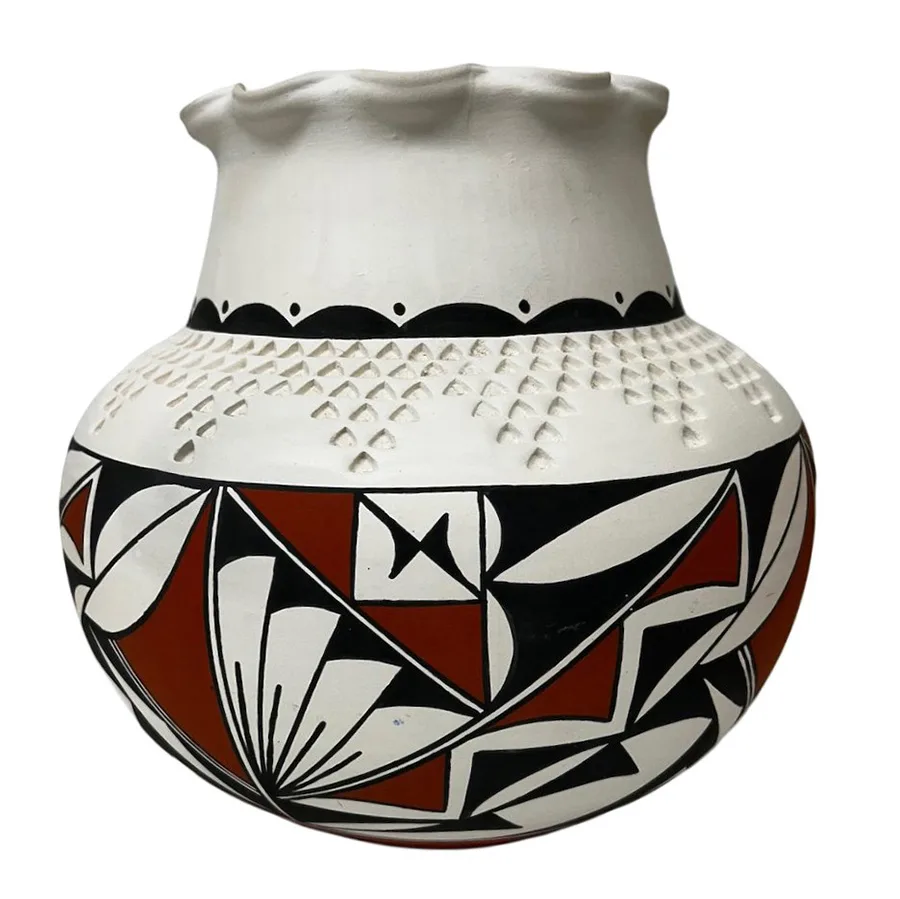
Bean Pot
Acoma, United States
#2023.12.E.250 ● Written by Pistol Chapa
The intricate patterns on this bean pot symbolize core values of the Acoma people, with the white base representing Mother Earth. Traditionally, Acoma pots were used for storing and carrying water, vital in the arid landscapes of the American Southwest. The potter, Ophelia S. Leon (b. 1966), draws inspiration from her Native American heritage, infusing her work with the narratives and traditions of her ancestors. This bean pot serves not only as a representation of Acoma art but also as a vital connection to the cultural identity and practices of the Acoma people.
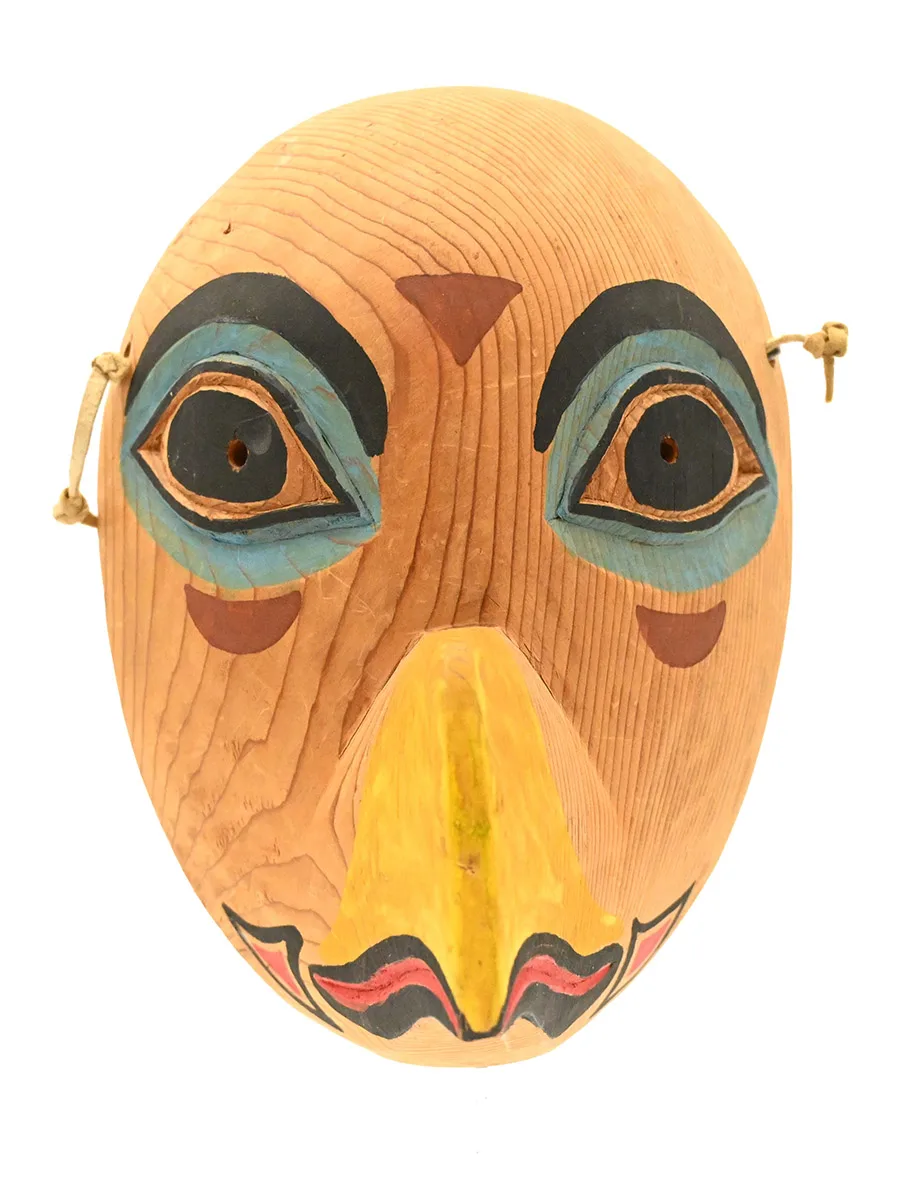
Mask
Tlingit, United States
#2023.12.E.126 ● Written by Alexandria Dove-Ali
This eagle mask was made by Willie Marks (1901-1981), a member of the Tlingit tribe, from Juneau, Alaska. Marks’ Tlingit name was Keet Yaanaayí. Marks is recognized as one of the finest carvers of his generation. In addition to making masks, he was also well known for his model totem poles, which helped maintain that art form during a time when full-sized totem poles were not being made. The eagle is one of two ritual groups that the Tlingit people divide into. The other is the raven.
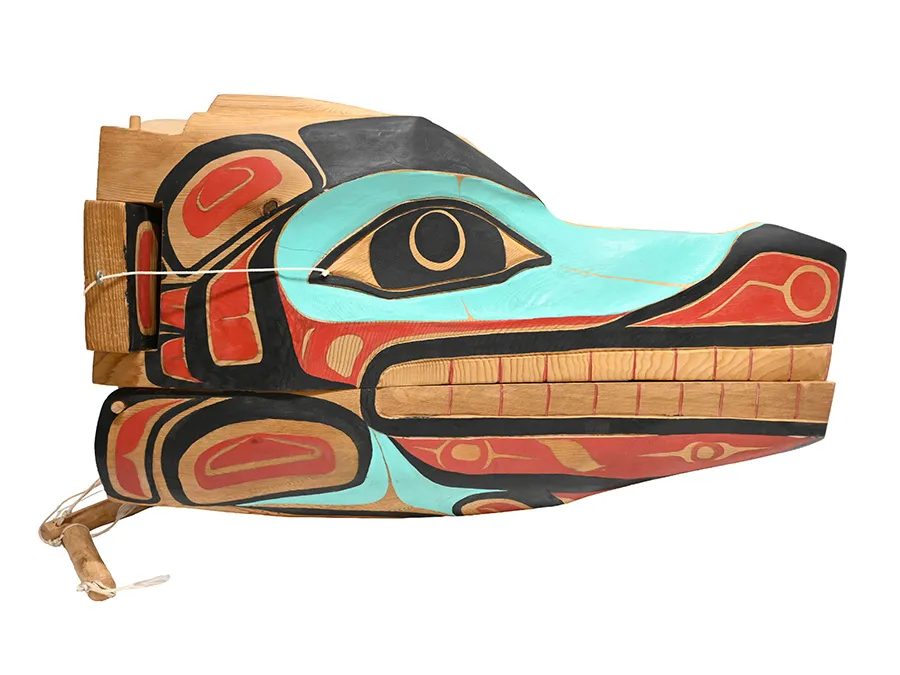
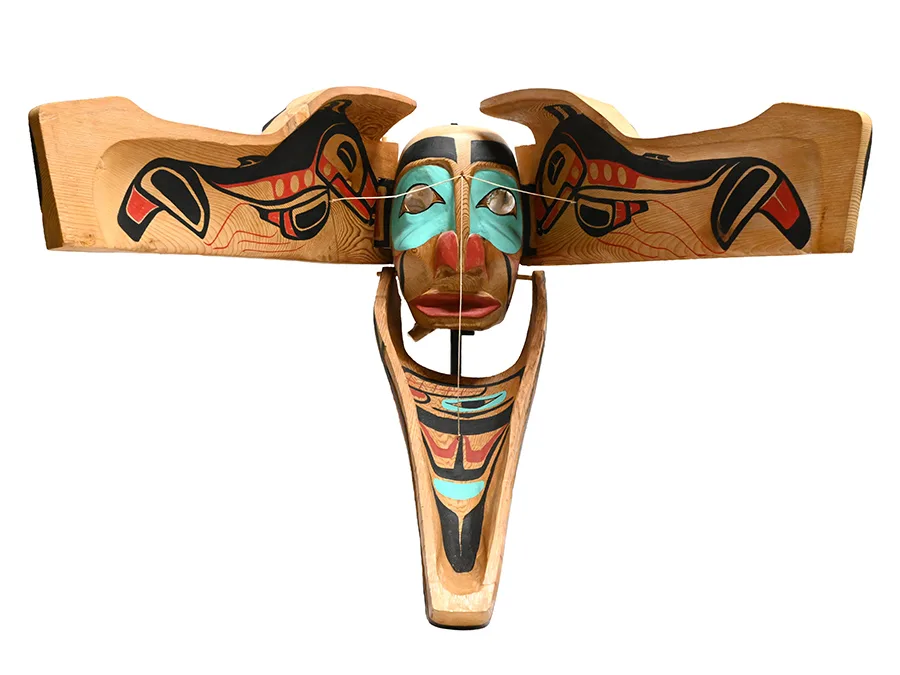
Mask
Northwest Coast, United States
#2023.12.E.166 ● Written by Leni Dethlefs
This contemporary transformation mask represents a wolf, but it features a unique opening mechanism, revealing an ancestral human face behind the animal’s features. The mask was carved from cedar in the Formline style, a traditional Northwest Coast technique of smooth-flowing, symmetrical lines in bright colors. Transformation masks were traditionally used in ceremonial dances to symbolize the dancer embodying both human and animal identities. Historically worn by individuals of high status, masks were outlawed by Christian missionaries in the late 19th and early 20th centuries. Today, Indigenous communities throughout the country are reclaiming their cultural heritage by creating new masks and fighting for the return of historical ones.
Carving
Unknown, United States or Canada
#2023.12.E.74 ● Written by Alexandra Ensrud
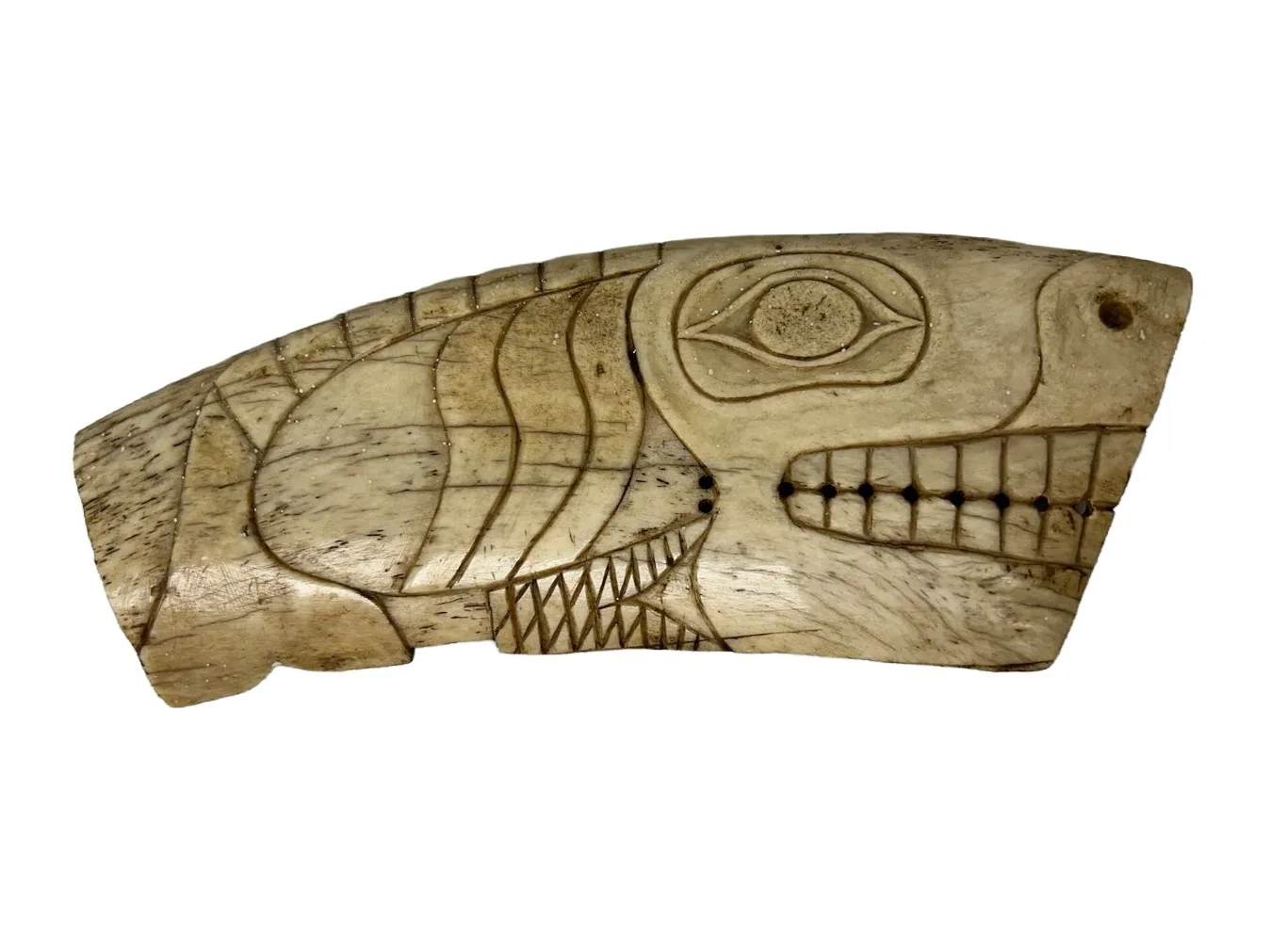
Not everything from the Museum of World Cultures could be easily identified. This carving in the shape of a whale originates from somewhere in the Arctic region of North America. Unfortunately, the precise cultural origin is unknown, as well as the period in which it was created. The paperwork that documented the carving’s context went missing before it was transferred to the Lam Museum. However, there are some clues to its origin based on its style. While it has the color of bone, it may be made from ivory, which is available in the Arctic from walruses and sperm whale teeth.
Carving
Inuit, United States
#2023.12.E.37
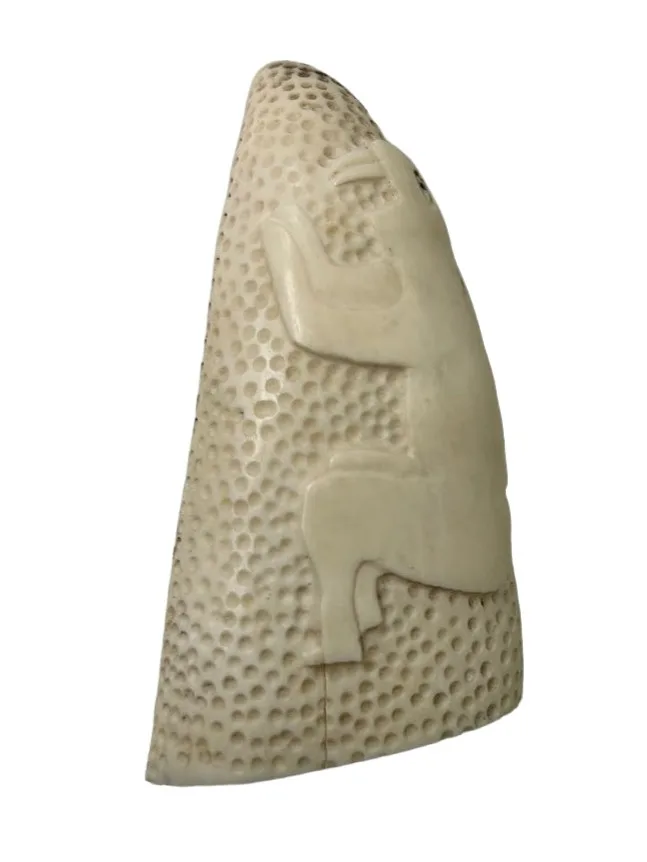
A strange creature hunches over in this carving, brought to life in low relief. It has the distinct curved tusks of a walrus, but the body and posture of a human. It likely represents a shaman mid-transformation, displaying their ability to shift between animal and human worlds. This carving is rendered on an ivory tooth from a sperm whale, which became popular with Inuit artists in the 19th century. By the 20th century, carvings like this one often featured depictions of magic and rituals to appeal to foreign tourists.
Amulet
Northern Plains, United States
#2023.12.E.89 ● Written by Alexandria Dove-Ali
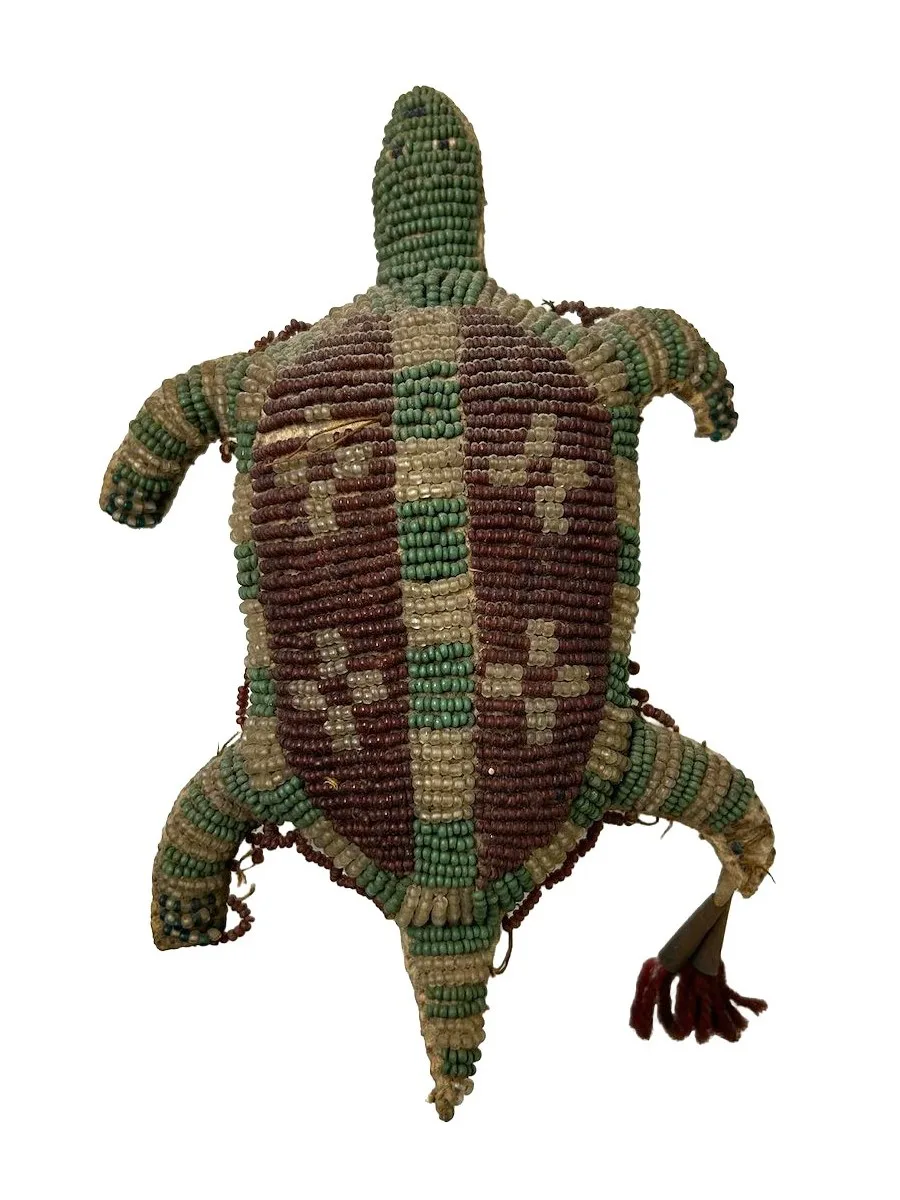
This protective amulet is similar to those made by the Cheyenne people to contain a baby’s dried umbilical cord. Once it fell off, the mother would wrap it in a soft material and sew that bundle into an amulet decorated with beadwork. The amulet, which was kept into adulthood, ensured heath and a long life. Turtle-shaped amulets were often made for girls because turtles were connected to women’s medicine, and they would provide protection from the dangers of pregnancy and childbirth. Turtles are also connected to a common Indigenous creation myth in which the first dry land was created on a turtle’s back.
Shield
Miniconjou, United States
#2023.12.E.107 ● Written by Bo Taliaferro
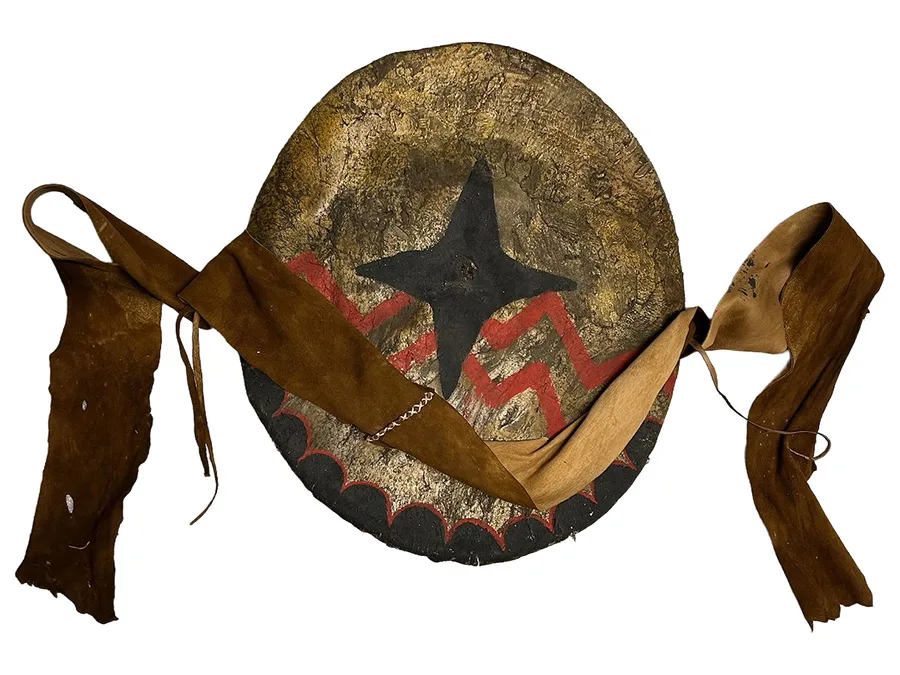
This ceremonial shield is crafted from buffalo hide. The painted symbols reflect both the physical location and spiritual traditions of the Miniconjou Lakota people. The dark, star-like design at its center symbolizes protective energy, while the red zigzag patterns evoke lightning or thunder, referencing the power of the Lakota people’s “Thunder Beings” for strength in battle. Shields like this were used for physical defense and also served as sacred objects that channeled spiritual protection for the user.
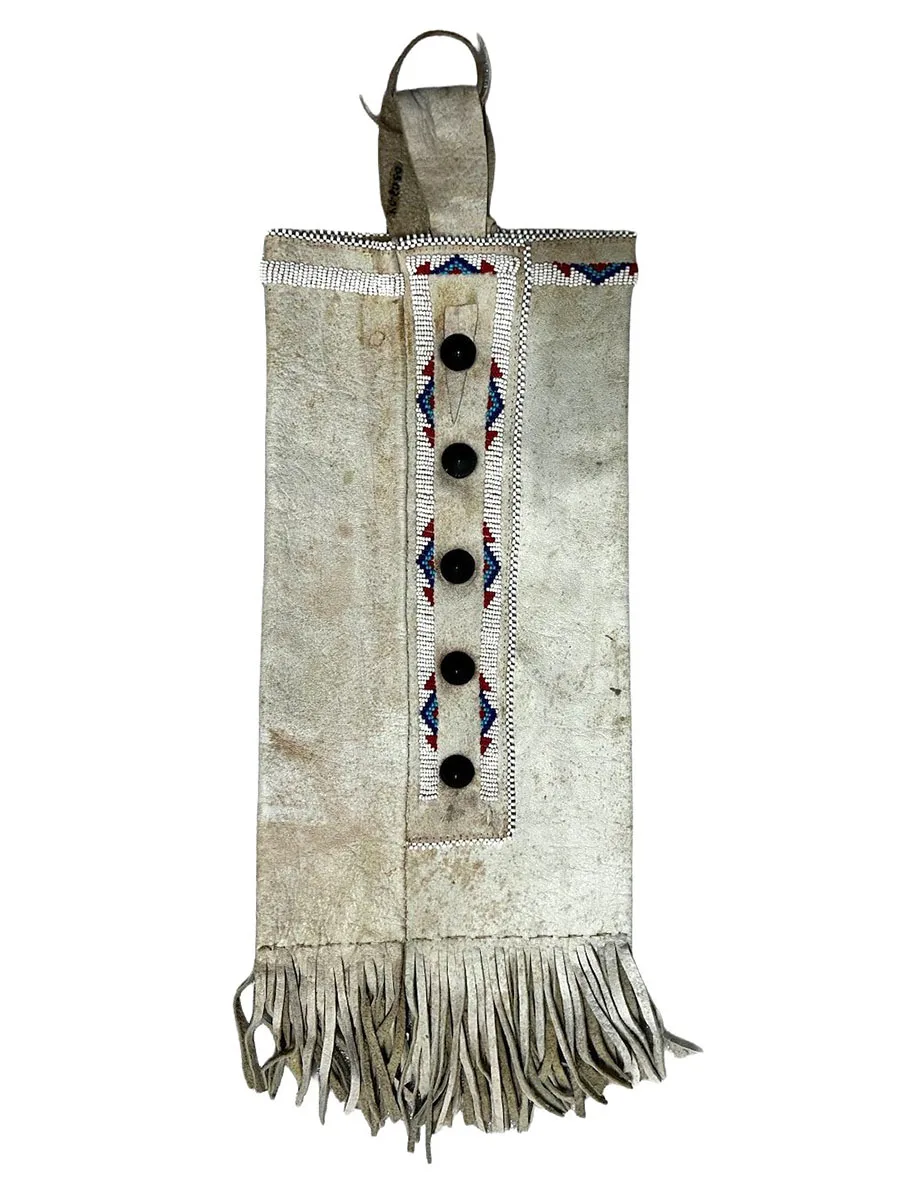
Pipe Bag
Cheyenne, United States
#2023.12.E.171 ● Written by Becca Bloom
Essential, Prestigious, Scared. These three words describe the value of pipe bags to the Cheyenne people. Pipe bags were used throughout the 19th century for ritual ceremonies and were part of everyday life. Pipe bags were typically made by Cheyenne women. This modern bag has small triangle designs made from white, blue, and red beads, as well as a fringed bottom and five buttons going down the middle. Some pipes continue to be used in sacred contexts today, but many are created for art, tradition, or to be used in secular ceremonies.