Africa
These objects from Africa represent highlights from the UNC-Wilmington Collection, acquired by the Lam Museum to preserve the legacy of the former Museum of World Cultures.
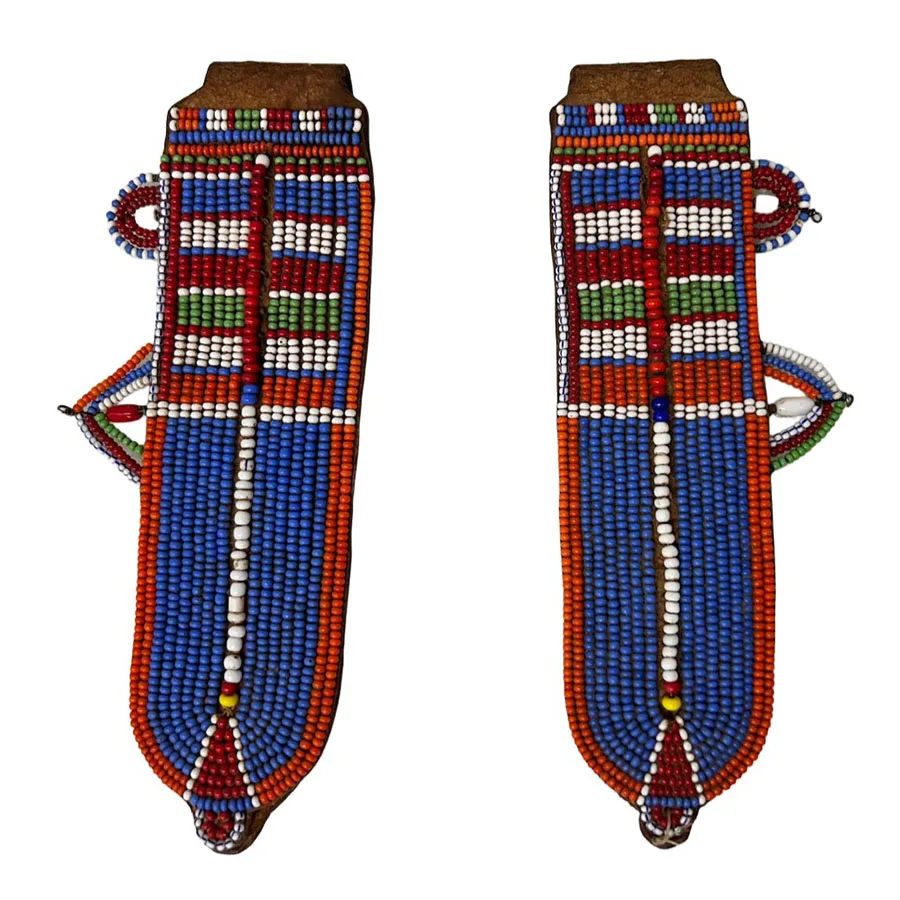
Pendants
Maasai, Kenya
#2023.12.E.102.a-b
Originally worn for ceremonial purposes, beaded pendants worn from the ears became popular souvenirs with explorers, colonists, and missionaries in the early 20th century. Influenced by European demand, Maasai artisans began creating even more vibrant, glass-bead jewelry which fed a growing market of safari tourists. By the time these pendants were acquired by the MOWC, such objects were a common part of ethnographic museum collections, reflecting both traditional Maasai craftsmanship and the impact of colonialism and global exchange.
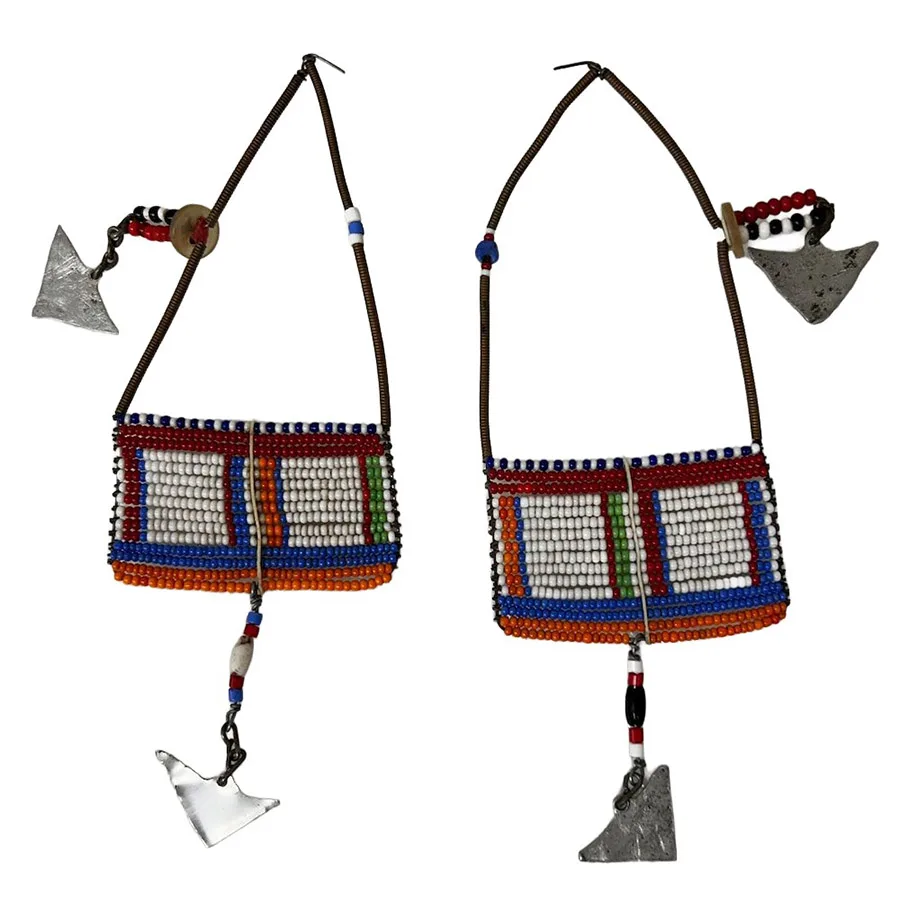
Earrings
Maasai, Kenya
#2023.12.E.101.a-b
Wire-framed jewelry strung with colorful glass beads have been a part of Maasai artistry for 100 years. Beyond artistic choice, beaded jewelry also reflects its wearer’s position within Maasai culture, such as age, social status, and significant life events. The colors hold symbolic meanings: blue for energy, red for bravery, green for health, orange for warmth, yellow for fertility, white for purity, and black for unity.
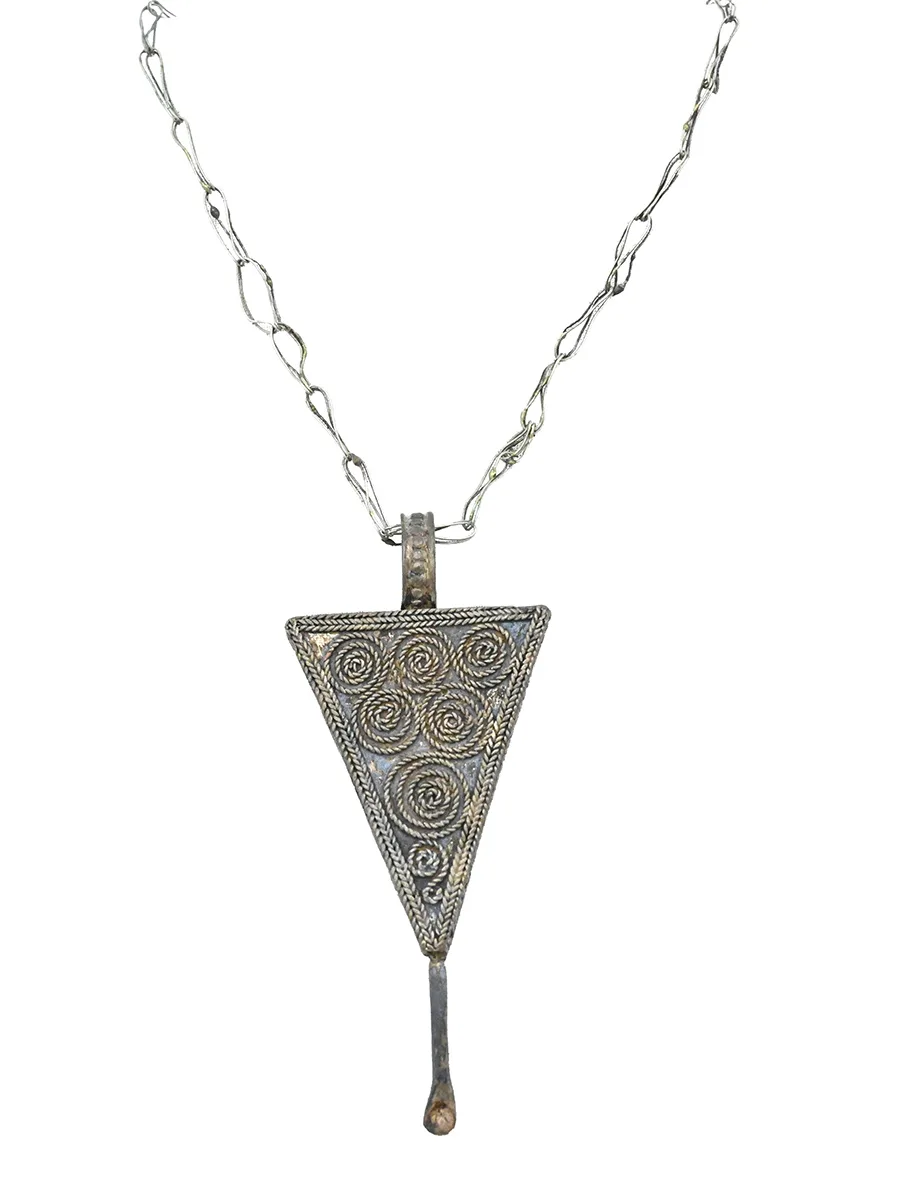
Necklace
Coptic, Ethiopia
#2023.12.E.28 ● Written by Alexandria Dove-Ali
The pendant on this necklace features a small spoon. Known as an ear spoon, it is used to remove earwax. Traditionally, Ethiopian Coptic Christians believe that it is important to clean one’s ears out before attending church in order to better hear the word of God. Ear spoons are used by many different cultures around the world.
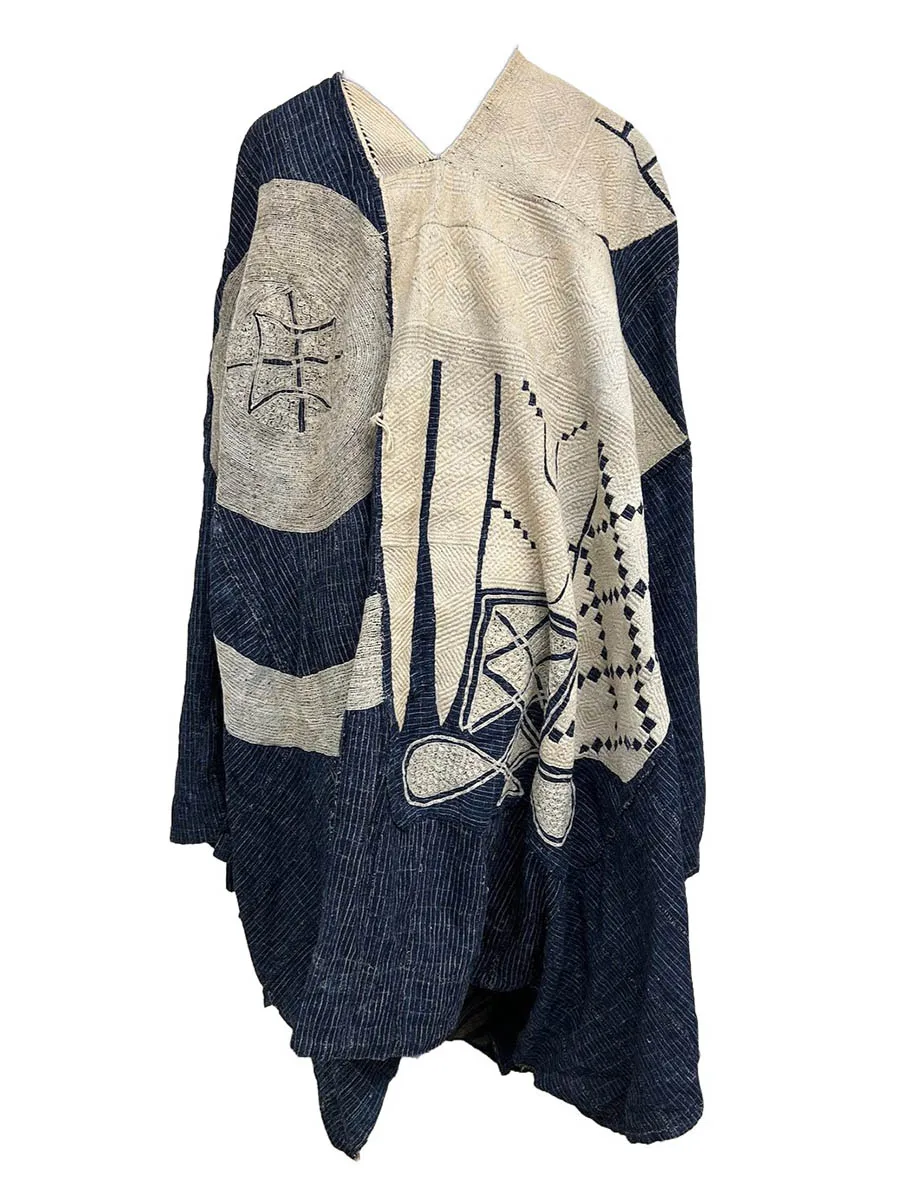
Robe
Nigerian, Nigeria
#2023.12.E.14
This large robe, dyed with indigo and embroidered with white geometric designs, is traditionally worn by both men and women across West Africa. Often called a boubou after a loose-fitting caftan from Senegal, this prestigious garment has been a symbol of high status since the adoption of cotton cloth over 1000 years ago. Boubous became popular through the spread of Islam in the 19th century and have grown to become a symbol of pan-African culture and the African diaspora.
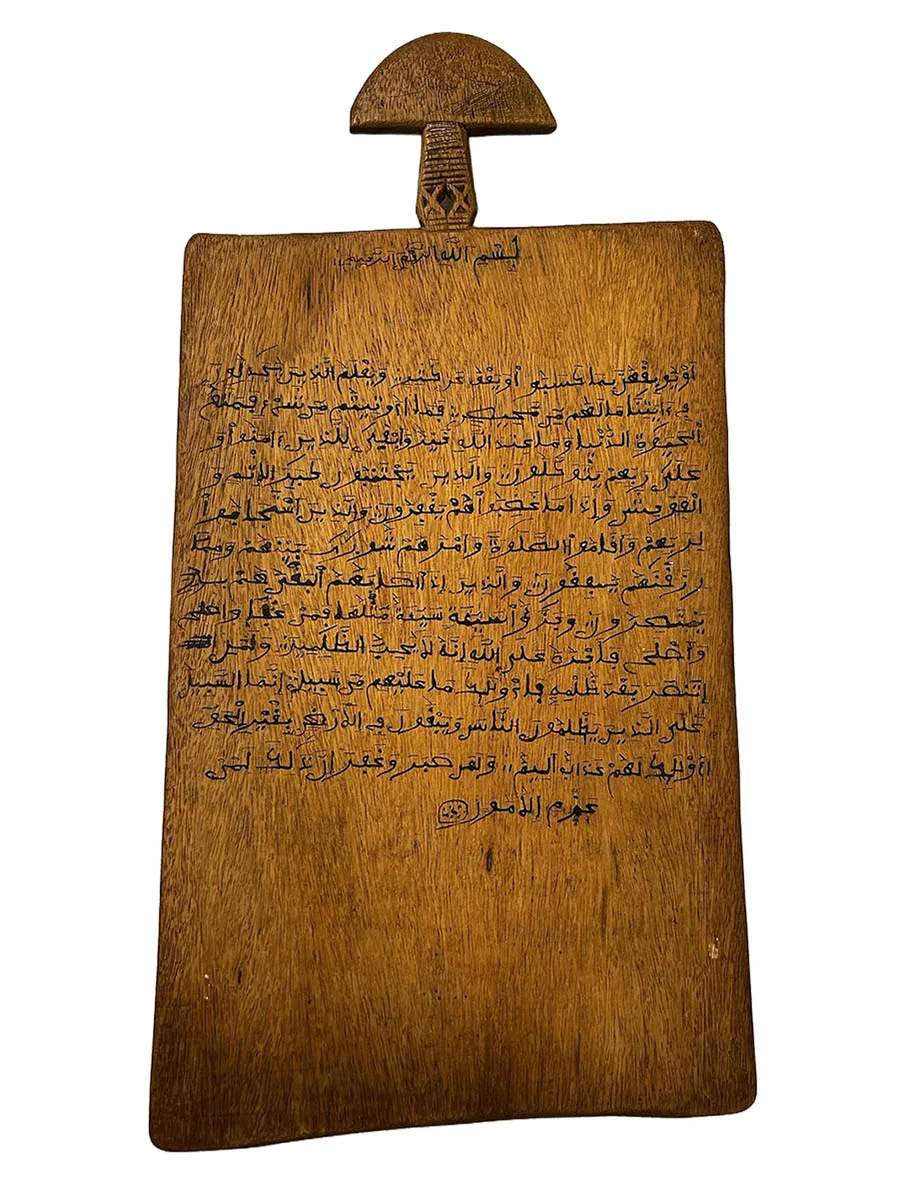
Tablet
Islamic, Nigeria
#2023.12.E.149
Wooden boards, known as a lawh in Arabic, are used to memorize and write passages from the Quran. Arabic script is used for this purpose regardless of the local language, reflecting the shared scriptural basis of Islam. The crescent-shaped top handle is a style common to West Africa, though the crosshatched design and diamond cut-out are decorative details unique to this object.
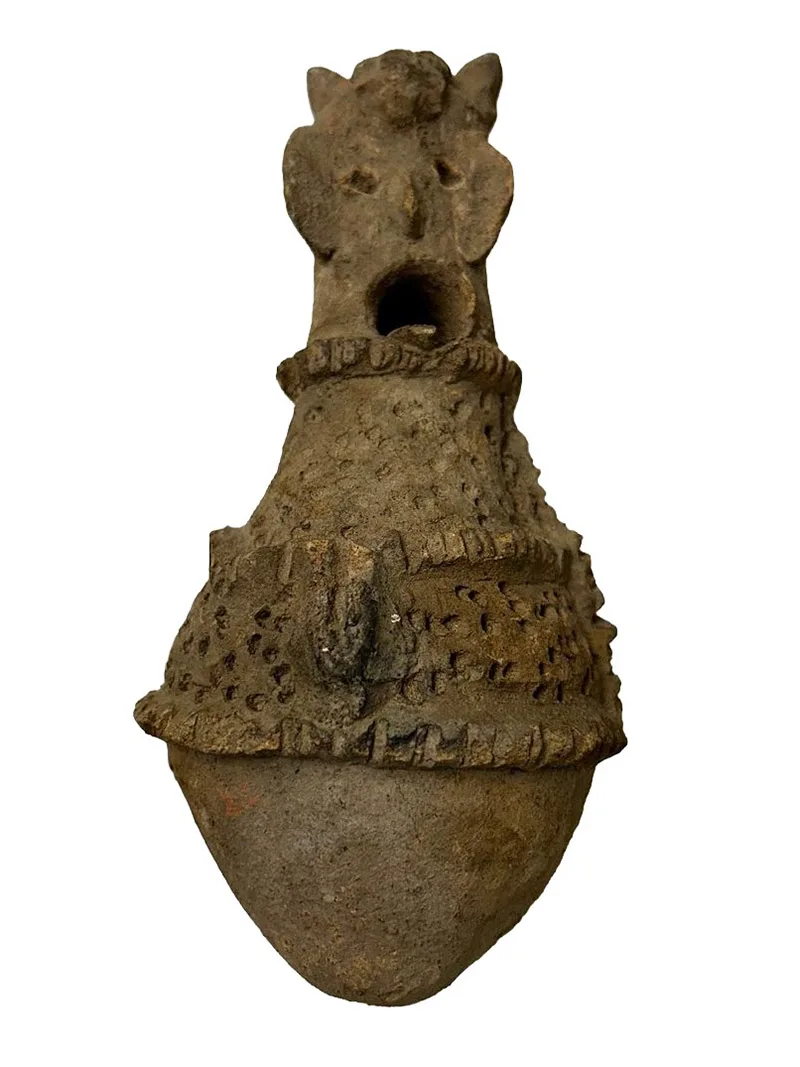
Pot
Longuda, Nigeria
#2023.12.E.153
Anthropomorphic ceramic pots play an important role in traditional Longuda healing practices, particularly in the treatment of spiritual disturbances that overlap with mental health issues and neurological disorders. The medicinal pot is typically used during healing rituals, which might involve the application of herbal concoctions taken from the pot, prayers, and incantations. The open mouth is both functional and symbolic of the vessel’s role in receiving and transmitting healing knowledge.
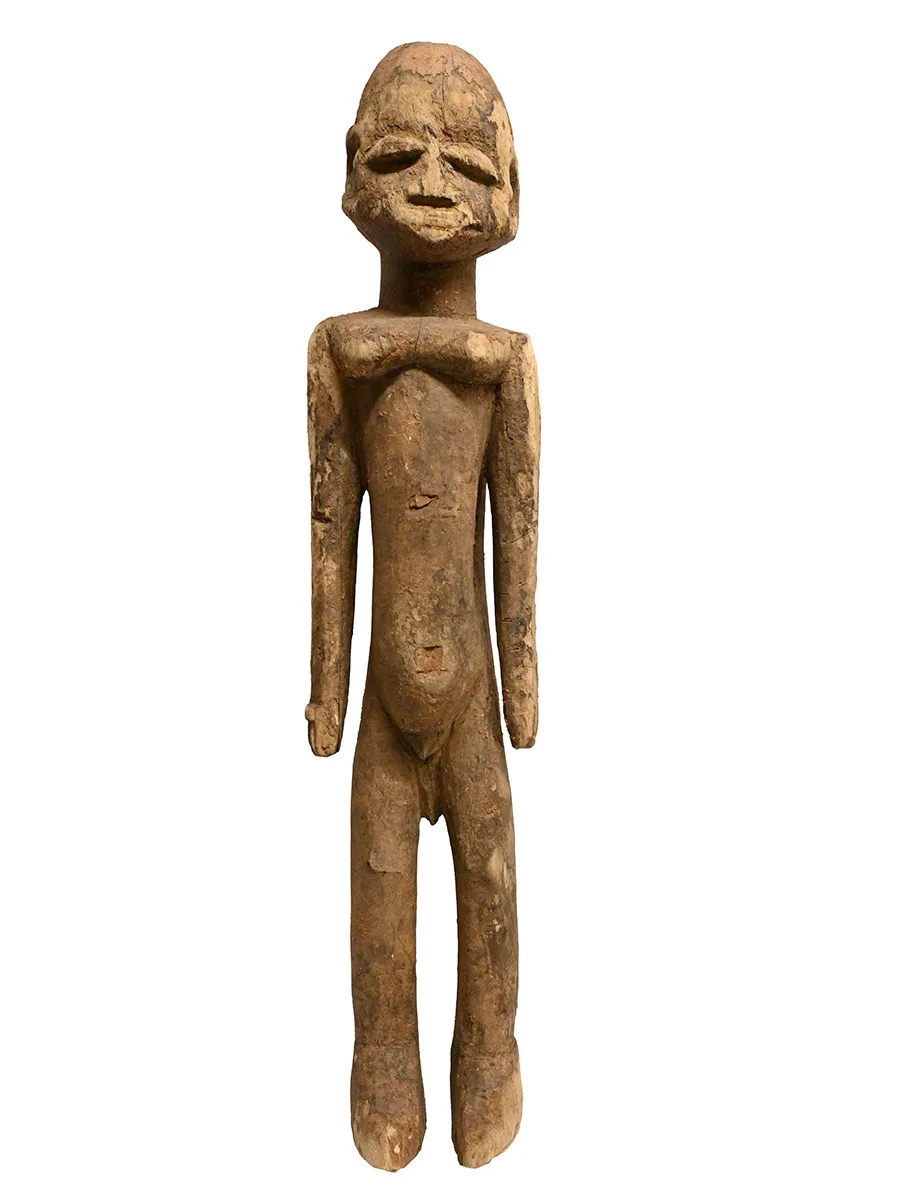
Figure
Lobi, Burkina Faso
#2023.12.E.186
This figure was used in Lobi rituals to honor ancestors. While we do not know its exact origin, it was sold to European or American collectors when they became interested in African art in the 20th century, and purchased many ritual objects through colonial trade, missionary contacts, or ethnographic expeditions. Objects like this figure changed from markers of identity to commodified artworks. As sites of collection and display, museums contributed to their transformation into art, though ethnographic museums like the MOWC and the Lam Museum try to place them in their cultural contexts.
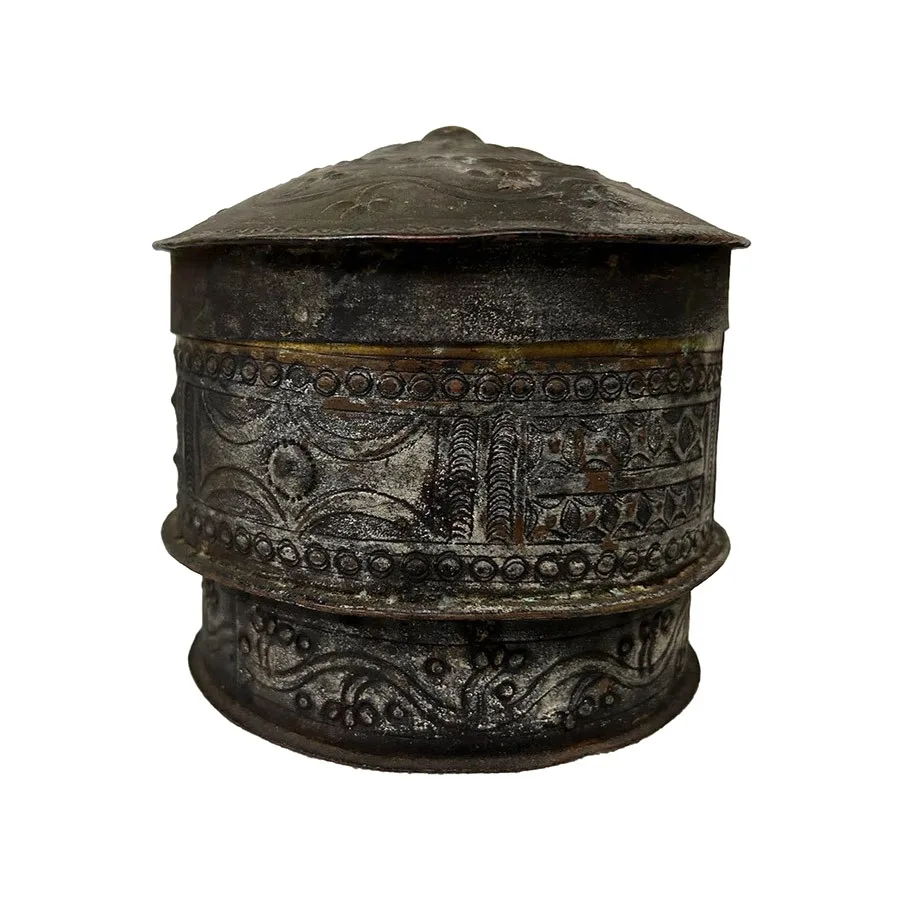
Cosmetic Container
Fante, Ghana
#2023.12.E.236.a-b
Brass containers are traditionally used to store shea butter and other cosmetic oils. Many cultures in Ghana used similar containers, which is likely why the MOWC originally identified this one as originating from the Asante people of central Ghana. However, this container was made by cutting, rolling, and stamping sheet brass, a construction technique that points to an origin in Fante communities further south. The conical lid is another clue, as this style is specific to 19th and 20th century artists working on the Ghanaian coast.
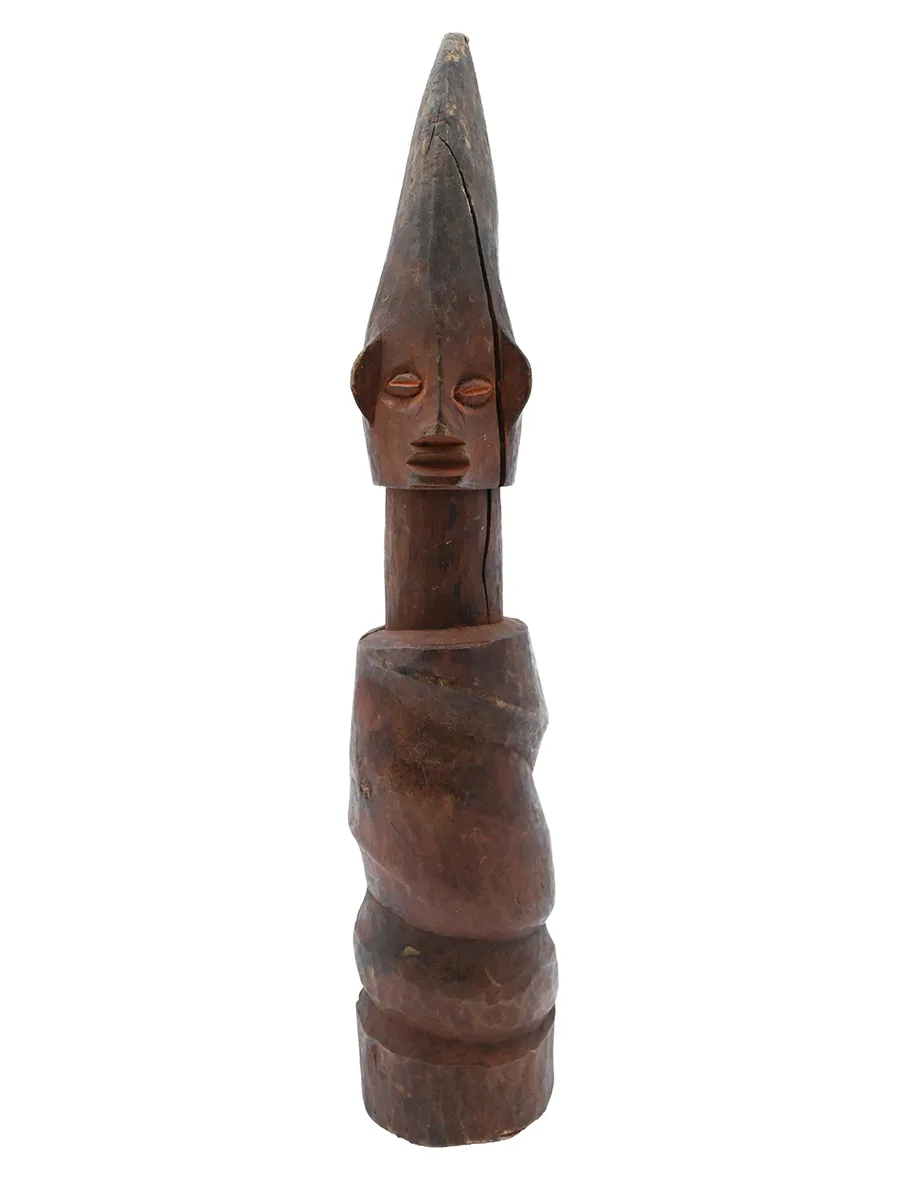
Figure
Yaka, Democratic Republic of the Congo
#2023.12.E.151
Wooden sculptures that appear to be human can actually be containers for powerful spirits. Called a kiteki in the Yaka language, this container draws in a sympathetic spirit so that its powers can be used to create miraculous effects. The human form of this kiteki is elongated and twisted into a spiral–representing the curved horns of a forest antelope, an animal thought to have a particularly close connection to spirits that live in the wild.
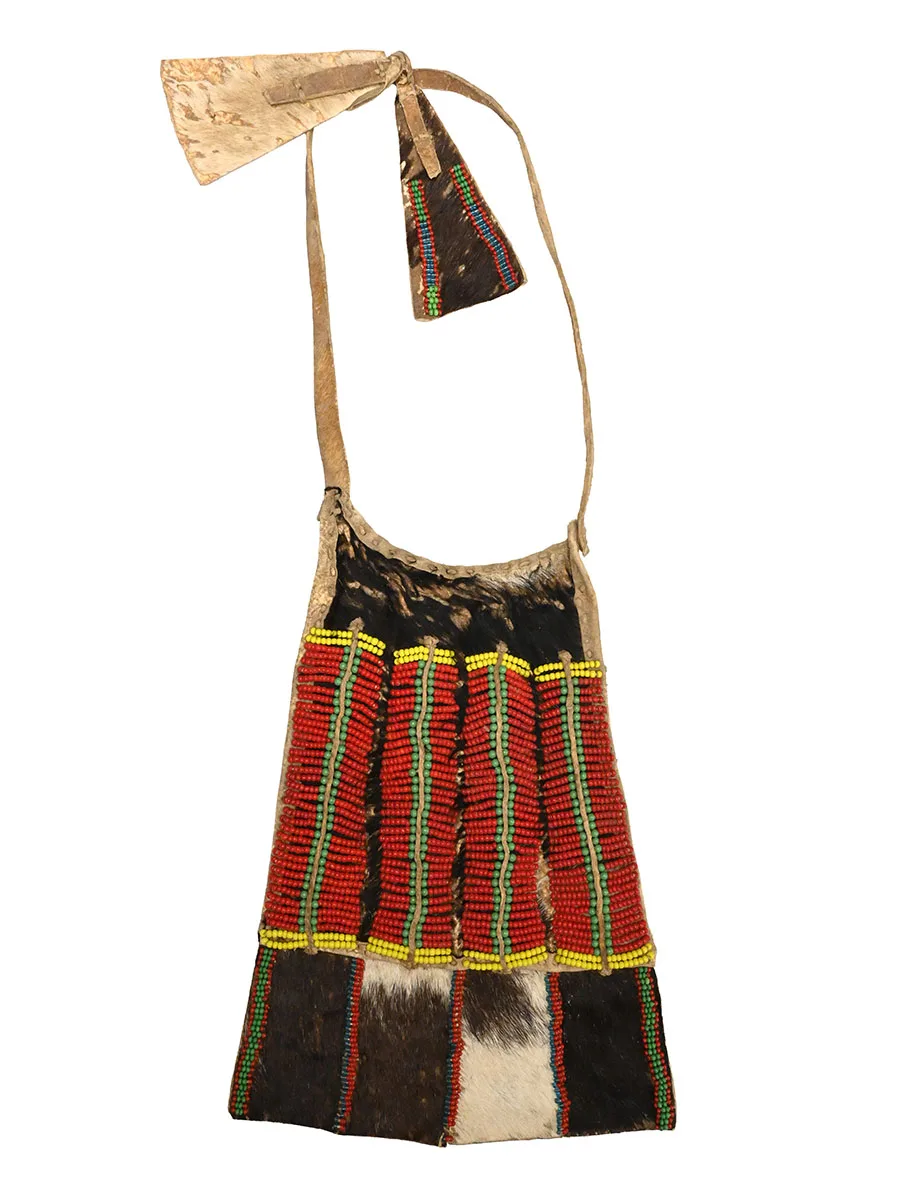
Skirt
Zulu, South Africa
#2023.12.E.193
This skirt is worn during Zulu puberty rites, a ceremony marking the transition from girlhood to womanhood. The skirt represents fertility and maturity. As part of the rites, young women are introduced to adult roles within Zulu society. The design and beadwork of the skirt are key elements in these ceremonies, though the meaning of color and pattern combinations varies from community to community. In this skirt, the red and green vertical columns might symbolize growth, with red for passion and green for fertility. The yellow rows on the ends could also represent growth, as the color is often associated with the sun and vitality.