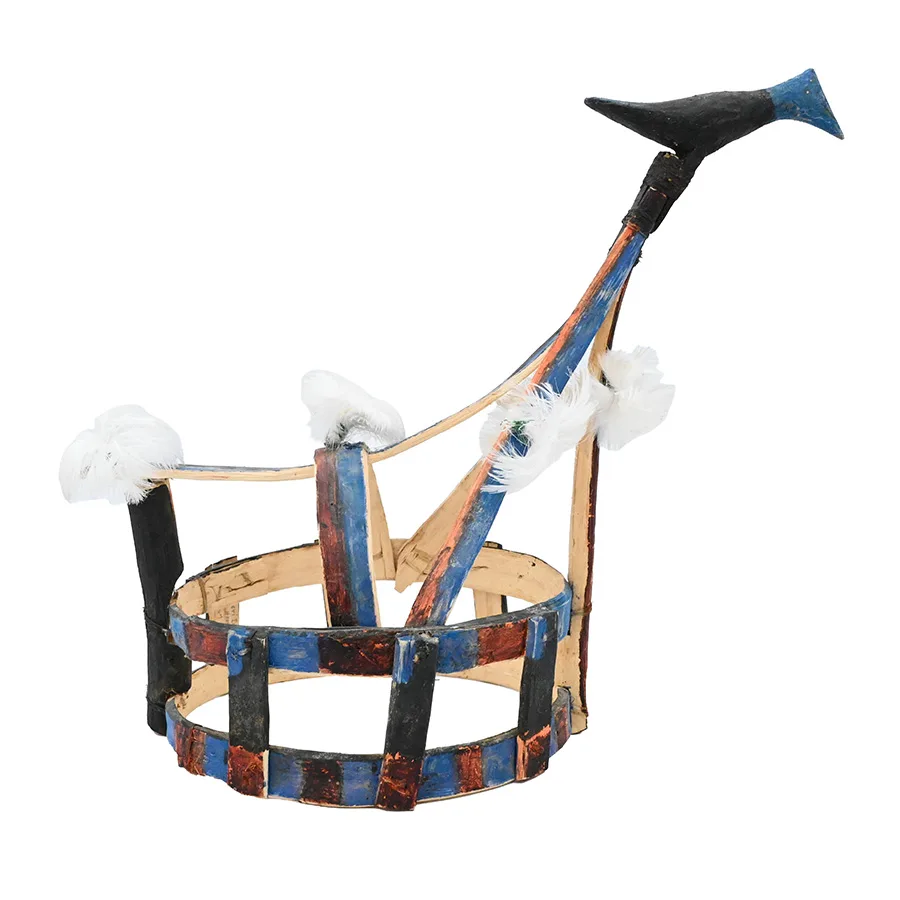
West Asia
These objects from West Asia represent highlights from the UNC-Wilmington Collection, acquired by the Lam Museum to preserve the legacy of the former Museum of World Cultures.
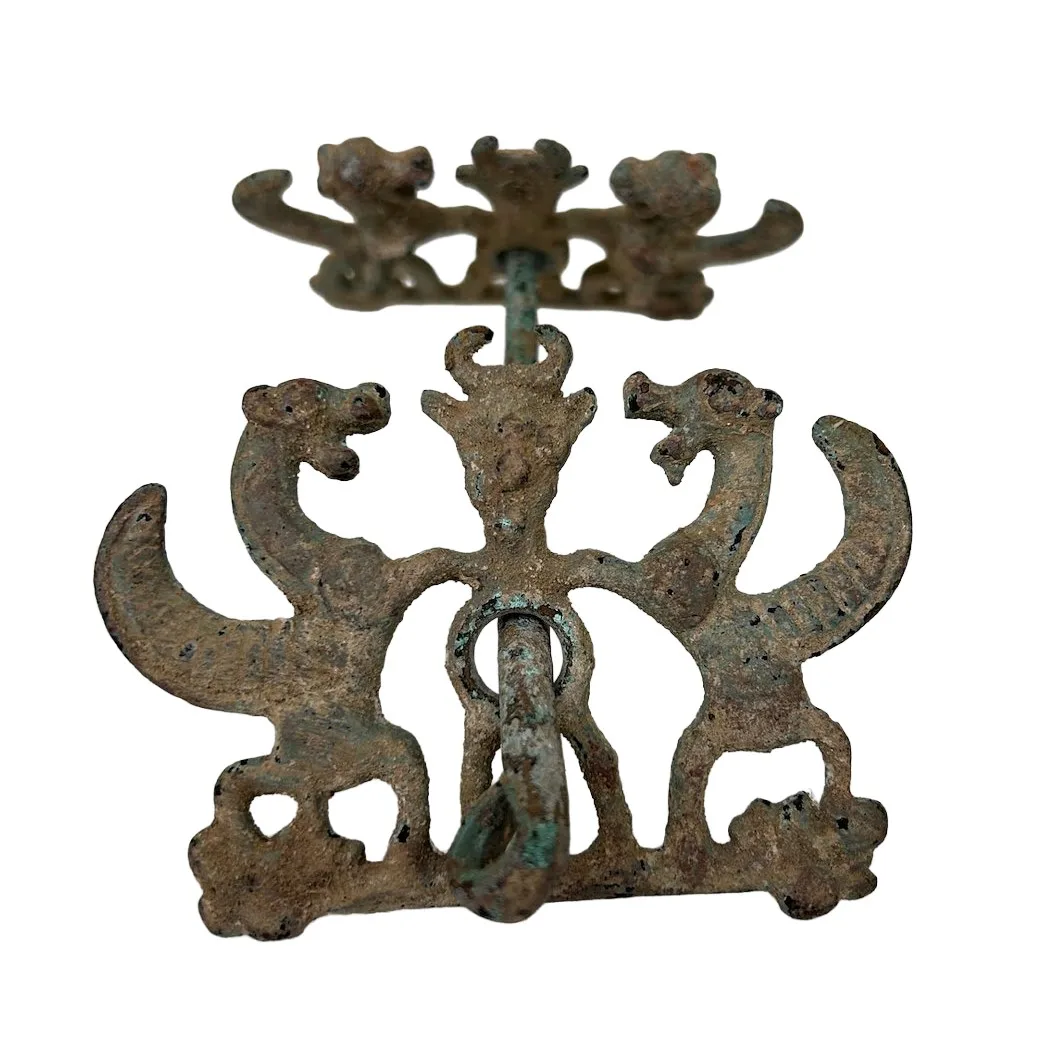
Horse Bit
Luristani (Archaeological), Iran
#2023.12.E.52 ● Written by Alexandria Dove-Ali
The people of Luristan, a mountainous region in western Iran, made a wide variety of bronze objects during the first half of the first century BCE. Little is known for certain about their society, but this horse bit likely served both functional and decorative purposes. A horse bit is placed in the animal’s mouth with the reins attached to the cheekpieces to control the horse. This piece is particularly ornate with cheekpieces featuring a scene called “master of animals” with a central figure holding two mythical creatures by the throat. This scene is common in Luristan and other ancient Near Eastern art.
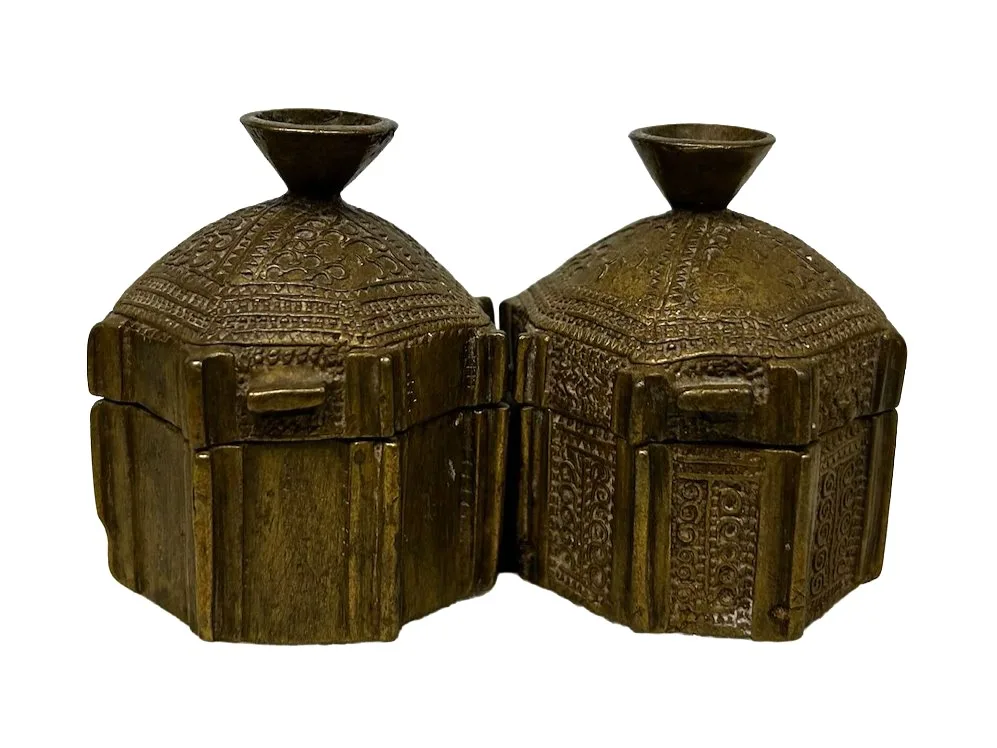
Inkwell
Persian, Iran
#2023.12.E.155 ● Written by Elizabeth Elliott
Metalworking is a difficult and time-consuming process. It takes extreme effort to extract ore, smelt it, and shape the metal into a finished object. This also means that metal objects are typically expensive. This Persian inkwell was used by writers and artists, an educated elite who were typically high status. The inkwell also has strong religious connections, as calligraphers traditionally used this type of inkwell to produce the text and illustrations of Islamic religious manuscripts.
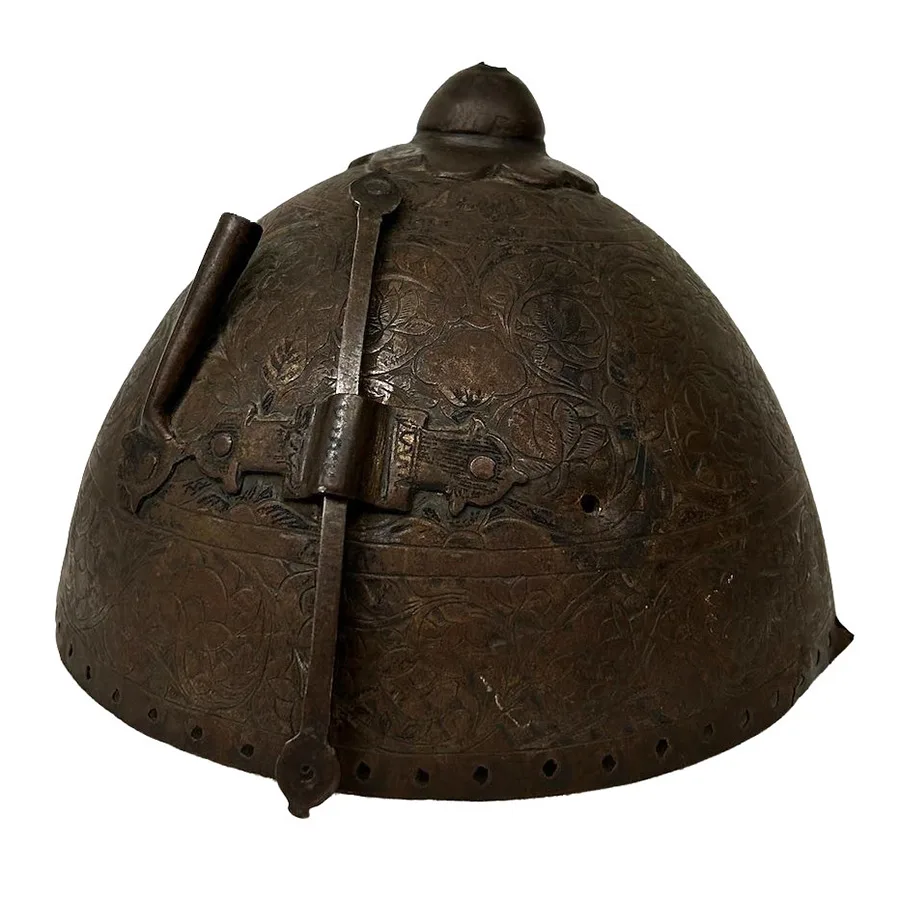
Helmet
Persian, Iran
#2023.12.E.246
A scrolling foliate design covers the entire exterior of this 19th century helmet, called a khula khud. This helmet style is known for its dome shape and elaborate decoration. This example originally included a top finial spike and an additional plume holder, both of which are now missing. The helmet would have been equipped with a chain link veil for added protection, but it is also no longer present. Despite its missing components, the helmet’s aesthetics demonstrate how armor became less functional and more fashionable during this period of modernization – worn for ceremony rather than protection.
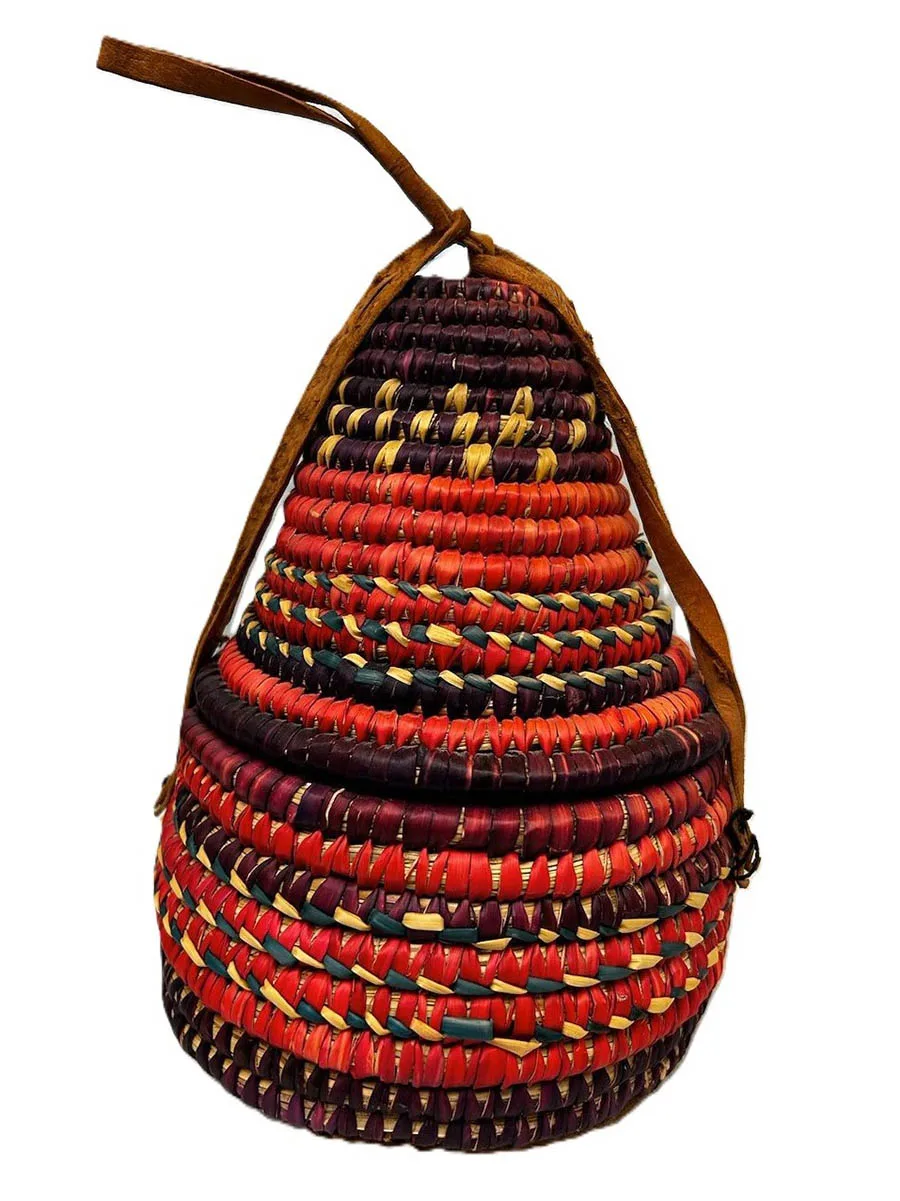
Basket
Bedouin, Saudi Arabia
#2023.12.E.184.a-b
Basketry is a timeless craft found across cultures, though its practical and decorative significance changes according to each cultural context. In the Asir region of southwest Saudi Arabia, baskets are woven from local grasses. This example also incorporates camel hide for its base and straps. Though the materials are local, the conical form is found throughout the region in Yemen, Oman, and across the Red Sea in Ethiopia and Somalia.
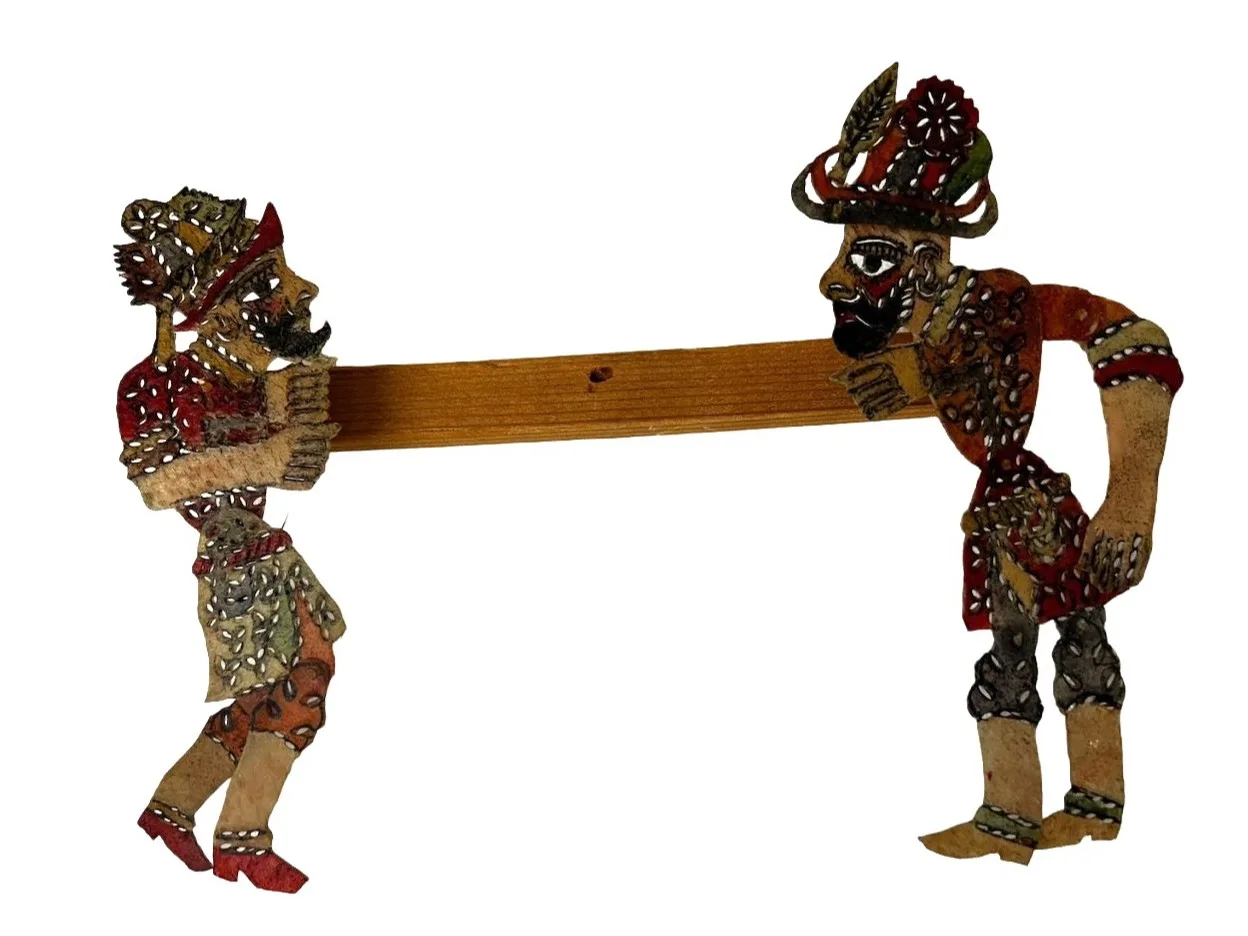
Shadow Puppets
Turkish, Turkey
#2023.12.E.192
Karagöz shadow play originated in the Ottoman Empire in the 16th century as a form of combined comedy and political satire. A single puppeteer, assisted by apprentices, performed the play behind a screen, using oil lamps to cast the shadows of painted leather puppets to his audience. Karagöz (right) is the main character of the play, depicted with a turban and shaggy beard. He is portrayed as an “every man,” often trying to succeed with his wit, but not quite making it due to his lack of luck and tact. Hacivat (left) is his foil in the play, whose privileged education and upbringing are represented by his fancy hat and pointed beard. These puppets are likely non-functional replicas, as they are smaller than traditional puppets and do not have the correct mechanisms for movement.