
Roman Denarius Coin
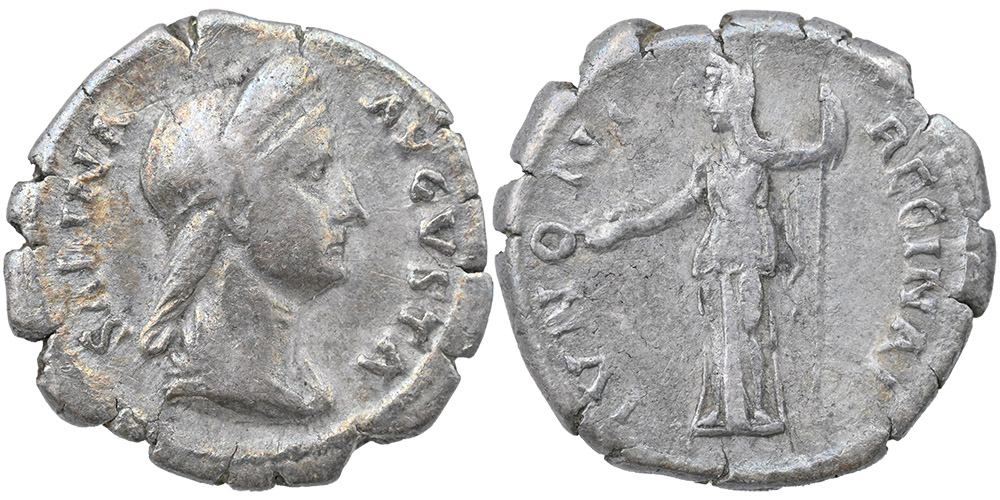
The Roman Republic first adopted coinage to trade and pay mercenaries around the time of the First Punic War (264-241 BCE). During the Second Punic War (218-201 BCE), Rome adopted a system that would endure for centuries, based on the silver denarius and the bronze as. A denarius, like this one,was worth about a day’s labor for a common worker, and the as was initially worth 1/10, later 1/16, of a denarius.
After the Republic fell and the Roman Empire formed in 27 BCE, coinage turned out to be a convenient mode of establishing power. Anyone who wanted to be emperor needed coins in their name. However, the Romans didn’t just feature emperors on their coins, they included the imperial family too. This coin features Sabina, the wife of the emperor Hadrian, who reigned from 117 to 138 CE. This coin from between 133 and 135 CE shows her distinctive hairstyle and features Juno, queen of the gods, on the reverse. Roman coin artistry reached a peak during this era as demonstrated by Sabina’s regal, realistic portrait, which remains recognizable even on worn-down examples like this one.
Roman coins circulated widely throughout their extensive empire. Their ubiquity set a standard for coin designs still recognizable today: flat, thin coins, usually with portraits on the obverse (front) and a design representing some important symbol or event on the reverse.
This coin is on exhibit in Pocket Change: A Story of Coins through Time through March 6, 2027. It is on loan to the Lam Museum from the curator, Jason Zhang (’26), who provided the research for this post.