
Kalinago Basket
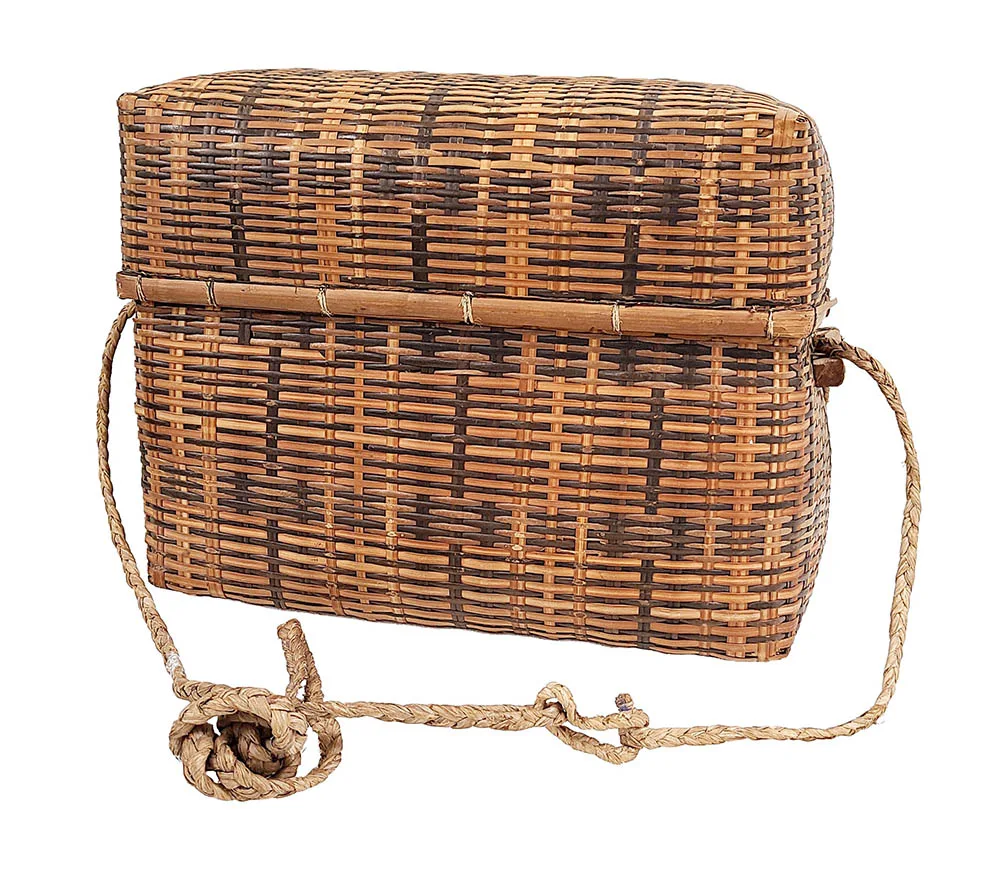
This Kalinago basket was collected by Dr. E. Pendleton Banks, the Lam Museum’s founder, during his PhD dissertation research in Dominica in the early 1950s. Dominica, not to be confused with the Dominican Republic, is a small island country in the Windward Islands of the Caribbean. It is the only island in the eastern Caribbean where the indigenous Kalinago people still live, having been killed or driven from their other native islands during European colonization. Today, the majority of the 3,000 people on Dominica who identify as Kalinago live in the Kalinago Territory, a remote area on the island’s Atlantic coast. It is the largest indigenous settlement in the Caribbean. The territory was set aside by the British colonial authorities in 1903, and the Kalinago remained largely isolated through much of the 20th century.
The Kalinago are known for their baskets made from larouma reeds. The multipurpose baskets, like this one, were used as storage chests and to carry a wide variety of items including food like tubers, fruit, and fish. The baskets could even be made waterproof by lining them with balisier leaves, which are similar in appearance to banana leaves.
To make the baskets, the Kalinago first harvest the larouma reeds, which can grow up to ten feet tall, and split each stalk into four parts. They then use a knife to remove the inner parts of the reed. Different colors are achieved by leaving the reeds to dry in the sun for a brown color, burying them in specially prepared mud for black, or rubbing them with saffron for yellow. The Kalinago then weave the reeds into the desired basket shape.
The durability and tight weave of Kalinago baskets made them important trade goods during pre-colonial times. Today, the Kalinago sell larouma reed baskets and other crafts primarily to tourists, creating a vital income stream for the community while also preserving an important part of traditional Kalinago culture.