
Kina Shell Necklace
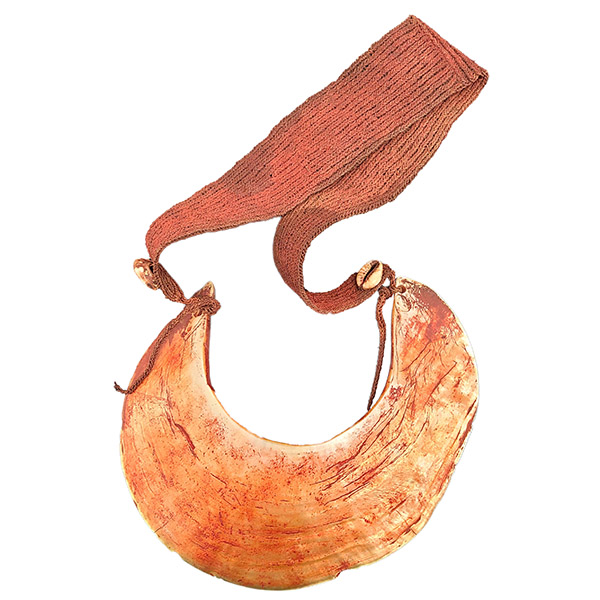
This kina shell necklace comes from the Engan peoples living in Kond Village in the Kandep District of Enga Province in the highlands of Papua New Guinea. Based on information given to the collector, it is likely more than 140 years old. The term kina refers to the large crescent-shaped shell pendant that forms the central portion of the necklace.
Kina shells area type of money that has been exchanged in Papua New Guinea for centuries. Pendants like this one are carved from large oyster shells and then traded from the coast into the highlands. Historically, people acquired this type of kina shell pendant by skillfully trading other commodities for it, such as pigs, textiles, or nassa shells harvested from snails. Wearing, or even just possessing, such jewelry signaled personal achievement. A wealthy individual could acquire multiple necklaces and use them to enrich his entire extended family.
In Enga culture, kina shells were given away as part of a tee, an elaborate system of competitive gifting in which participants build partnerships by giving away expensive things. They could also be used in other ceremonial exchanges, such as paying bride prices or settling blood feuds. Kina shells are sometimes stained red, as this one is, when they have been used in a ceremony or celebration.
After colonization, kina became a standardized currency exchangeable for Australian shillings. Today, the official currency of Papua New Guinea is the Kina, which takes its name from the kina shell.
This kina shell necklace will be on display in Shelling Out: Traditional Currency from the Collection from March 17, 2026, to March 6, 2027. You can learn more about shell necklaces in Papua New Guinea and complete a craft project with this Cultures Up Close post.
Research assistance for this post was provided by Lake Barrett (‘28) and Johnny Gasparro (‘29).