Whistles
Research by Shannon Cummings (‘24)
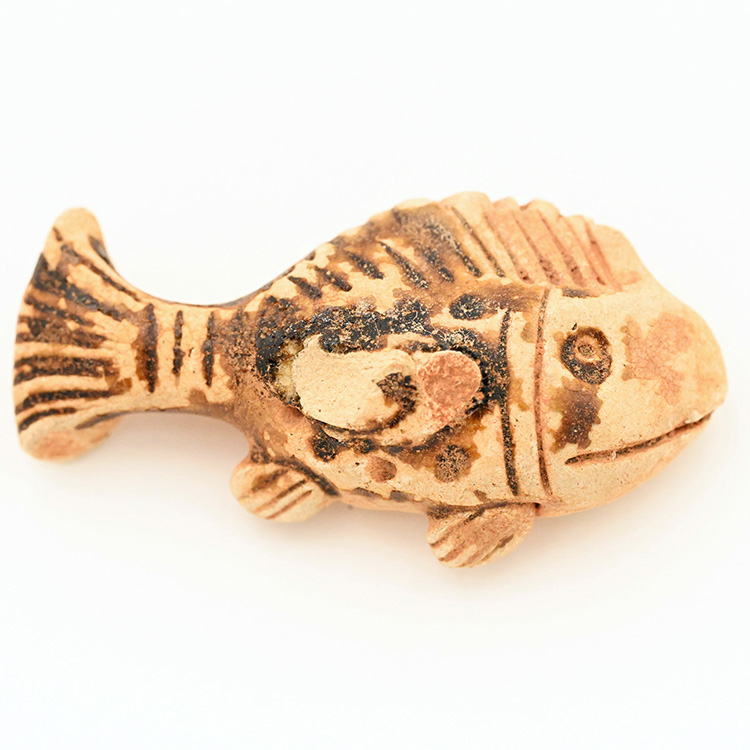
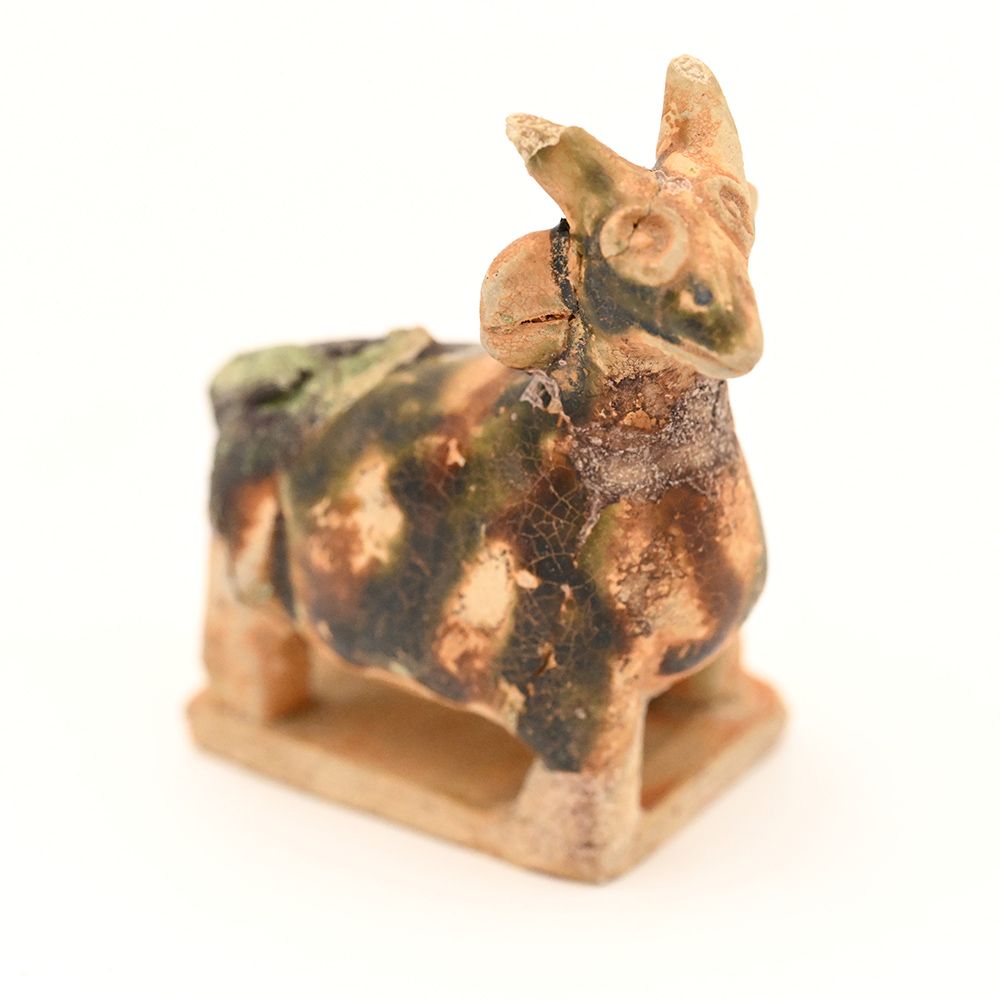
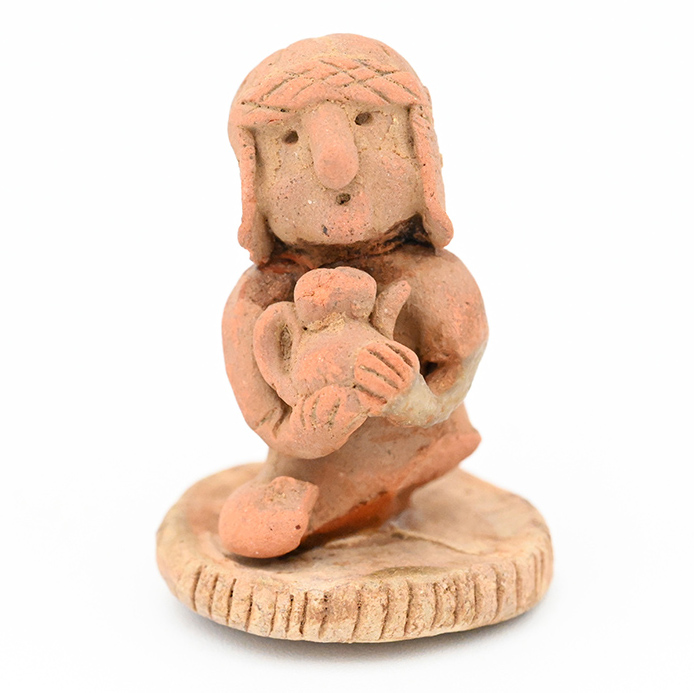
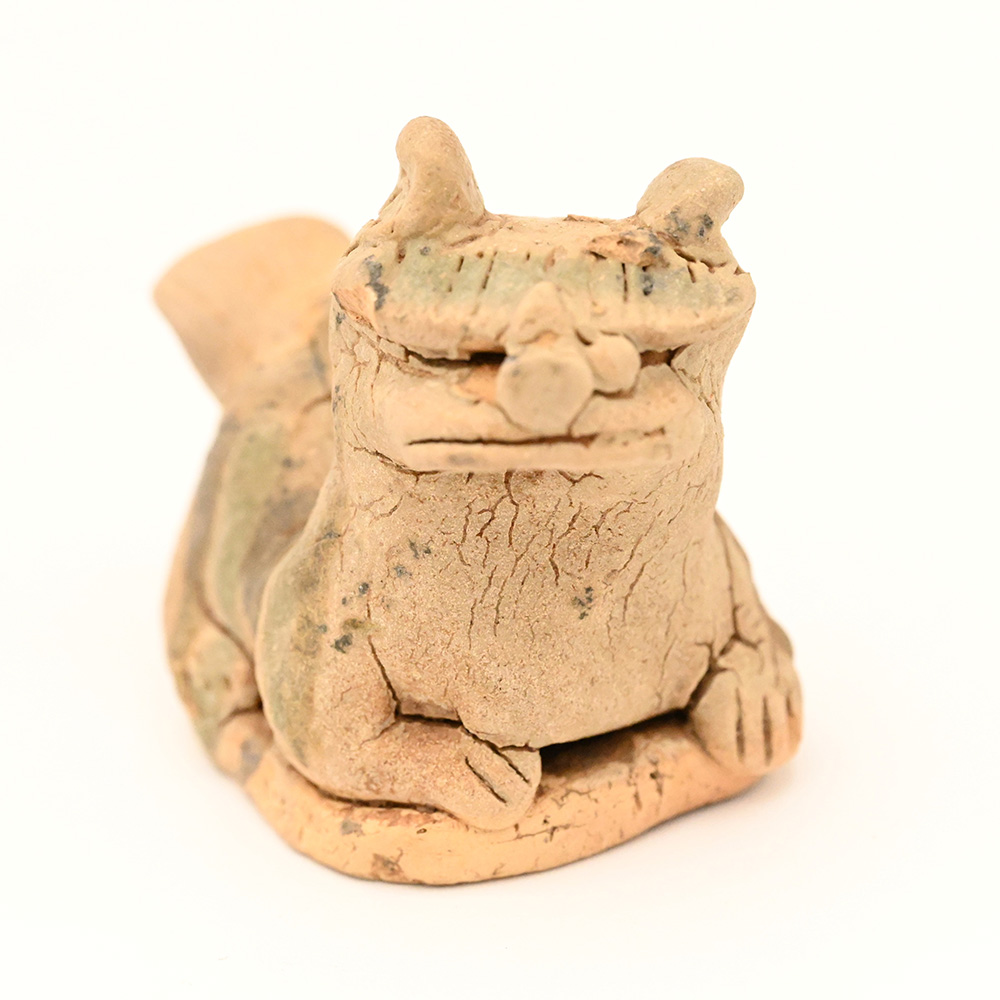
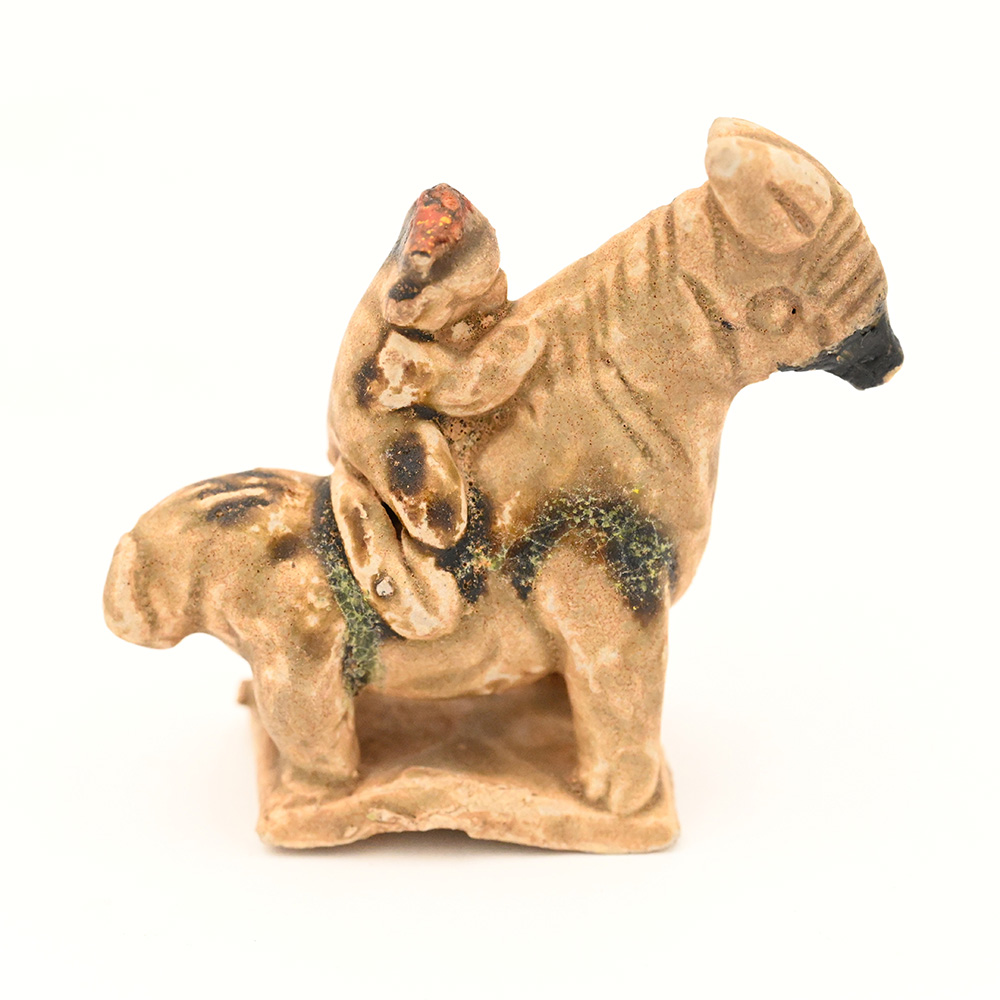
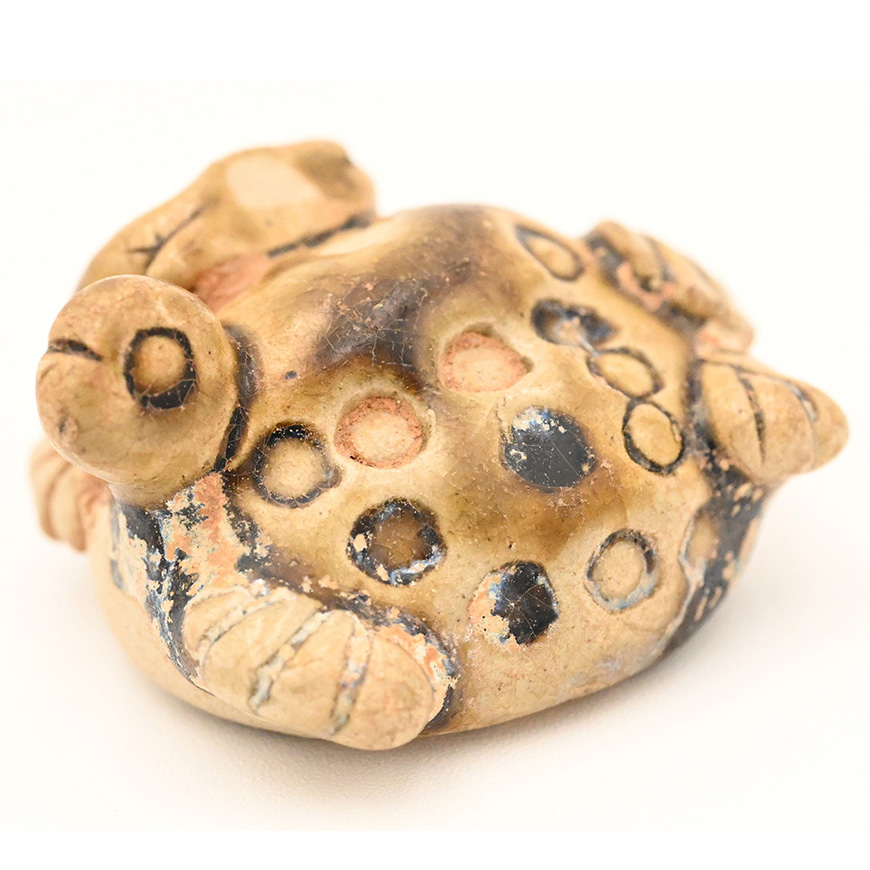
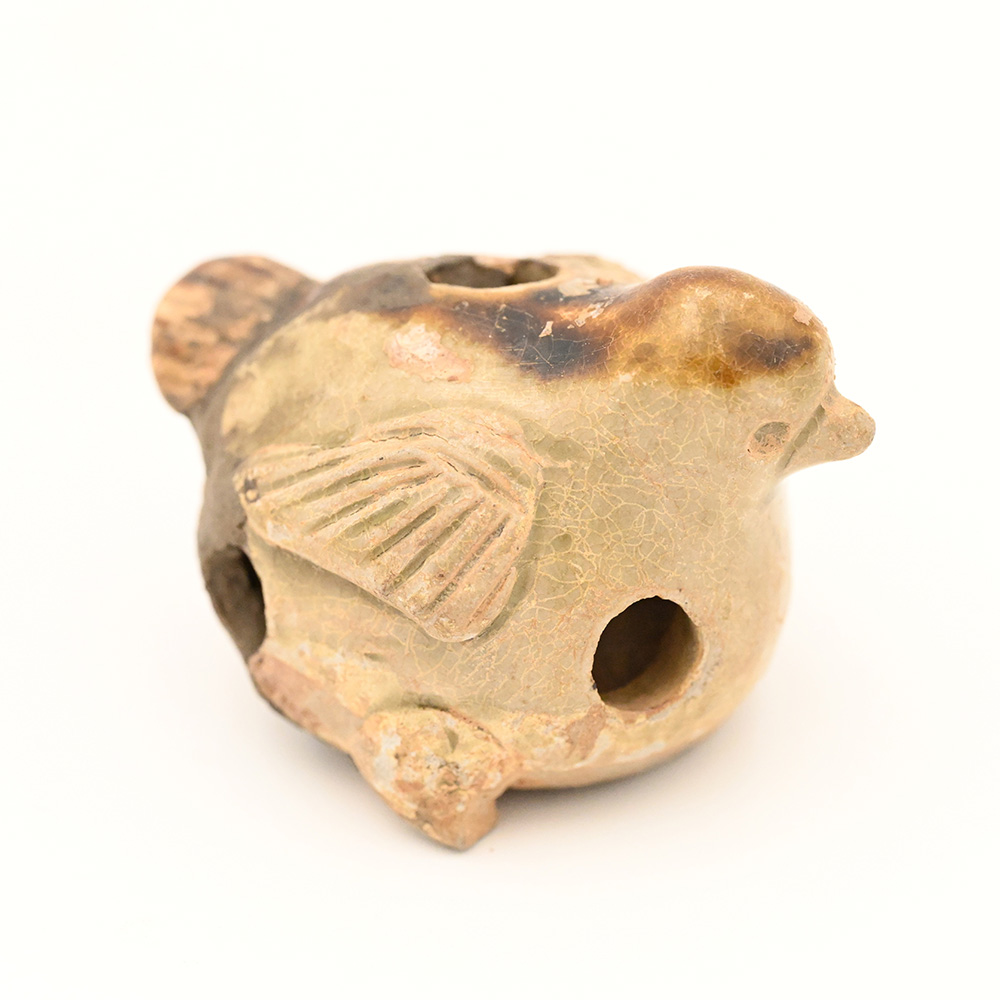
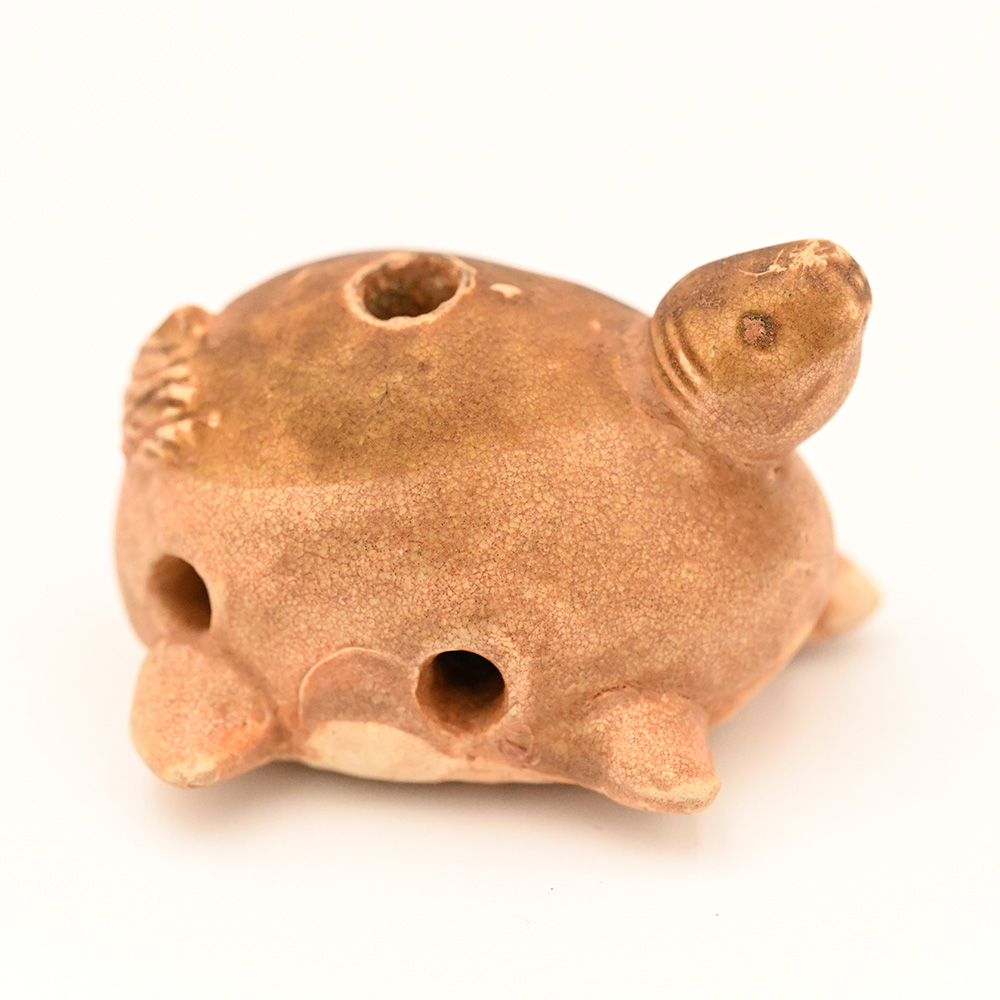
Upon initial inspection, these Changsha “whistles” do not represent what you might imagine to be the prototypical whistle. They don’t have an extended mouthpiece that clearly indicates where to blow or a labium to split the air column. Instead, these ceramic figures have an egg shaped body with three holes and animal features, such as legs and heads, extending from the body. Though labeled a whistle, it isn’t immediately clear how you would use these to produce different sounds.
I measured the angle of the animal’s head, the whistle’s overall size and shape, and the positioning of holes. I found that the six whistles could be paired off into three groups:
Bird & Turtle (285 & 564)
- Heads facing slightly to the left
- Smaller, more egg-shaped
- One hole on top of their back
- Two holes on their right
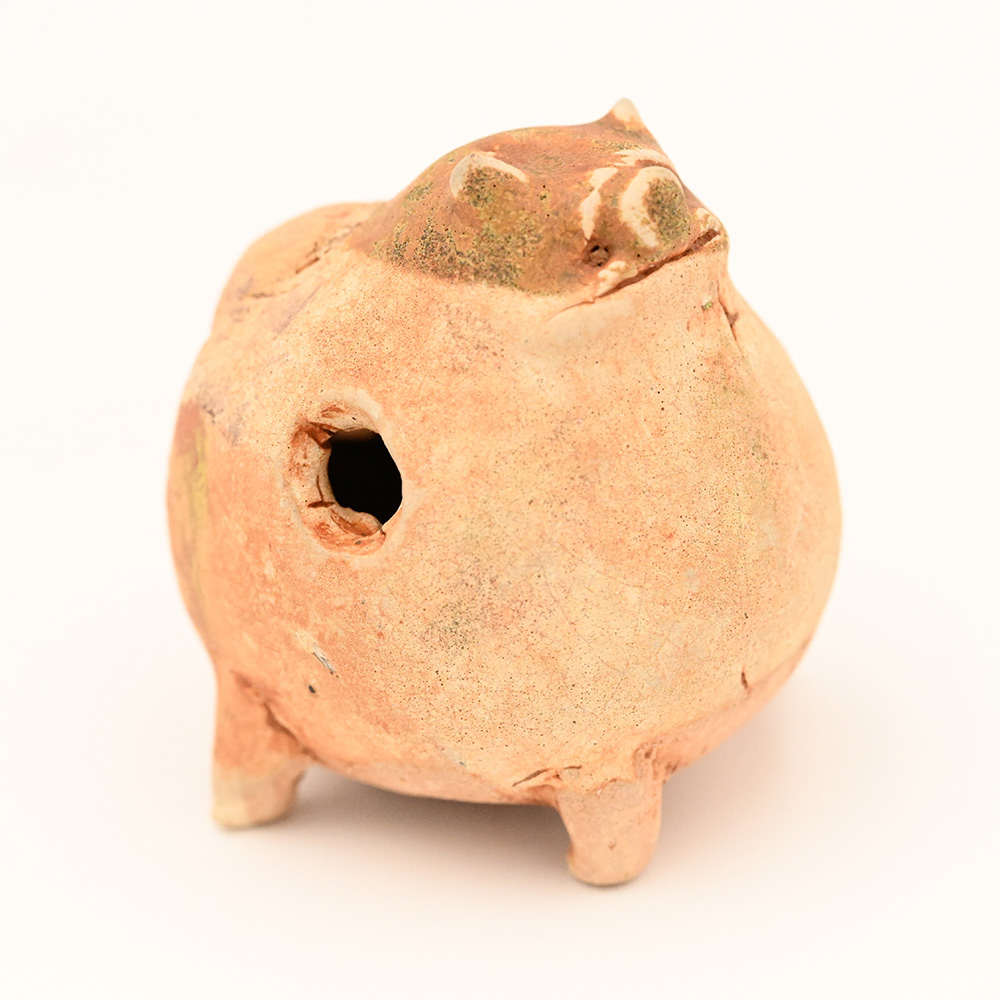
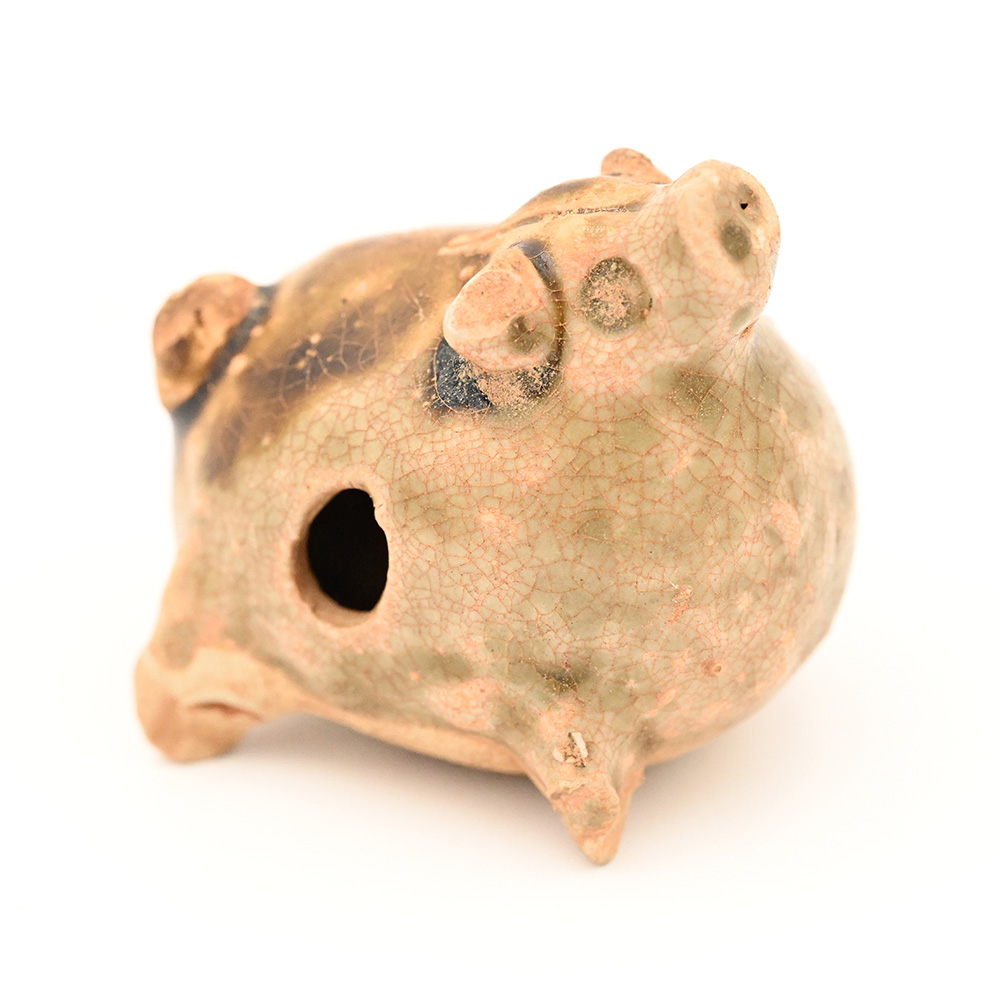
Two Pigs (266 & 589)
- Heads facing slightly to the right
- Larger, rounder
- One hole on their right
- Two holes on their left
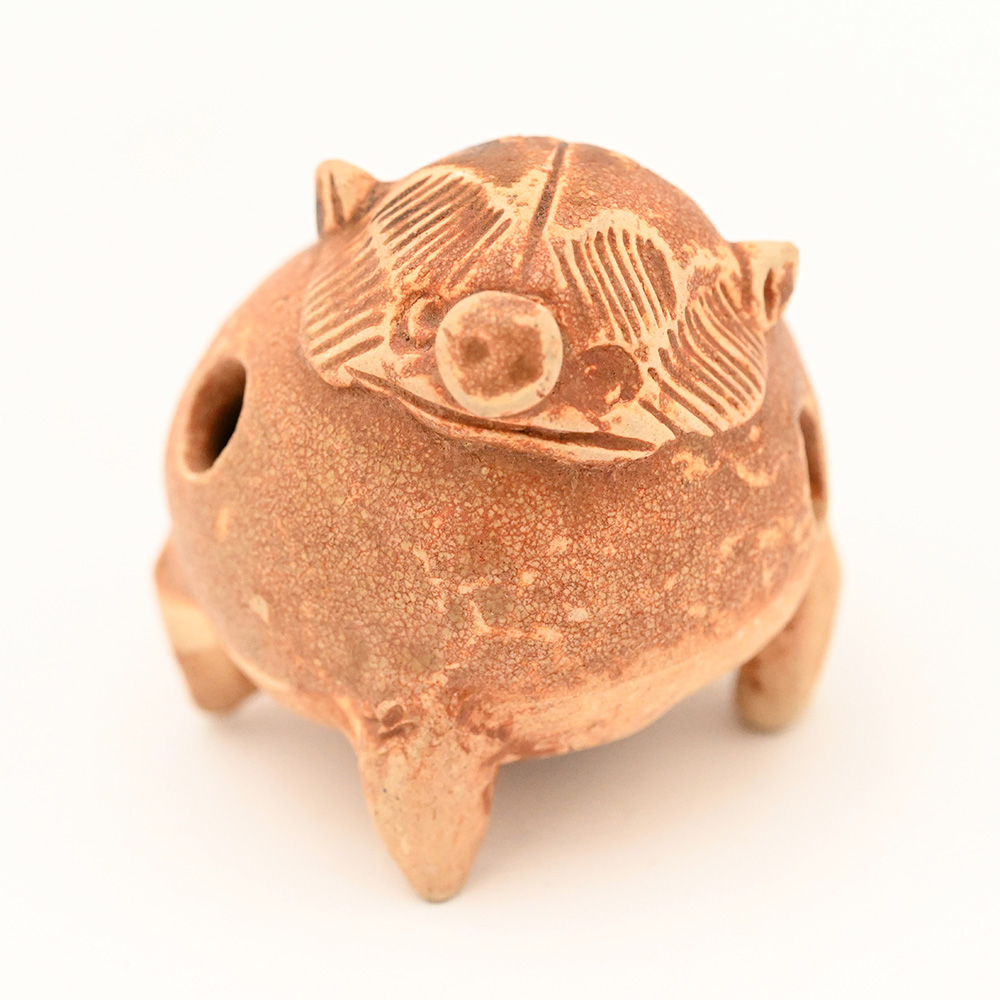
Pig & Tiger (115 & 271)
- Heads facing far to the right
- Larger, rounder
- One hole on their right
- Two holes on their left
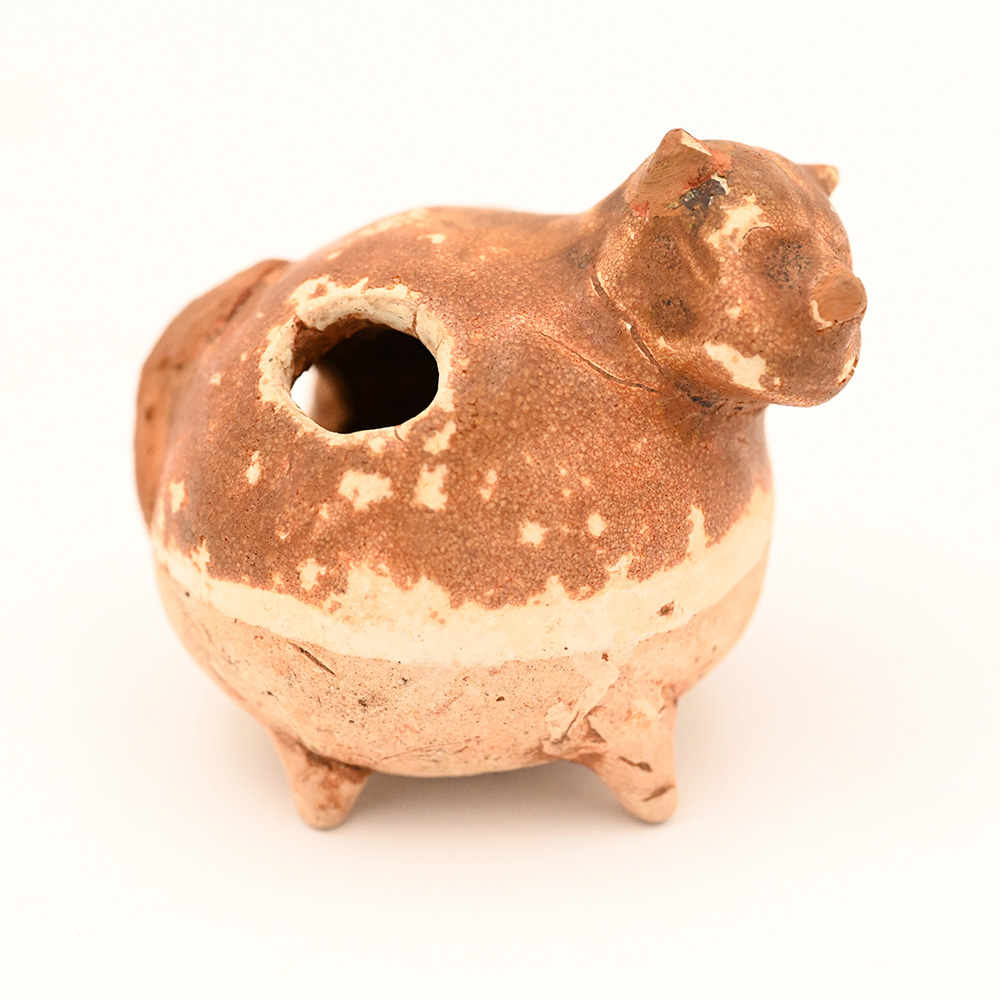
Determining the playability of these objects was a complicated process. I began experimenting by blowing at different angles across the various holes on each whistle, similar to blowing across the mouth of a glass bottle. For each animal, I attempted to play three positions: the first by blowing into Hole A while covering B and C; the second by blowing into Hole A while B was uncovered and C was covered; the third by blowing into Hole A while both B and C were uncovered. In the end, I was able to produce a mid-range note from each of the artifacts by blowing across the animals’ back most hole while covering the upper two. Interestingly, for each of the animals, the hole I’ve determined to be the “blow-hole” is in line with the direction of the animal’s head.
For each artifact, I created an audio recording of myself playing three notes. I used software called Tony to analyze the pitches of each audio recording and record the notes for each instrument. Along with collecting data on each instrument’s musical potential, I also documented important dimensions of the body, or vessel, of each whistle, as well as noting the size of each instrument’s holes in order to gauge whether or not there may have been an ideal form that was attempting to be reproduced.
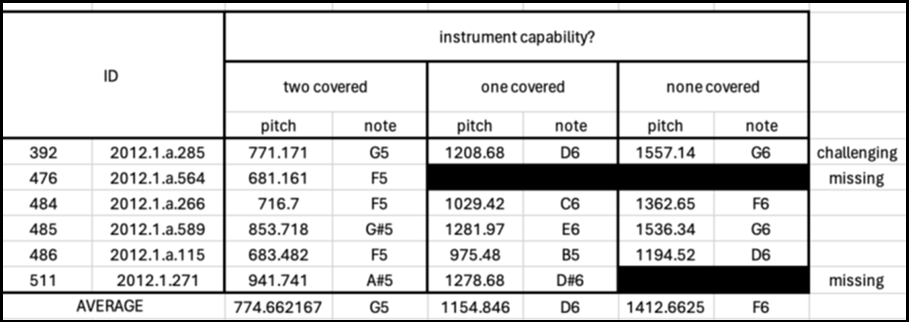
While I was doing research in the initial phases of this project, I was still trying to figure out how to play these whistles. I found some reassurance, though, as several sources pointed out that if I was having difficulty, there was a good chance it was the instrument’s fault and not my own. In fact, these whistles were actually ocarinas or a vessel flutes—a wind instrument that is more complex than a whistle. Although I managed the play three different notes on all six of the instruments, the quality of the sound was quite poor, with unstable airy notes. All six instruments were shaped as animals, which leads me to conclude that in the manufacturing process, visual aesthetics were initially prioritized over their function as an instrument.
While they may never have been intended to be serious musical instruments like a classical xun, there was still some important consistencies. Not only were the vessels similar in size and capable of producing a similar range of notes, but the animals’ heads also indicated the direction the user was meant to blow. This leads me to conclude that the manufacturers were likely mass producing these instruments based on a standardized form which might have been similar to average dimensions I calculated in my table.
At the time these vessel flutes were produced, China under the Tang Dynasty was experiencing a golden age. There was extensive foreign trade, with the Changsha site dominating ceramic exportation. While these vessel flutes might have been poor quality instruments, they would have made great novelty items at both domestic and international markets. Mass production would have allowed for mass exportation and sharing of Chinese culture.
Explore the Other Sections of this Exhibit