Fish
Research by Michelle Ye (‘25)
I explored this group of ceramic fish figurines not as flawed objects from a trash pile, but as part of an active process of experimentation and creativity. These were never just products. They were part of a rhythm of making, shaped by repetition, chance, and the hands of many artisans. What interested me wasn’t what went wrong, but what these small differences—uneven glaze, pinched clay, odd proportions—could reveal about how people made things, how they worked, and what they valued. These fish aren’t evidence of failure—they’re traces of work in motion.
Each one is slightly different—some have long snouts, others fan-shaped tails or faint impressions of fingerprints. As I studied them, I became fascinated by their differences. These weren’t assembly-line objects. Each fish tells a slightly different story about how it was shaped, glazed, and fired. The more I looked, the more I began to see not mistakes, but choices—and evidence of the human hands behind them.
Some changes may have been intentional—slight tweaks to shape, fin placement, or eye size. Others were probably the result of quick decisions in the workshop or shifts in temperature inside the kiln. In a busy kiln site like Changsha, I imagine artisans repeating the same forms over and over again—but also adjusting as they went. Some fish might have been test pieces. Others might have just turned out a little differently. Either way, they weren’t necessarily rejected. They were part of the flow of making.
To understand these fish, I focused on five key features:
- Shape & Proportion — What form does the body take? Is the head too large? The tail too small?
- Glaze Distribution — Does it flow evenly, or pool in certain areas?
- Surface Texture — Is it smooth or coarse? Shiny or matte?
- Finger Traces & Pinching — Can I see where someone pressed or shaped the clay?
- Clay Body & Paste — What color is the clay? Are there impurities or bubbles?
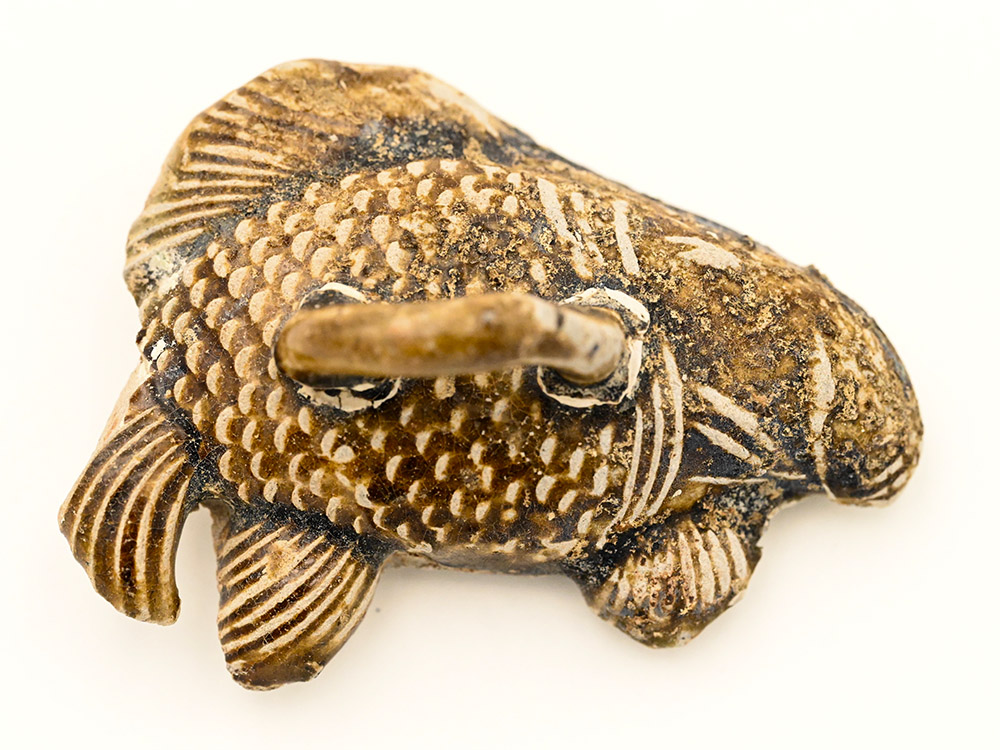
Shape/Fish Features:
Drop shape.
Fan-shaped dorsal fin, pelvic fin, anal fin, and caudal fin.
Damaged caudal fin (upper portion).
Slender and downward head.
Eyes covered by patina of clay and soil.
Protruding ring attaches the body.
Small and dense C-shape fish scales.
Glaze:
Dark brown.
Uneven distribution.
Blackish glaze at the peripheral of the fish body.
Only the fish head, partial fish scale, lines on fins, and the ring were being glazed. Showing the distinction between each individual scale.
Texture:
The head is coarser due to the patina on it.
Glaze portions are smooth.
The rugged and uneven surface of the fish body indicates the carved fish scales.
Paste:
Gray clay.
Porous.
No impurities.
Fingerprint:
Backside of the fish’s dorsal fin.
Crazing/Pinching:
Intense and yet small fractures were shown on the glaze.
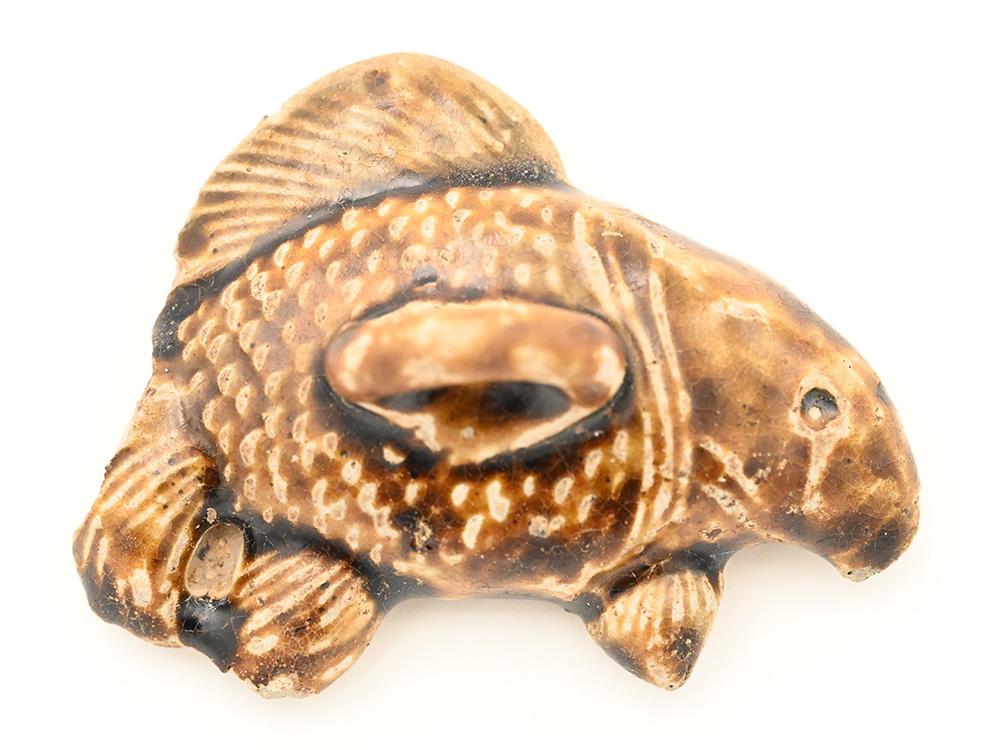
Shape/Fish Features:
Drop shape.
Fan-shaped fins.
Damaged caudal fin (upper portion).
Slender and downward head.
Less Patina compared with 586.
A protruding ring attaches the body of the fish.
Small and dense C-shape fish scales.
Glaze:
Brown.
Uneven distribution.
Brighter glaze.
Fish scales not glazed.
Texture:
Smooth.
Few patinas and abrasions under the ring. Coarse.
Paste:
Grey clay, covered by yellowish-brown soils.
Porous.
No impurities.
Fingerprint:
N/A
Crazing/Pinching:
Cracks on glaze.
Aggregation of clays on the backside of the anal and pelvic fins. Indication of pinching.
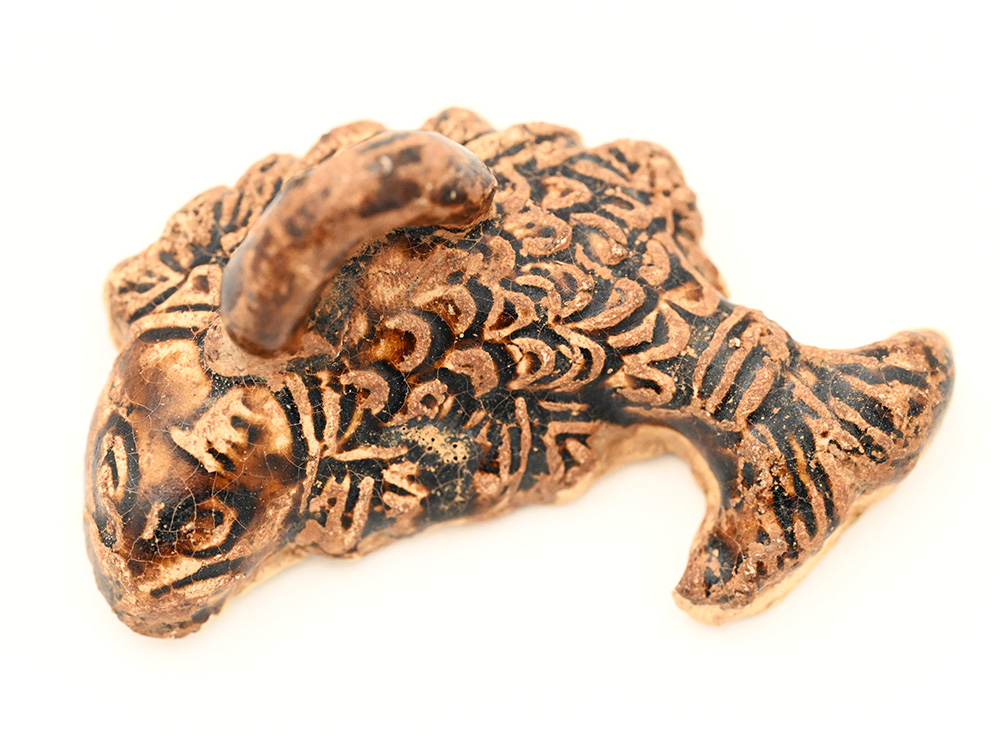
Shape/Fish Features:
Bending downward.
No sunken eyes.
Large and dense crescent moon-shaped fish scales.
Undulating dorsal fin.
Caudal fin blended with the pelvic fin.
Glaze:
Dark brown.
Head and body covered with glaze.
Uneven distribution.
Protruding portion of the fish scales were not glazed.
Texture:
Smooth (head).
Coase (body).
Paste:
Khaki brown clay.
Porous.
No impurities.
Fingerprint:
N/A
Crazing/Pinching:
Cracks on glaze.
Aggregation of clays on the dorsal fin.
Aggregation on the connection between caudal fin and the fish body. Indication of pinching.
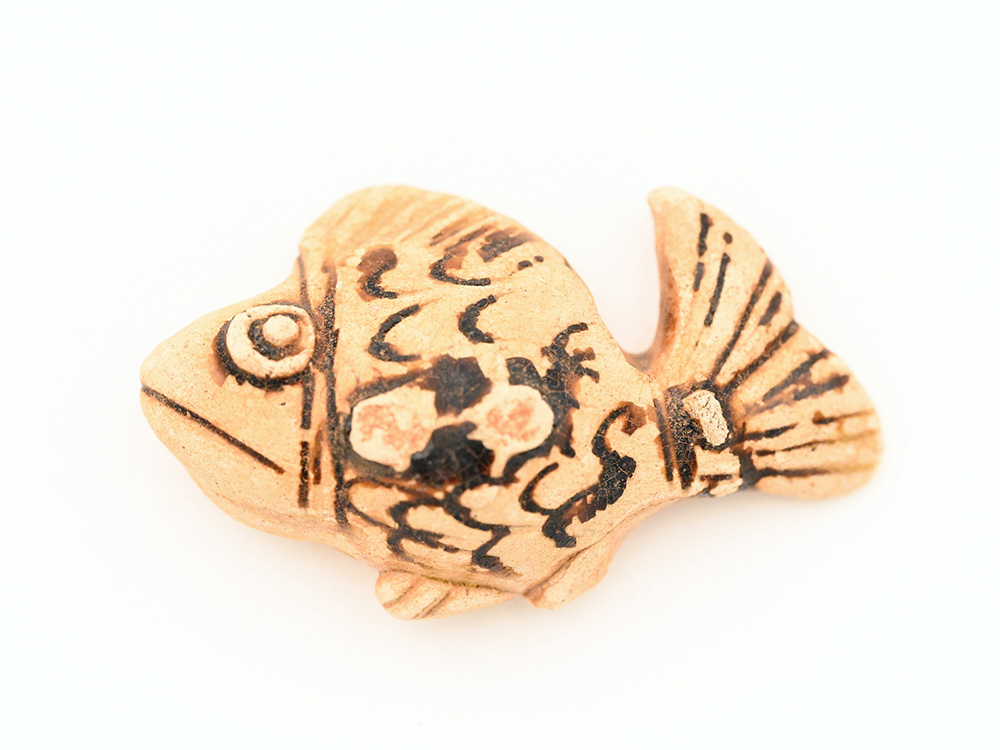
Shape/Fish Features:
Pointing head, round body and tail.
Round dorsal fin.
Protruding eyes.
The fish’s mouth is delineated with curved lines.
Two clay pieces adhere to the body, representing pelvic and anal fins.
Two protrusions on the body. Indication of the damaged rings.
Large and sparse semi-elliptical fish scales.
Glaze:
Dark brown glaze on fisheyes, mouth, fins, and the peripheral of tails.
Even color distribution.
Uneven glaze distribution around the damaged ring.
Texture:
Roughness because majority of the ceramics were unglazed.
Even surface: no obvious protrusions.
Paste:
Khaki clay.
Porous.
No impurities.
Fingerprint:
Backside of the fish’s caudal fin.
Crazing/Pinching:
Aggregations on the peripheral of the dorsal fin connection between the body and the anal fins, and the peripheral of the caudal fin. Indication of pinching.
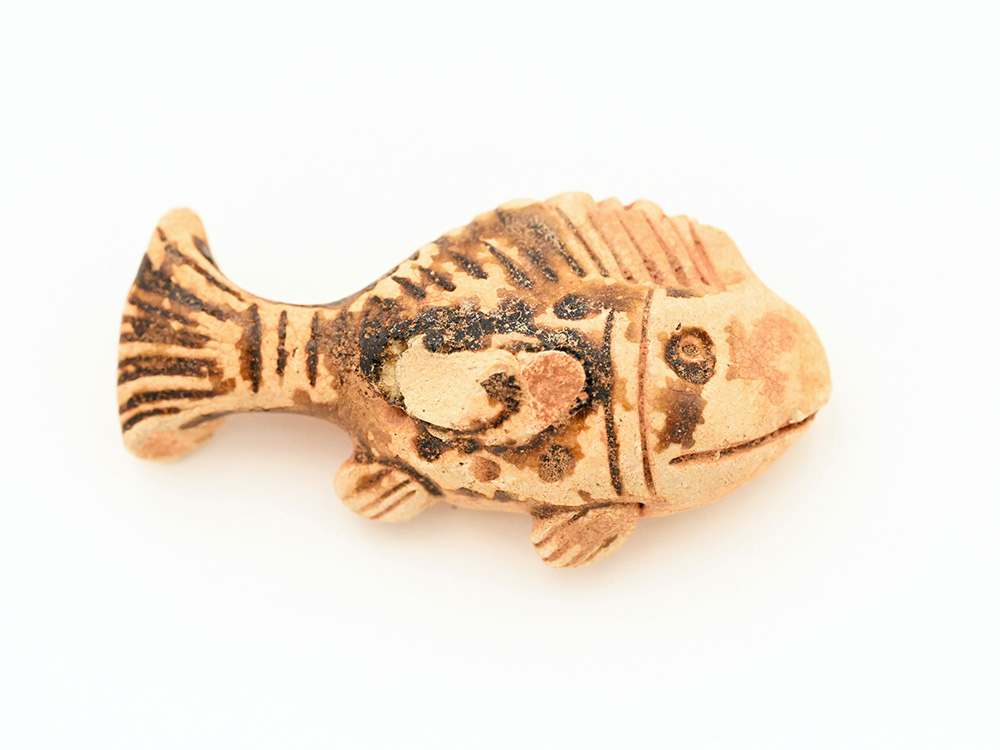
Shape/Fish Features:
Elliptical body
Long tail
Protruding Eyeball
Mouth delineated with curved lines
Two clay pieces adhere to the body, representing pelvic and anal fins.
No fish scales.
Glaze:
Light & dark brown clays.
Uneven distribution (both glaze and color)
Glaze appeared on fisheye, fins, peripheral of the caudal fin. The cheek of face has a glaze.
Texture:
Glaze is smooth.
Rough clay area.
Patina on the glaze.
Paste:
Khaki clay.
Porous.
No impurities.
Fingerprint:
Backside of the dorsal fin.
Crazing/Pinching:
Aggregation on the dorsal fin, fish heads, and the joint between anal fins and the fish body. Indication of pinching.
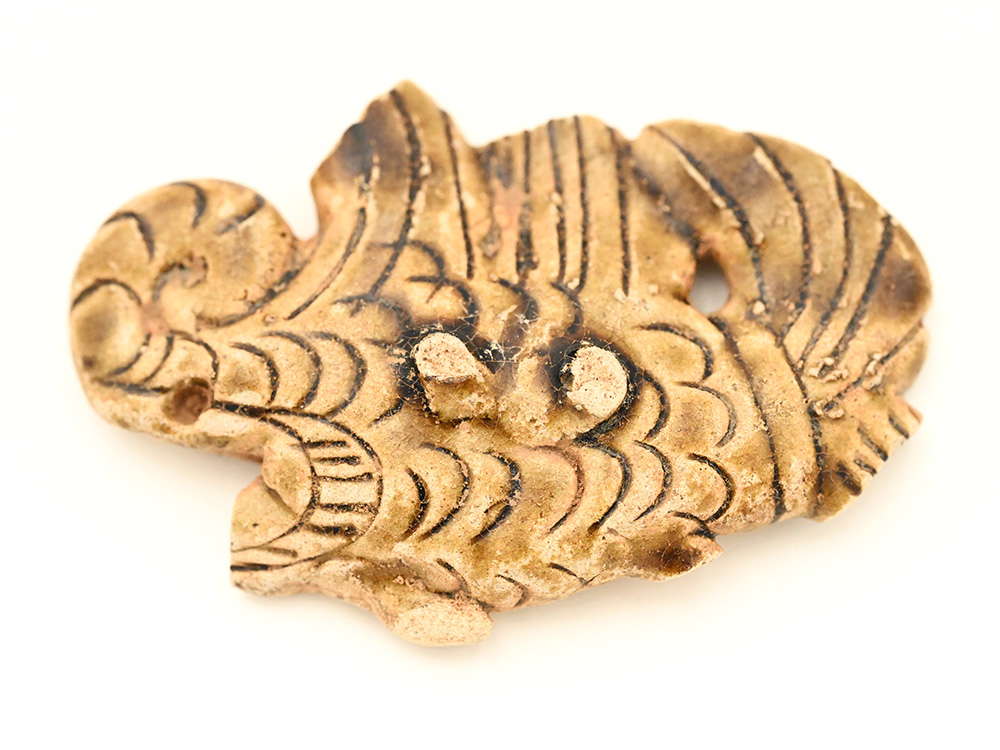
Shape/Fish Features:
Flat oval body.
Trunk-like snout.
Open mouth.
Lower part of the tail is damaged.
Two protrusions on the body, possibly indicating damage to circular ornaments.
Decorative crescent patterns at the gill.
Large and dense crescent moon-shaped fish scales.
Glaze:
Light & dark brown clays.
Uneven distribution (both glaze and color).
Texture:
Smooth glaze.
Patina on caudal fin.
Abrasion on the dorsal.
Paste:
Khaki clay.
Porous.
No impurities.
Fingerprint:
Backside of the dorsal and caudal fins.
Crazing/Pinching:
Cracks on glaze.
Aggregation of clays on the backside of the mouth and anal fins. Indication of pinching.
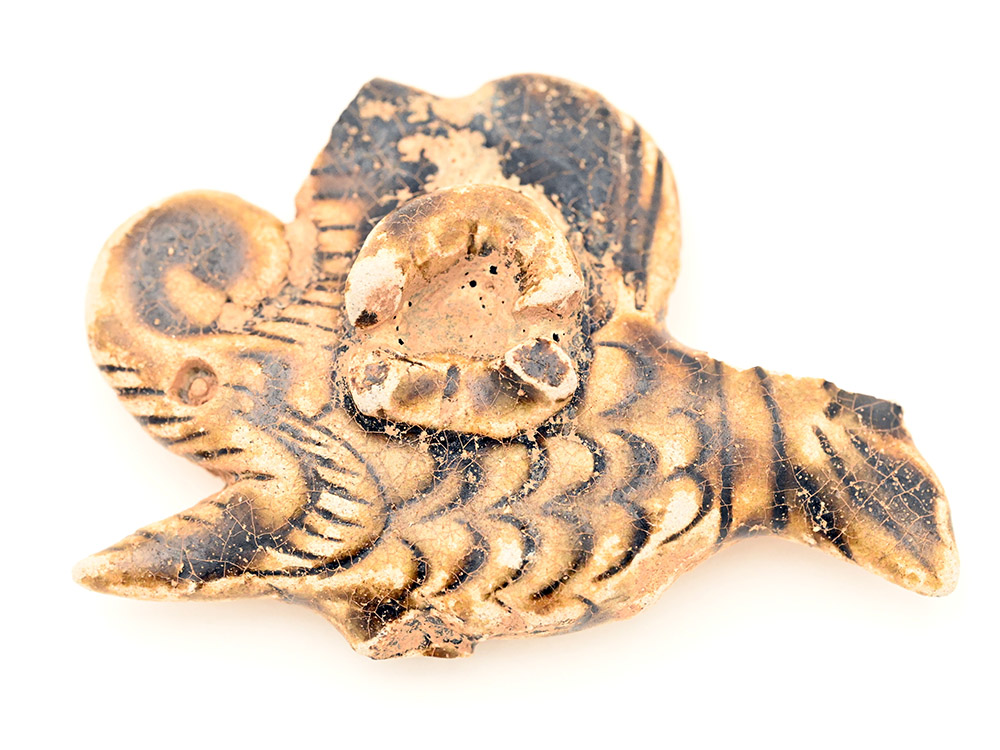
Shape/Fish Features:
Flat oval body.
Trunk-like snout.
Open mouth.
Lower part of the tail is damaged.
Two protrusions on the body, possibly indicating damage to circular ornaments.
Decorative crescent patterns at gill.
Large and dense crescent moon-shaped fish scales.
Glaze:
Light & dark brown.
Uneven color distribution.
Texture:
Smooth glaze.
Paste:
Grey clay.
Porous.
No impurities.
Fingerprint:
Backside of the dorsal and caudal fins.
Crazing/Pinching:
Cracks on glaze.
Aggregation of clays on the backside of the mouth and anal fins. Indication of pinching.
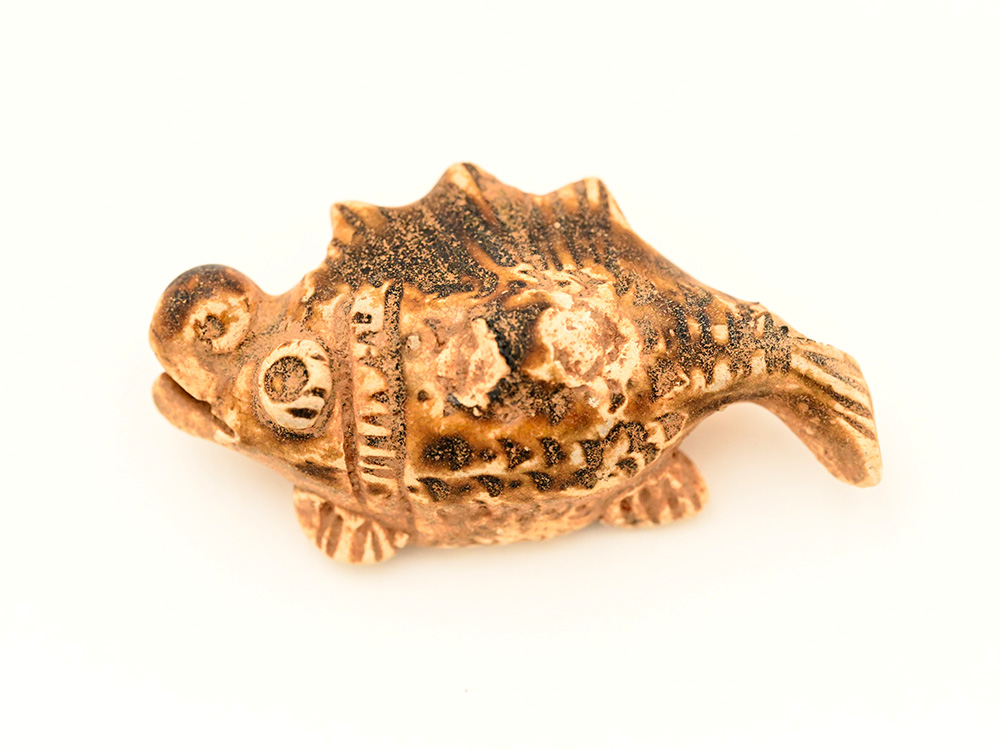
Shape/Fish Features:
Drum-shaped oval body.
Trunk-like snout.
Open mouth.
Pelvic fins missing. Contains damaged circular ornament.
Fish scales are abraded and unclear.
Glaze:
Light & dark brown.
Uneven color distribution.
Light glaze covered fish body. Dark brown covered caudal, dorsal fins.
Texture:
Coarse and rough.
Paste:
Khaki clay.
Porous.
No impurities.
Fingerprint:
Backside of the dorsal and anal fins.
Crazing/Pinching:
Cracks on glaze.
Using these clues, I began piecing together not just how the fish were made, but how variation—sometimes subtle, sometimes obvious—was part of the production process. I wasn’t asking “What’s wrong with this fish?”—I was asking “What does this tell me about how it was made?”
These fish may seem small, but they carry a lot of possibilities:
- Maybe they were toys, made for children to play with.
- Maybe they were decorations, bright and lively on a shelf or altar.
- Maybe they held symbolic meaning—in Chinese tradition, fish represent abundance and luck.
- Maybe some were practice pieces, used to test glaze or form.
What excites me is how open-ended these meanings are. One fish might have been made in a hurry. Another might have been shaped with care. Each one shows me that meaning doesn’t always come from perfection—it can come from process.
By studying these fish, I found that the fish aren’t broken, but rather that they’re objects in motion, full of traces of touch, time, and transformation.
Explore the Other Sections of this Exhibit