Inscriptions
Poem on a Ewer
Research by Shelly Ji (MA ‘25), Lin Wang (MA ‘25), and Chris Ni (MA ‘25)
Text by Shelly Ji
During our first group visit to the museum for the Changsha exhibit, we found ourselves irresistibly drawn to one particular ewer. While the inscriptions on most of the other ewers were easily traceable through digital databases, this one remained elusive—its poem refusing to reveal itself at first glance. It felt as though the object was deliberately withholding its true identity, challenging us to dig deeper.
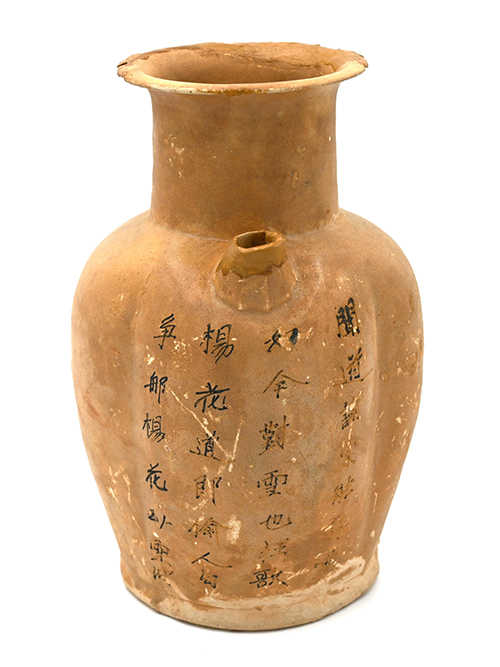
By closely examining the calligraphy, we were able to make out a few scattered characters, but these fragments didn’t immediately lead us to a recognizable poem. Determined to uncover its meaning, I continued observing the ewer in detail. Then, a breakthrough: I spotted a cluster of five consecutive characters that appeared to read “谢家能咏雪” (“The Xie clan can chant of snow”). This immediately reminded me of the well-known anecdote of Xie Daoyun, famed for her poetic response about snow, and led us to a Tang-dynasty poem titled Ode to Snow by Xu Ning.
At first, we believed the inscription on the ewer was Xu Ning’s poem. But the more we tried to match it line by line, the more inconsistencies we found. The text didn’t align. That was when we took a step back to think not only about the inscription, but also about the object itself. As a wine vessel, the ewer might serve a practical function—but it also clearly held literary significance. What if this poem was not Ode to Snow, but rather a response to it?
That shift in perspective opened new doors. Perhaps the poet was engaging with Xu Ning’s original, either in homage or critique. Armed with this idea, we revisited the inscription, this time comparing the calligraphy to Tang dynasty script styles. Slowly, the characters began to make sense—and to our astonishment, we realized that this was no ordinary echo, but a sharp poetic rebuttal.
Xu Ning’s original reads:
I have long admired the Xie clan’s gift for chanting snow;
Now I see the snow and sing wildly too.
If comparing snow to catkins is theft,
Then so be it—how can catkins rival the river of snow?
*Poems are traditionally read starting in the top right corner.
| 不 | 杨 | 今 | 长 |
| 那 | 花 | 朝 | 爱 |
| 杨 | 道 | 见 | 谢 |
| 花 | 即 | 雪 | 家 |
| 似 | 偷 | 亦 | 能 |
| 雪 | 人 | 狂 | 咏 |
| 何 | 句 | 歌 | 雪 |
The poem carved on the ewer, by contrast, subtly mocks the original:
The Xie clan of Chen once chanted snow, their verses renowned through time.
Now, lost in this swirling white, I, too, must sing with reckless rhyme.
If willow catkins is but a stolen line, then let it drift and take its course—
How can it rival the river of snow, rushing forth with boundless force?
| 争 | 杨 | 如 | 闻 |
| 那 | 花 | 今 | 道 |
| 杨 | 道 | 对 | 谢 |
| 花 | 即 | 雪 | 家 |
| 似 | 偷 | 也 | 能 |
| 雪 | 人 | 狂 | 咏 |
| 河 | 句 | 歌 | 雪 |
This discovery revealed what might be an unrecorded moment of poetic rivalry—an elegant, biting response preserved not in ink, but in clay. Through collaborative analysis, we uncovered a hidden gem of Tang poetic dialogue, nestled in the glaze of an ancient vessel.
Additional Translations
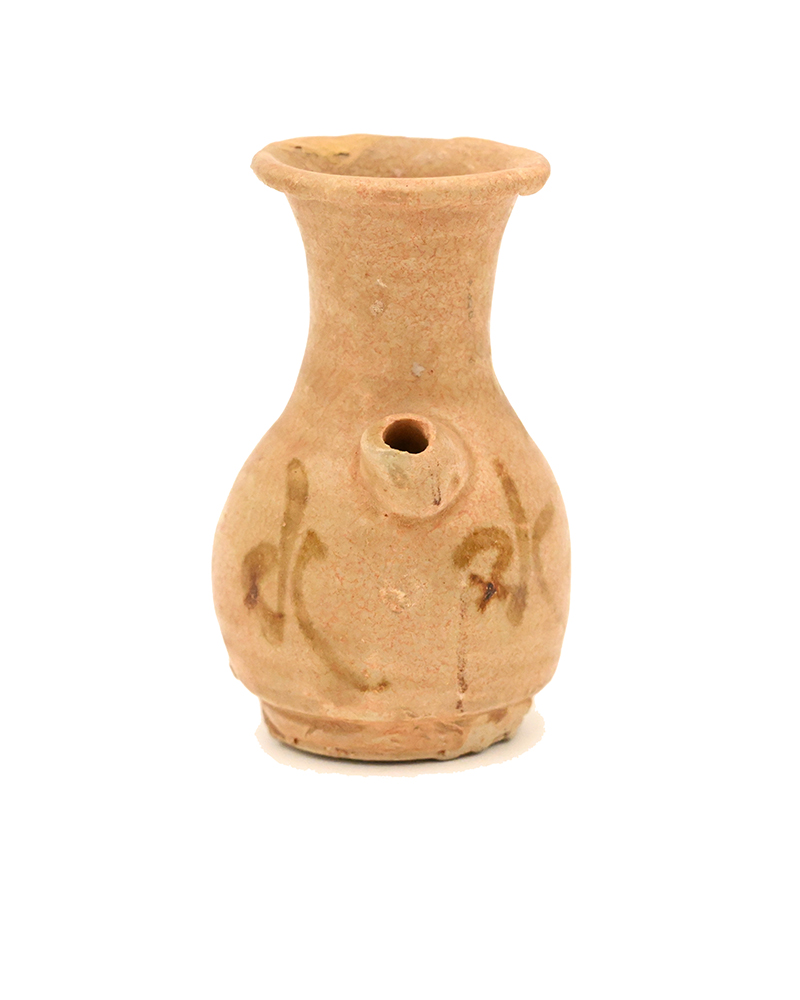
Water
| 水 | 水 |
410, research by Lin Wang (MA ‘25)
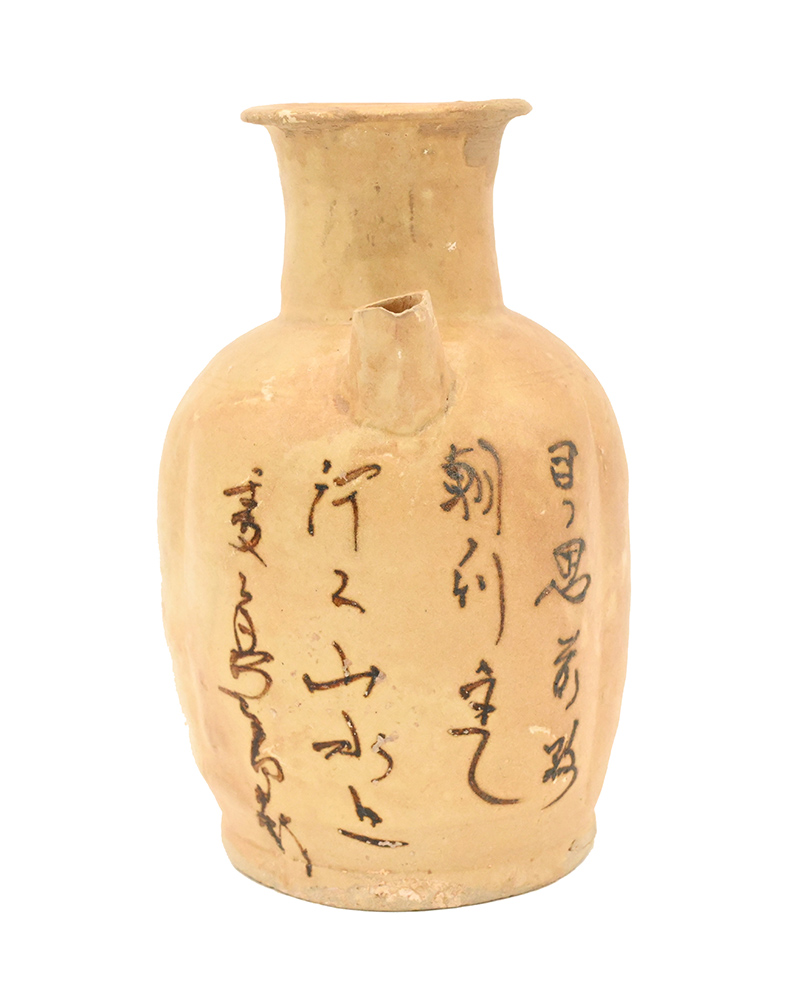
Each day I dream upon the road I trace,
Each dawn I part from the familiar place.
Through lofty hills and streams that gently wind,
In every spot, new birds their song unwind.
*Poems are traditionally read starting in the top right corner.
| 处 | 行 | 朝 | 日 |
| 处 | 行 | 朝 | 日 |
| 鸟 | 山 | 别 | 思 |
| 啼 | 水 | 主 | 前 |
| 新 | 上 | 人 | 路 |
051, research by Lin Wang (MA ‘25)
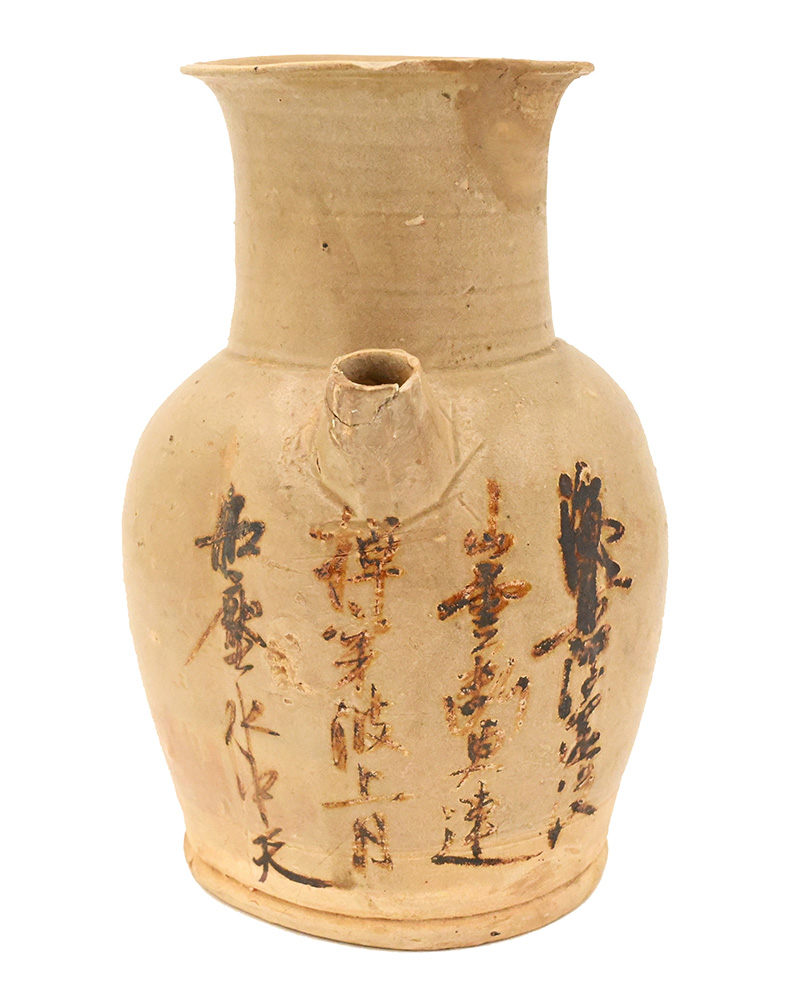
Birds drift as if lost in the fog,
Mountains part in mist, then merge as we row.
The oar pierces the moon beneath the waves,
The boat weighs on the sky within the water.
| 船 | 棹 | 山 | 沙 |
| 压 | 穿 | 云 | 鸟 |
| 水 | 波 | 断 | 浮 |
| 中 | 底 | 复 | 还 |
| 天 | 月 | 连 | 没 |
295, research by Chris Ni (MA ‘25)
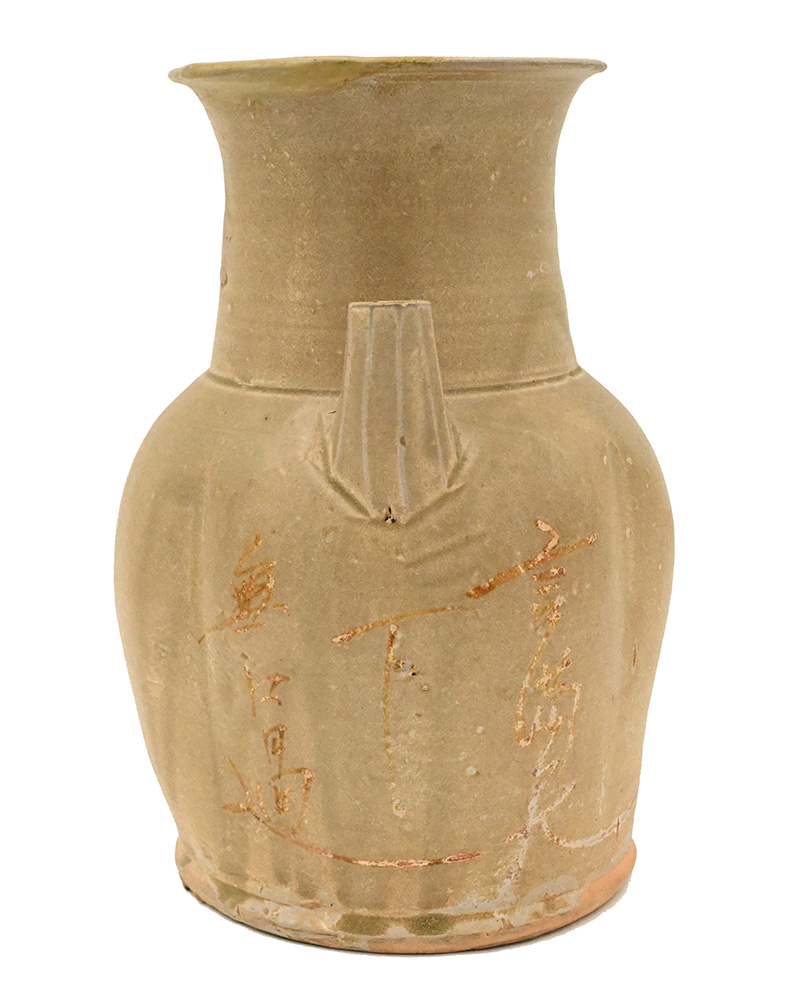
Let not thy words in ceaseless stream be poured
| 无 | 言 | |
| 口 | 下 | 满 |
| 过 | 天 |
This text is part of a longer proverb which reads:
Let not thy words in ceaseless stream be poured,
Nor actions rash, that stir the hearts abhorred.
296, research by Lin Wang (MA ‘25)
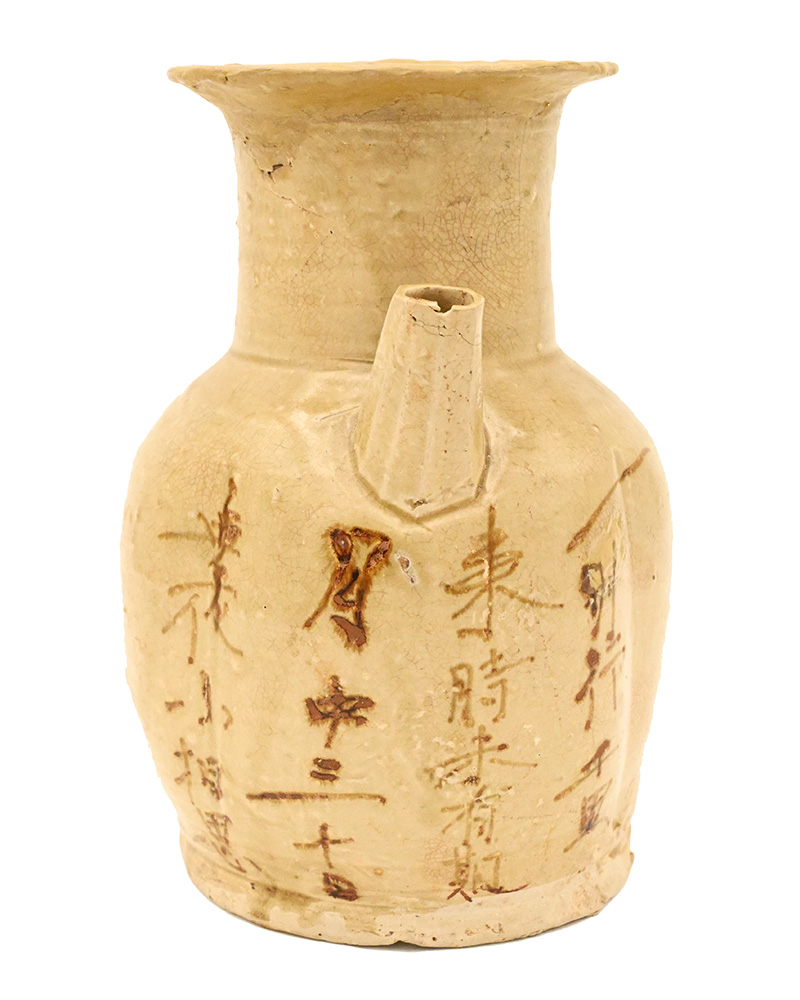
Parting to travel a thousand miles away,
The date of my return remains unknown.
Through thirty days of each month,
Not a night passes without thoughts of you.
| 无 | 月 | 来 | 一 |
| 夜 | 中 | 时 | 别 |
| 不 | 三 | 未 | 行 |
| 相 | 十 | 有 | 千 |
| 思 | 日 | 期 | 里 |
107, research by Chris Ni (MA ‘25)
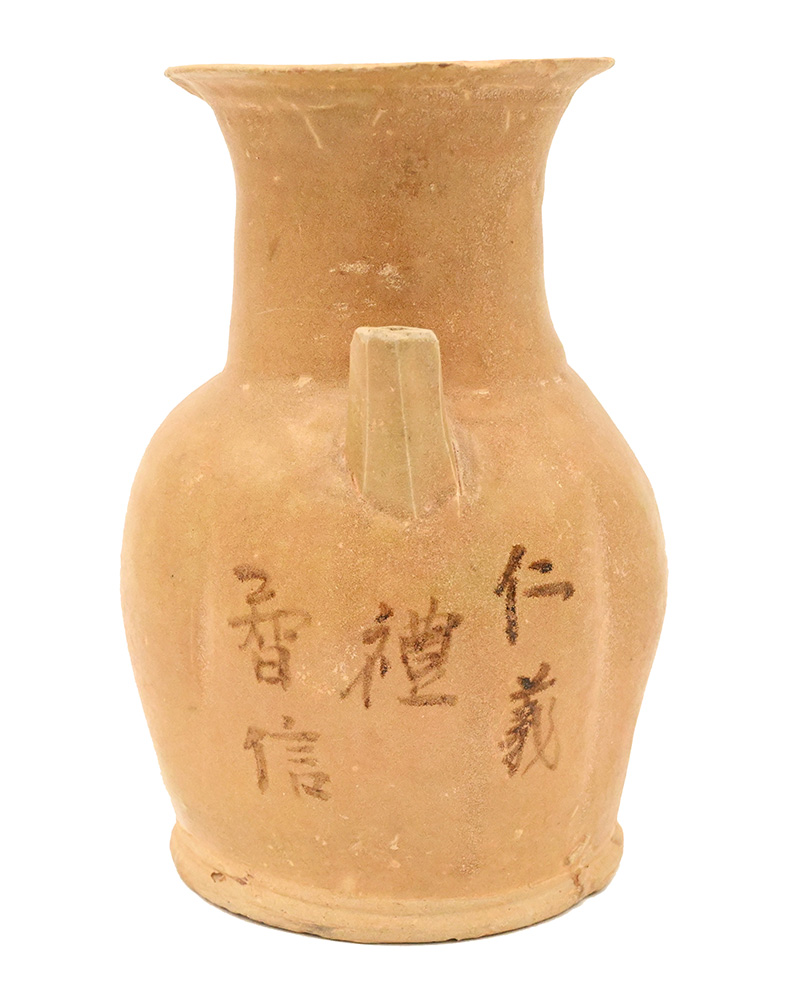
Benevolence, Righteousness
Courtesy
Wisdom, Trust
| 智 | 礼 | 仁 |
| 信 | 义 |
533, research by Shelly Ji (MA ‘25)
Reflections from the Translators
Providing accurate translations for ancient artifacts is never an easy task—especially when the objects share the same cultural roots as you do. Interpreting the poems inscribed on the ewers proved to be particularly challenging, as they were written in a variety of calligraphic styles, each rich with unique artistic expression. To ensure a faithful and accurate reading, our team made several visits to the museum to examine the artifacts up close. We discussed which modern Chinese characters corresponded to each ancient form, consulted Tang dynasty calligraphy references—since the artifacts originated from the Changsha Tongguan Kiln of the Tang era—and scoured online databases for similar texts. To our surprise, we even managed to decipher a poem that appears to have gone unrecorded in historical archives—a poem that subtly critiques a renowned poet of the Tang dynasty. This discovery was exhilarating. It reminded us that artifacts are not merely vessels of beauty or craftsmanship—they are also carriers of literary dialogue and cultural discourse.
For me, connecting with these ancient objects from my hometown, now across the Pacific, has been a deeply empowering experience.
Shelly Ji (MA ‘25)
Translating these ancient inscriptions felt like piecing together a delicate puzzle—one shaped by time, culture, and art. Each poem carved into the ewers from the Changsha Tongguan Kiln carried layers of meaning, but many of the characters had become worn, stylized, or even distorted. We spent hours discussing unclear strokes, comparing them with historical references and calligraphy manuals, and searching across databases for similar phrases. Some characters sparked long debates—was it a brush slip, a regional variation, or an intentional twist of style?
One of the most exciting moments came when we realized a particular poem, with a subtle change in wording, might be a critique of a well-known Tang poet—an alternate version that doesn’t appear in the official records. It reminded us that these objects are not just decorative—they speak, respond, and even challenge literary history.
For me, engaging with these objects was a rare chance to bridge my training in language and translation with the rich legacy of Chinese art and literature.
Lin Wang (MA ‘25)
The two vessels I interpreted happen to provide two perfect examples of deciphering challenges.
On the first vessel (107) many of the key characters were distorted or used ancient fonts. Taking “来” and “無” for example, meaning “return” and “not”, while they both look similar to other characters like “東” (east) or “車” (chariot) in traditional Chinese. There is also a print error that “不”, meaning “do not,” with the horizontal stroke above it missing. Luckily the other part of the poem remains identifiable, allowing us to match it with one of the poems inscribed on Tongguan Kiln porcelain, also identifying the print error.
The second vessel (295) is a perfect example when many of the characters are heavily stained or eroded, causing difficulty in identifying them. There is also a specific mistake that “底” (beneath) is misprinted as “上” (up), making it even more challenging to find the matching poem. We eventually managed to use second and fourth lines that are more distinct to find the poem and identify the print error.
Chris Ni (MA ‘25)
Explore the Other Sections of this Exhibit