
Maasai Shield
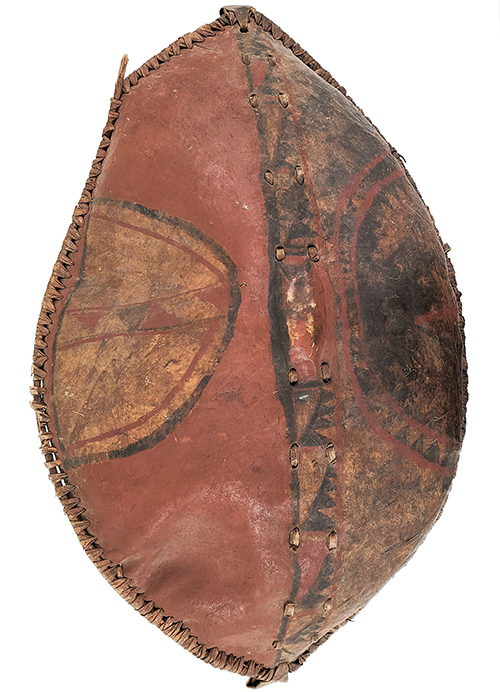
This Maasai shield is from Kenya and dates to the early 20th century. The Maasai are a cultural group of semi-nomadic pastoralists with a population of approximately one million people living primarily in southern Kenya and northern Tanzania.
This type of shield, known as elongo, provided both physical and spiritual protection for Maasai hunters and warriors in their duties protecting people and cattle against intruders and dangerous wild animals. A spiritual leader, called the Oloibon, imbued each shield with enhanced protective powers through charms called entasim to ensure the warrior’s success.
Maasai warriors made their own shields by sewing cow or buffalo hide from an animal they killed onto a wooden frame to form a convex oval shape. The wooden handle in the center of the back side was traditionally wrapped in leather strips for better grip. The shield was then painted with dyes made from mixing ashes with colored clays.
The multicolored geometric designs of this shield follow a typical pattern with a center line made up of triangle motifs. On one side of the line the background is red, and the other is black. Crescent shapes with different interior patterns appear on both sides. These designs are called sirata and indicate the holder’s place in a complex lineage system. The decorations mark this type of Maasai shield as a prestige object in addition to its practical purpose. Contemporary Maasai warriors no longer use this type of shield, and the specific meanings of the designs have largely been lost to time.
This shield is on exhibit in Archery: Hunting, Warfare, and Identity through June 20, 2026.